
Villa Swagatam
Ongoing Programme
Villa Swagatam is
a network of residencies run by the French Institute in India to promote the
mobility of creatives and to foster cultural exchange between France, India and
the South Asian region. This network places particular emphasis on two thematic
fields, literature and the crafts, as privileged vectors of dialogue. Since its
launch in March 2023, Villa Swagatam has grown to include some of the most
distinguished cultural institutions and organisations in the domain of arts and
crafts across France and South Asia. This has resulted in unique creative
collaborations that highlight the immense potential that emerges when artistic
traditions, techniques and perspectives from both regions intersect.
Third Edition (2025-2026)
"Being
selected by Villa Swagatam to work with Brihatta Art Foundation is an honor in
the context of climate urgency. The Ganges-Brahmaputra delta, facing 1.40m sea
level rise by 2100, represents a critical laboratory for rethinking water
relationships. Through 'Rivers' Threads,' we'll develop cultural adaptation
methodology for deltaic populations worldwide, creating bridges between
ancestral knowledge and climate adaptation while accompanying frontline
communities as environmental upheavals reshape their territories."
Clémence Vazard
Bio
Clémence Vazard
is a French transdisciplinary artist exploring invisible connections between
living beings and their environments through collaborative research-creation
methodologies.
Distinguished
graduate of Central Saint Martins' MA Art & Science (London), she has
exhibited internationally and developed monumental participatory projects,
including "Palabras del Amazonas" in the Ecuadorian Amazon, which gathered
over 300 participants.
Her recent
practice uses natural dyeing to reveal relationships between humans and
waterbodies within a collaborative ecology framework. Recipient of the ADAGP
Research Fund for "La Parole de l'Eau" (2023), she has been laureate
of residency programs including Villa CreaColombia (Medellín, Colombia), La
Fabrique des résidences (Macas, Ecuador), Massa Stories (Sidi r'bat, Morocco),
Ateliers de la Madeleine and LUMA Ateliers (both in Arles, France).
নদীর সুতা / Rivers' Threads
নদীর সুতা / Rivers' Threads
"The forms and contours of riversheds define places and
relationships."
-Giuseppe
Moretti, Bassins fluviaux de la conscience
In the Bangladesh
delta, where 17% of the land will be submerged by 2050, I found myself asking:
how do we truly listen to rivers?
I discovered
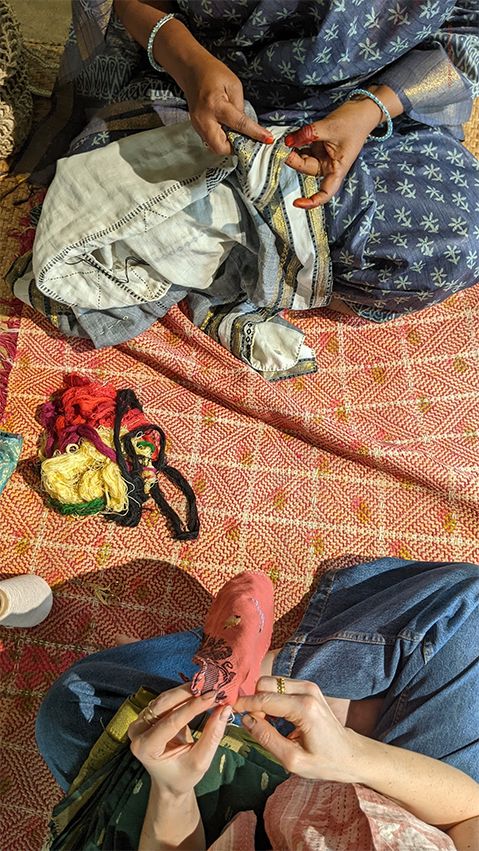
nakshi kantha-women's embroidery on recycled saris, passed down through
generations-not as craft, but as a five-step ritual of manifestation: observe,
feel, connect, represent, manifest. In rural Bangladesh, women don't just
document their world; they embroider their desires into being, stitching
futures into existence.
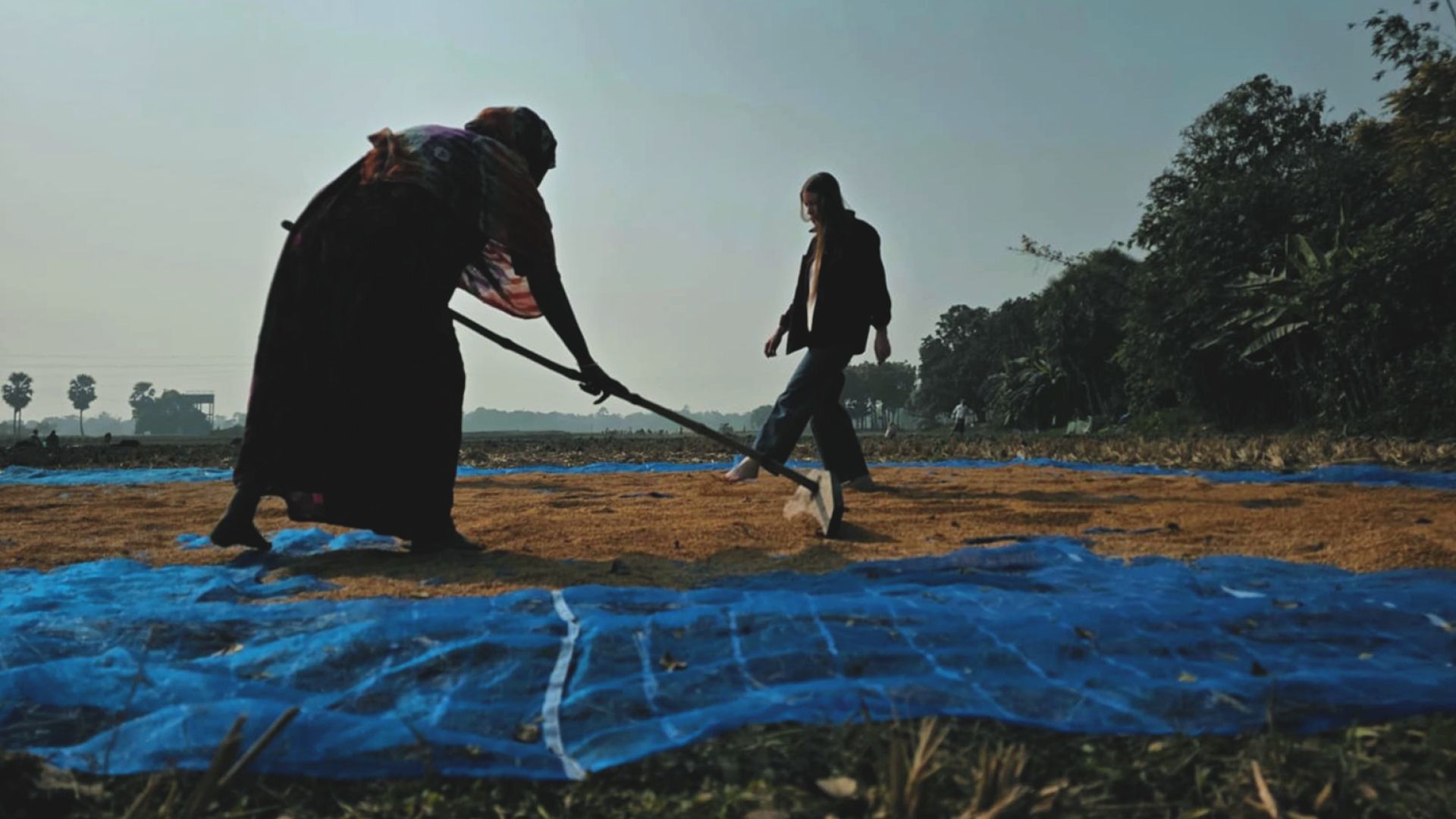
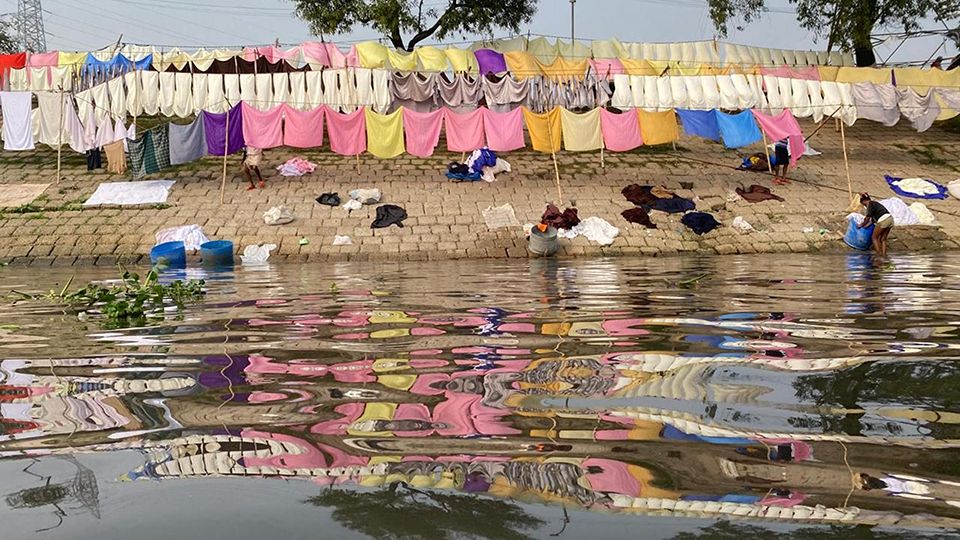
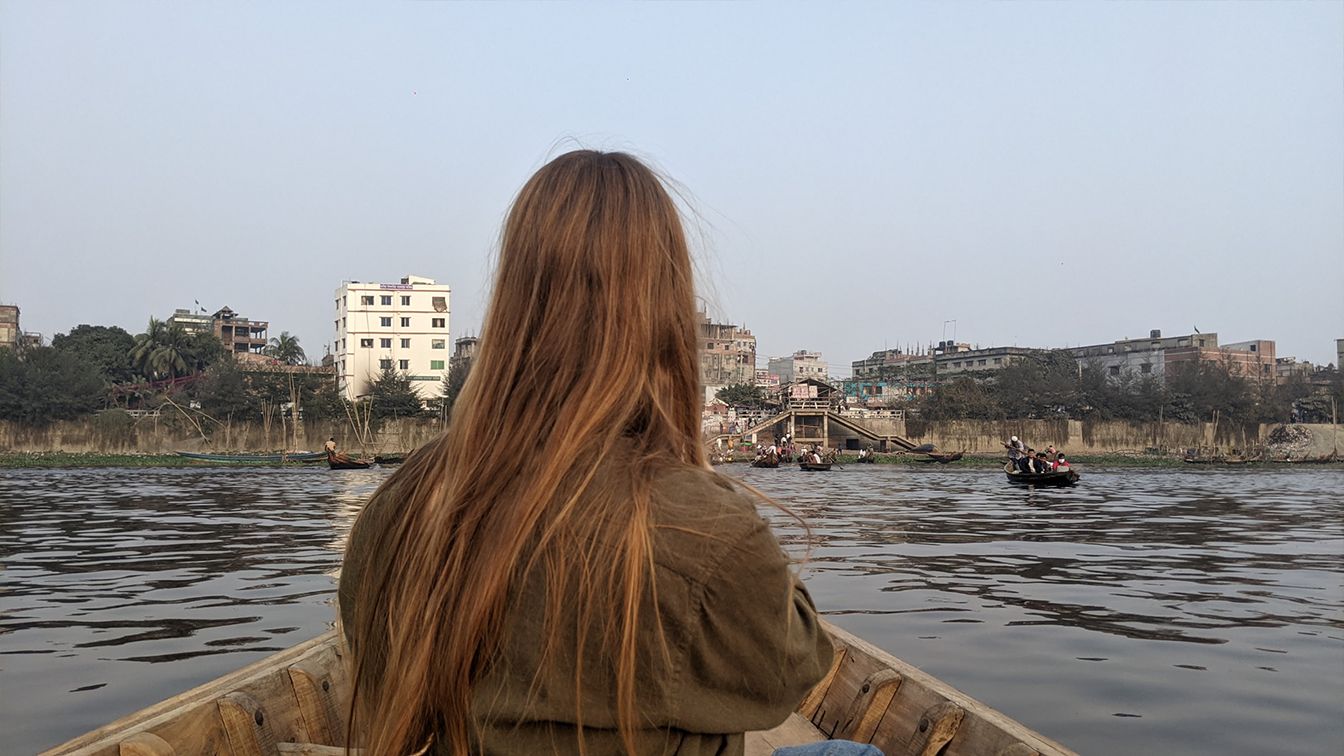
I let the rivers
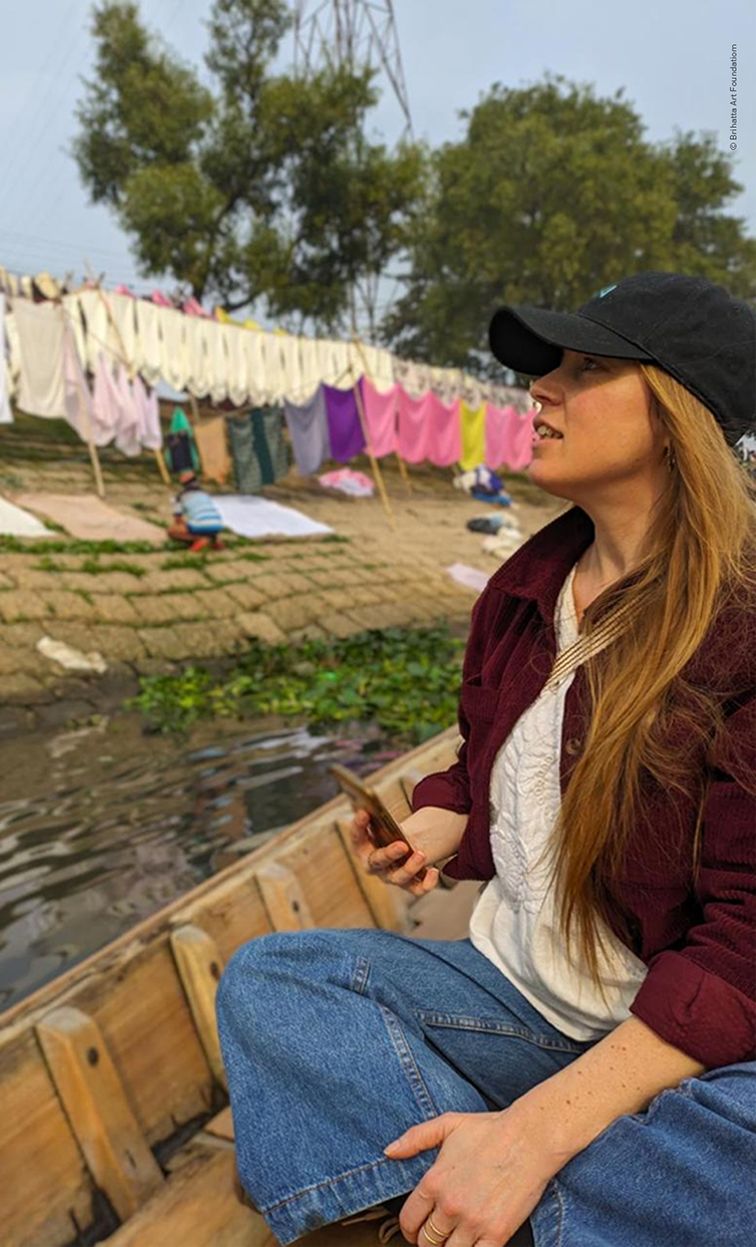
teach me. Floating past Showari Ghat, I watched washermen's fabrics ripple
across the Buriganga in ephemeral waves of color-each undulation a breath
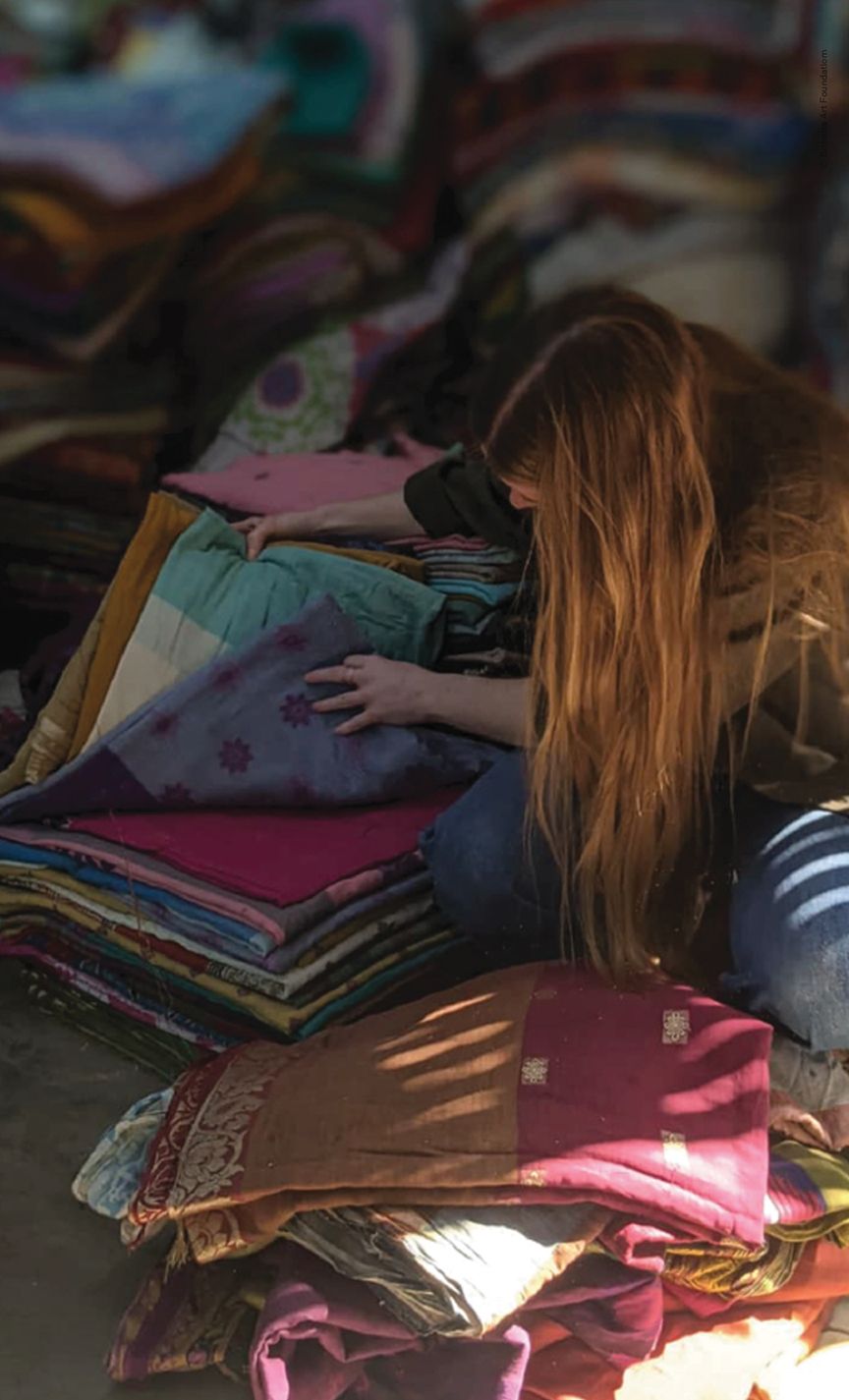
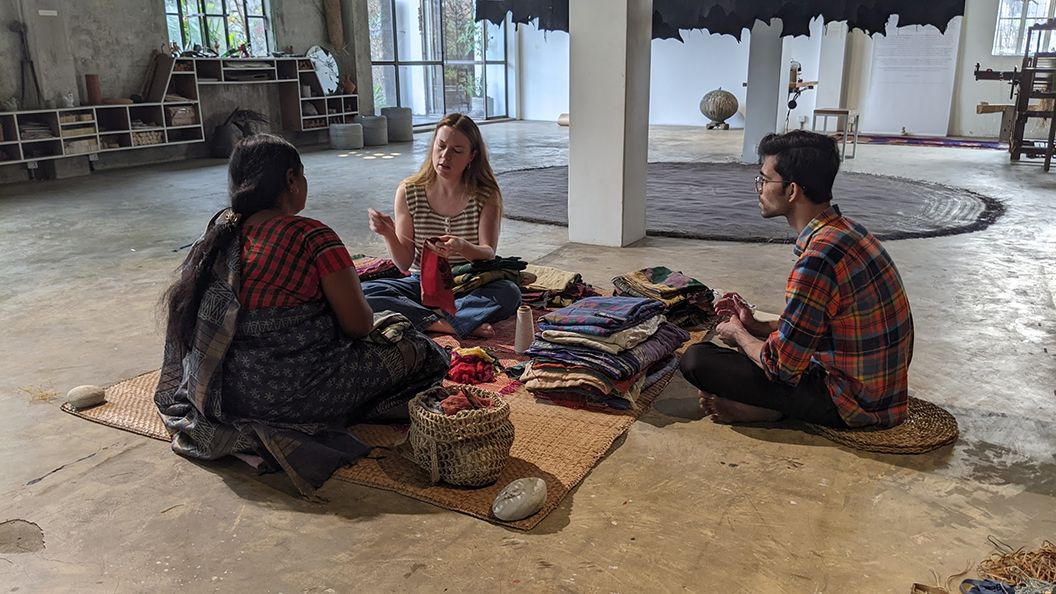
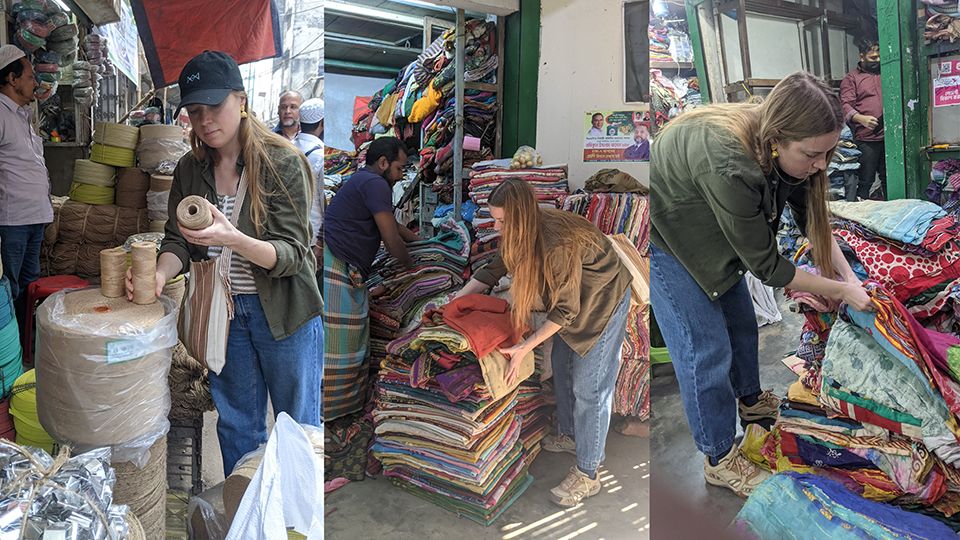
(observe). At Begum Bazar, my hands moved through piles of discarded saris,
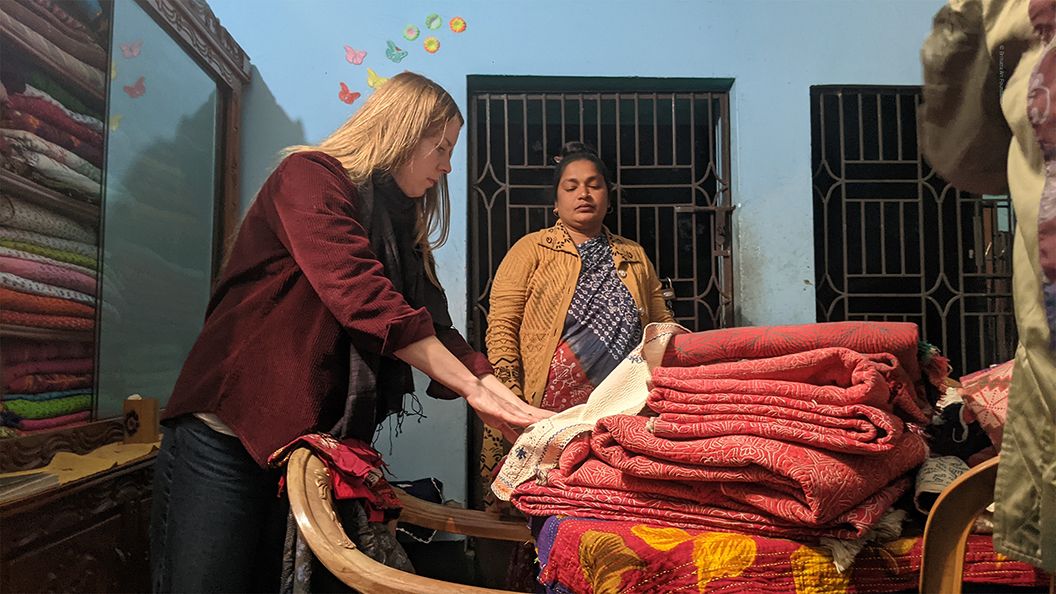
choosing by touch and instinct (feel). In Rajshahi, Runa Begum's fingers guided
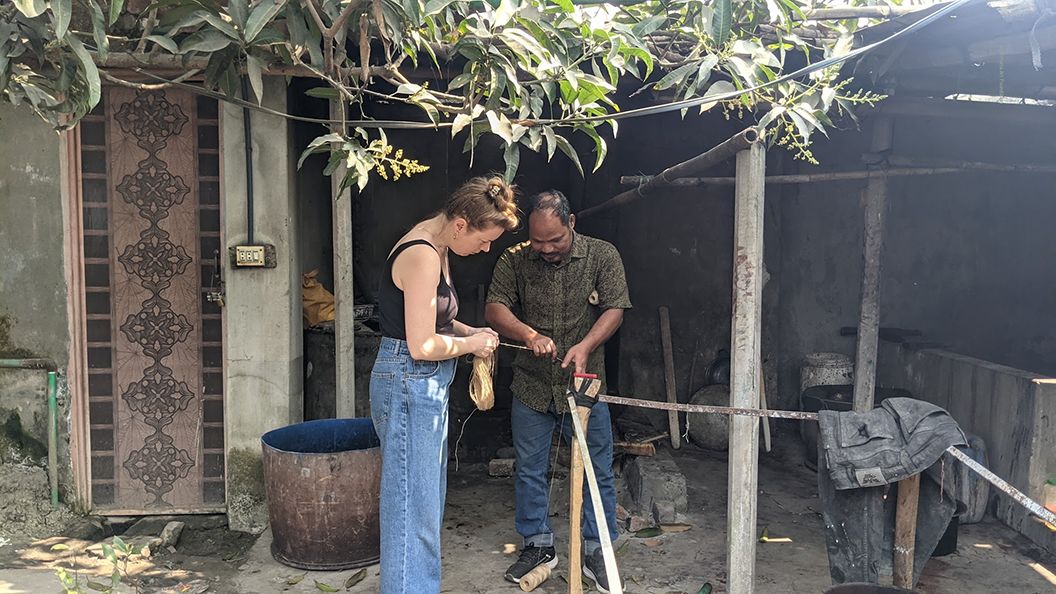
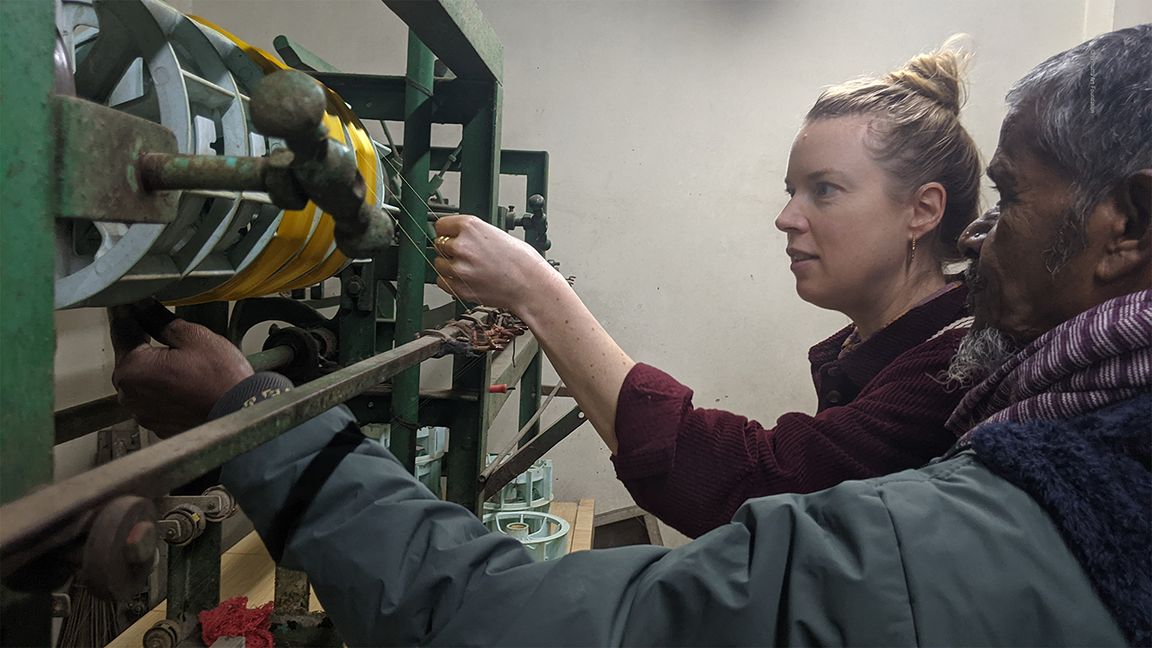
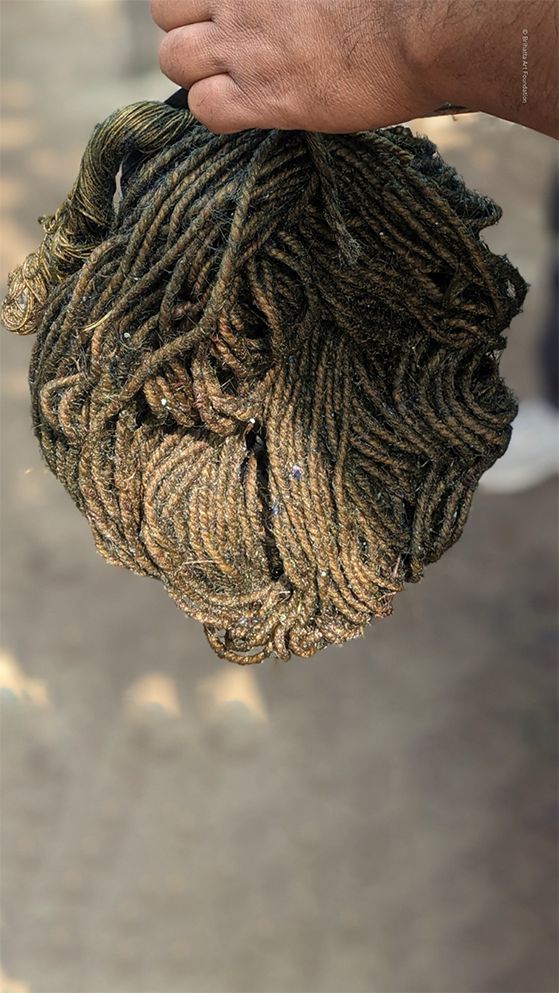
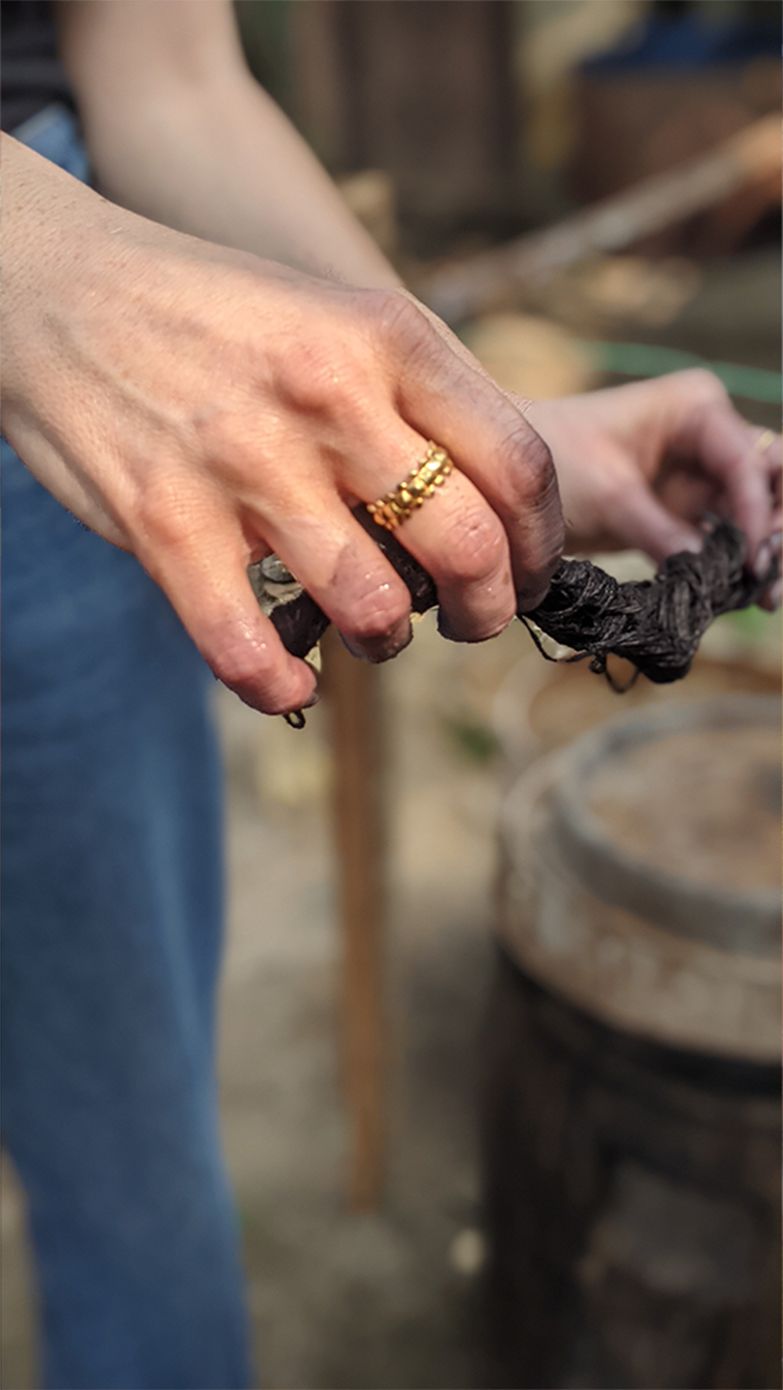
mine through nakshi kantha's ancient rhythms (connect). With Jagadish Chandra
Roy, I dyed jute threads in indigo, watching forgotten fibers transform into
ecological treasure (represent).
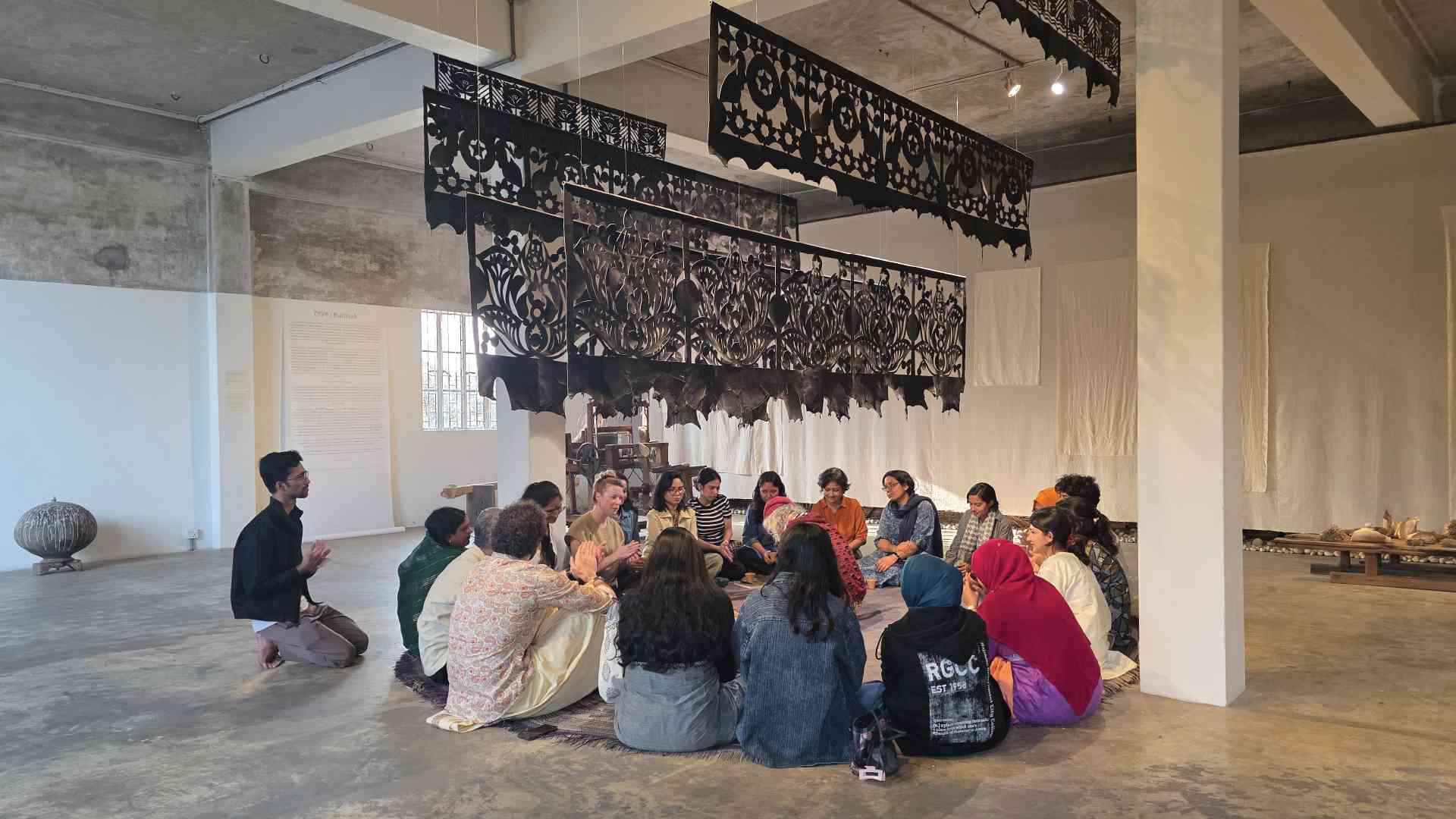
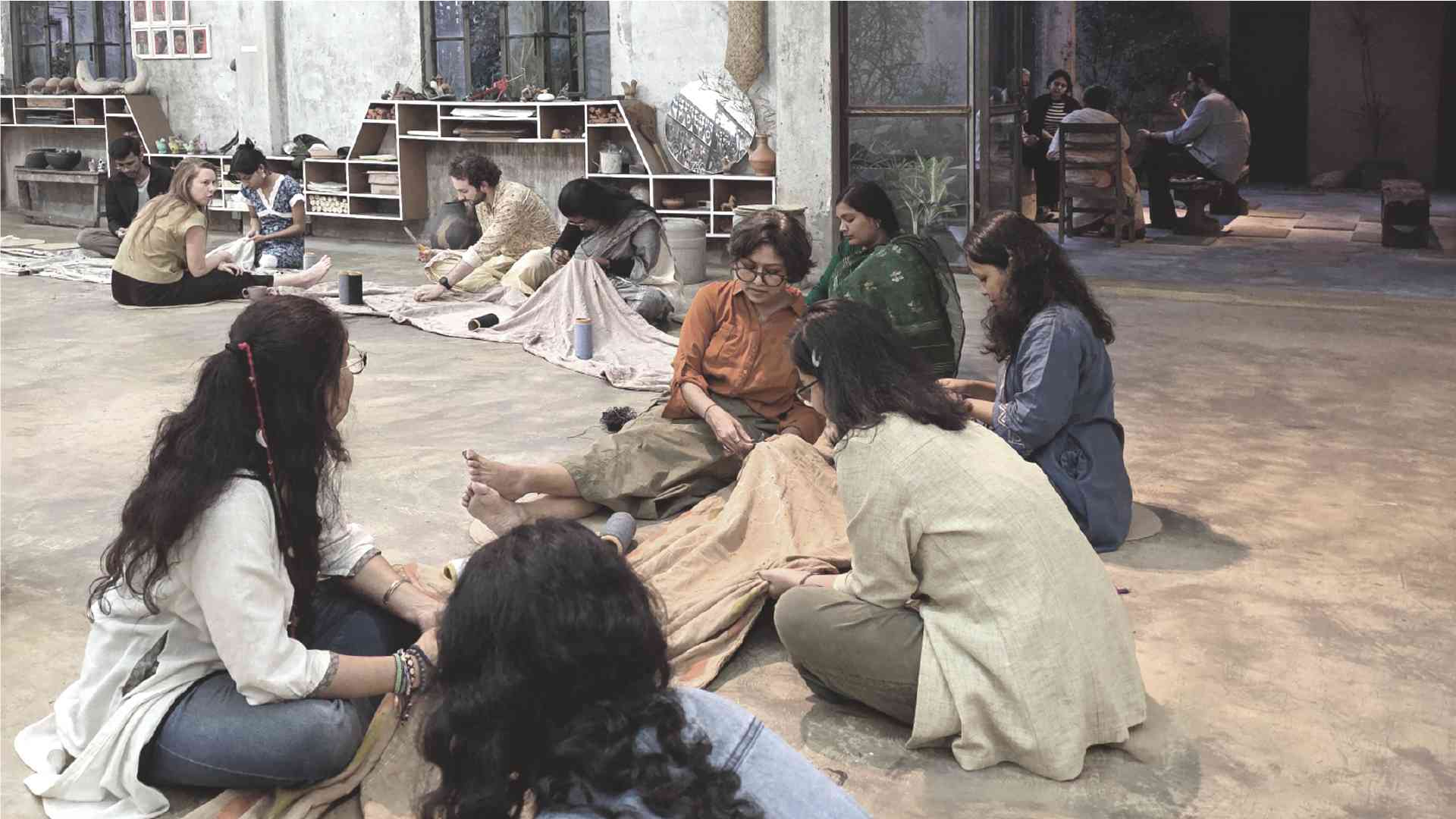
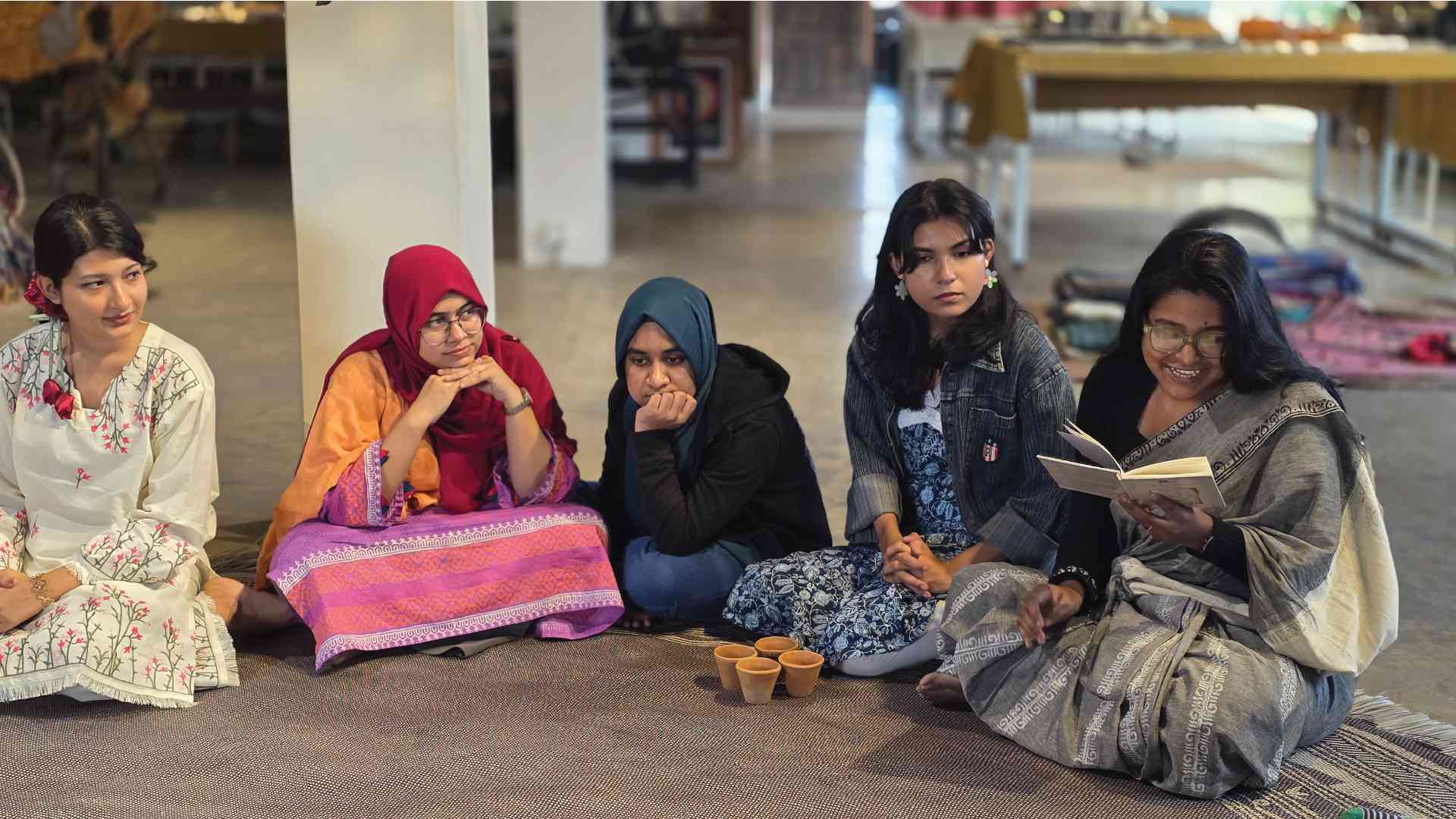
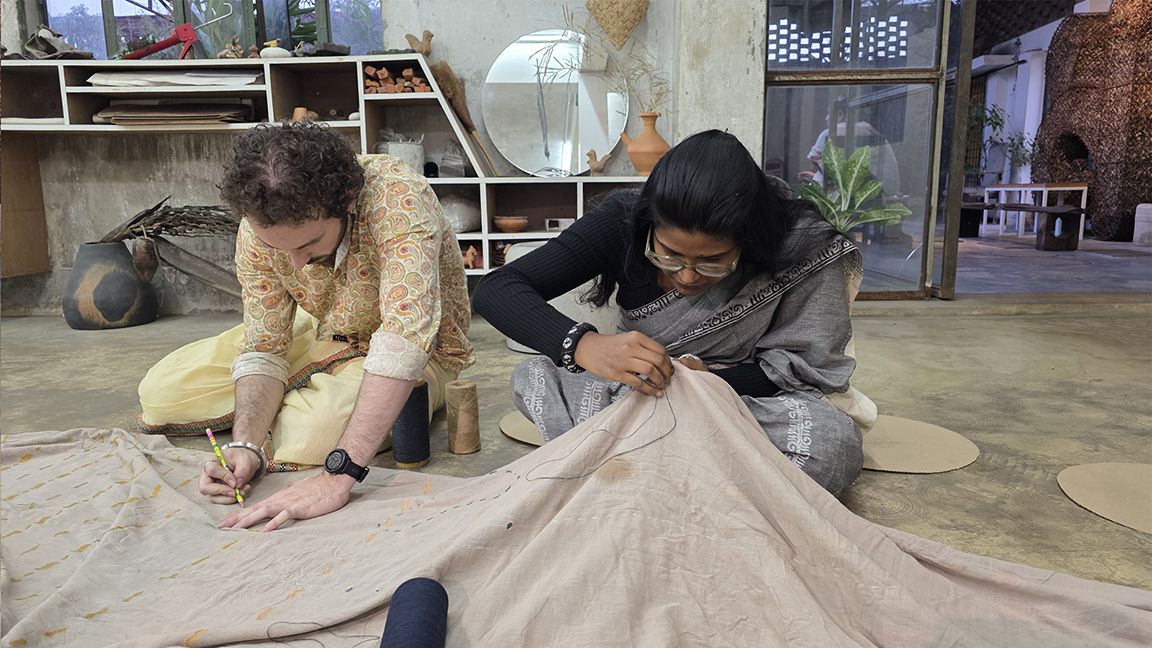
At Brihatta Art
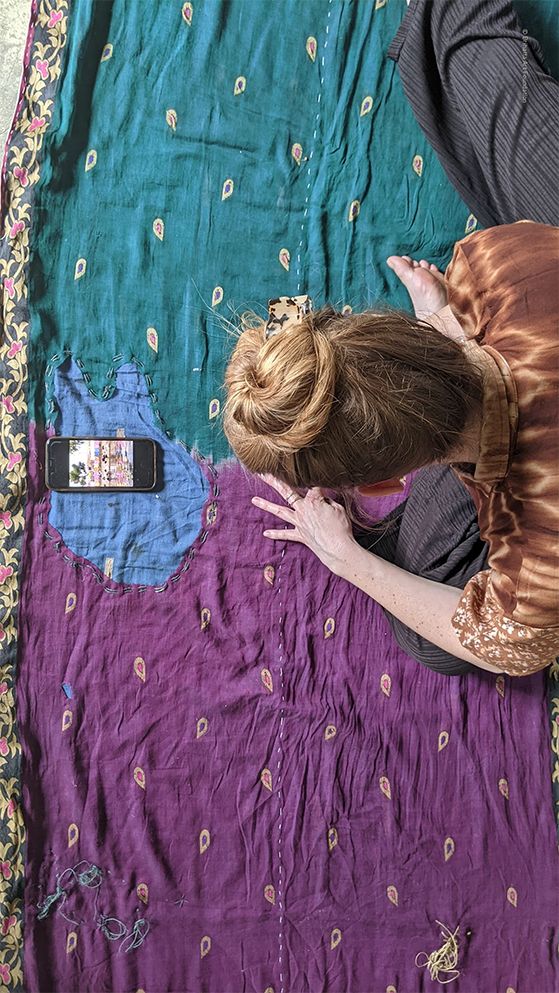
Foundation, I invited participants to embroider their river. "What river
are you?" Their threads wove stories, memories, longings (manifest). On
the reverse side, I embroidered back-from the river's gaze. Water has always
been a surface for seeing futures; my stitches extended this divinatory power,
capturing what rivers reflect: boat ballets, bridge constructions, the pulse of
everyday gestures.
This dialogue
revealed what I'd sensed all along: we look at rivers, and rivers look back at
us. Through collaborative practice, textile becomes confluence where artisanal
knowledge meets environmental consciousness, weaving threads that reconnect
communities to their rivers-because only by recognizing rivers as beings can we
protect the futures we're embroidering together.
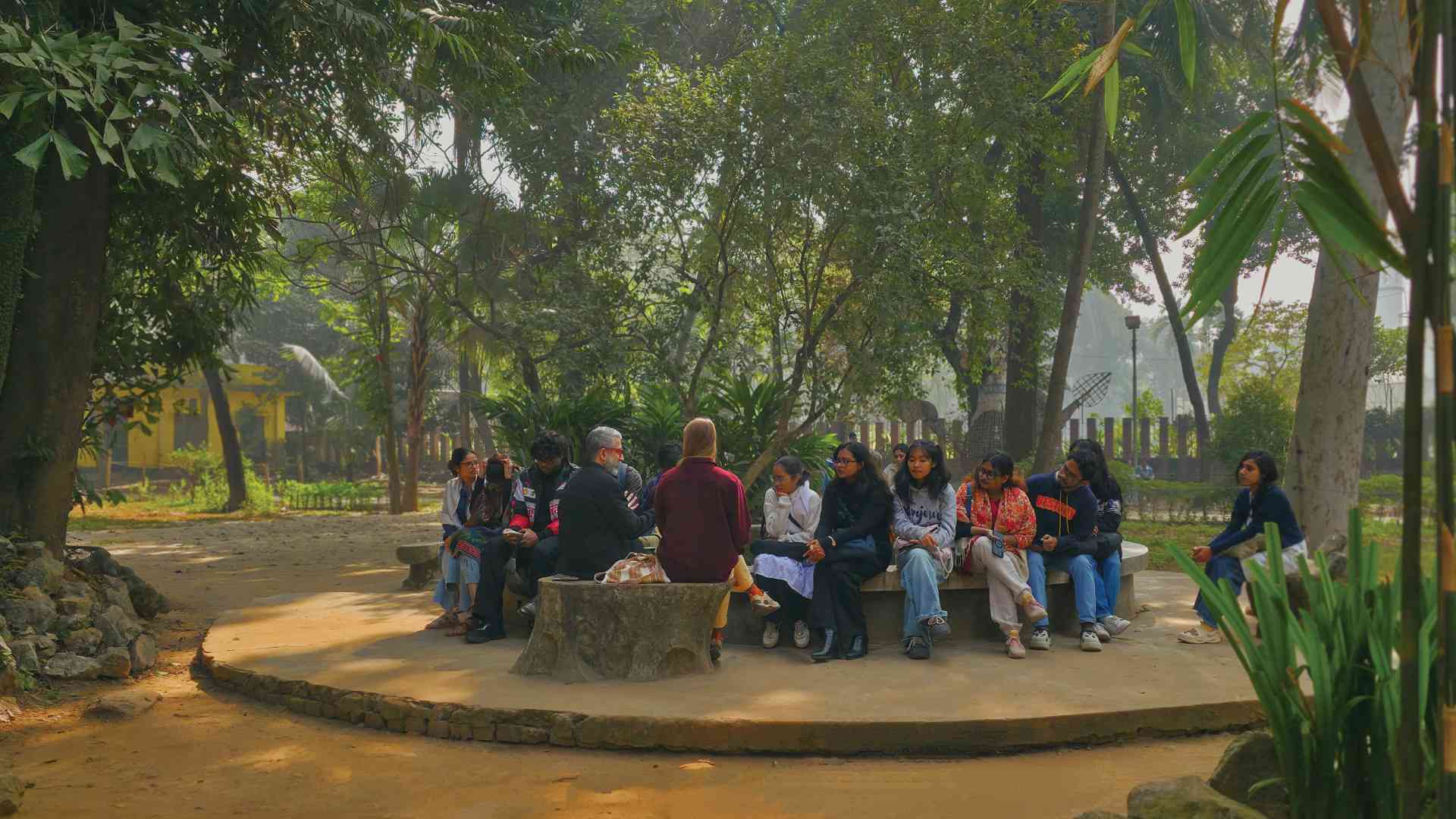
Dye, Drift, Desire: A Textile Fieldwork by Humaira Hossain
Dye, Drift, Desire: A
Textile Fieldwork
নদীর সুতা / Rivers’
Threads, an ongoing
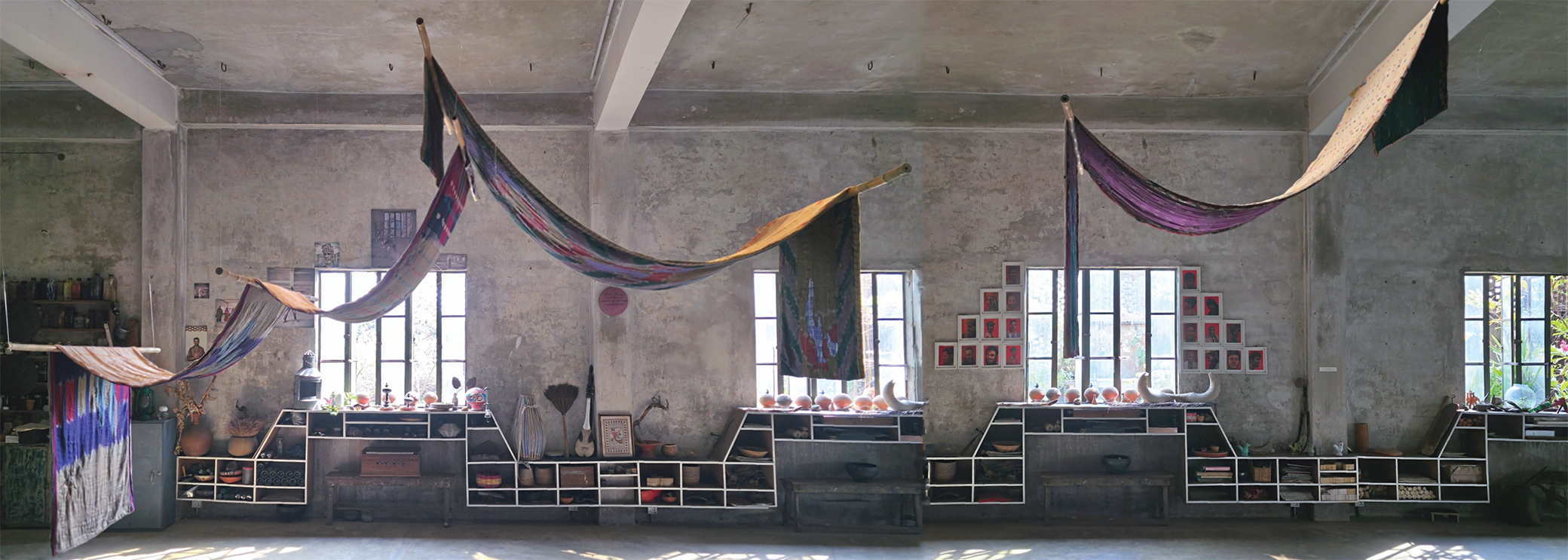
project by Clémence Vazard developed during her Villa Swagatam residency at the
Brihatta Art Foundation in Bangladesh, approaches the delta as more than a
site, it becomes both archive and collaborator, unfolding through water,
textile, and the embodied labor of dyeing, mending, and stitching. Rivers in
this project are not backdrop but a key methodological element. Vazard follows
a five-stage process - observe, feel, connect, represent, manifest that allows
field encounters to determine what the work can become.
Brihatta Art
foundation had a key role to this research-led practice. Through local
mediation, translation, and logistics, the residency opened access to sites
that rarely fold into the artist’s studio. In Dhaka, Vazard explored the
crowded sari markets of Begum Bazar and the industrial edges of the Buriganga,
selecting discarded garments whose stains and frayed borders already hold
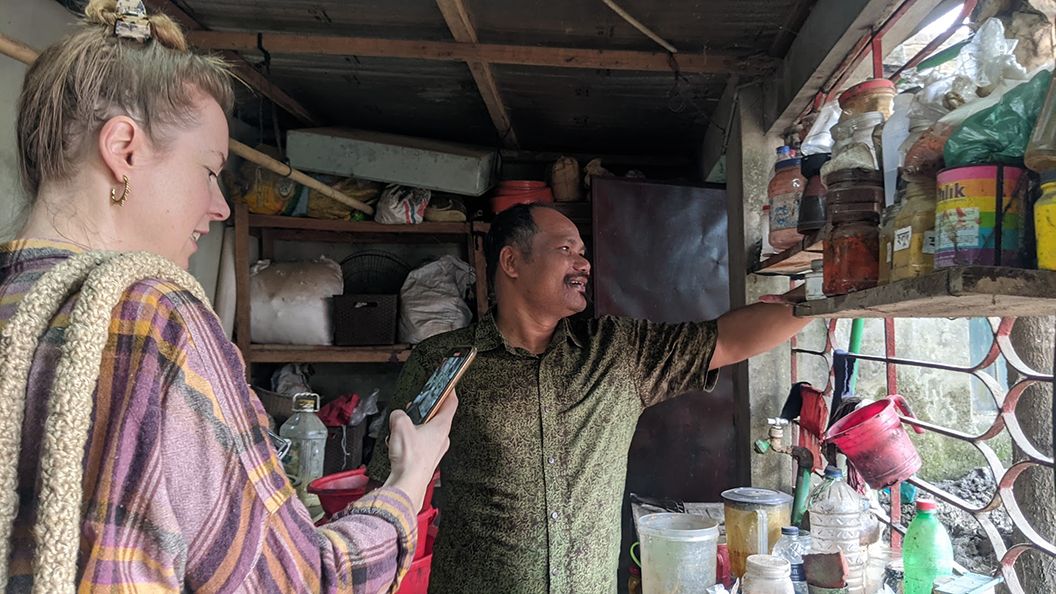
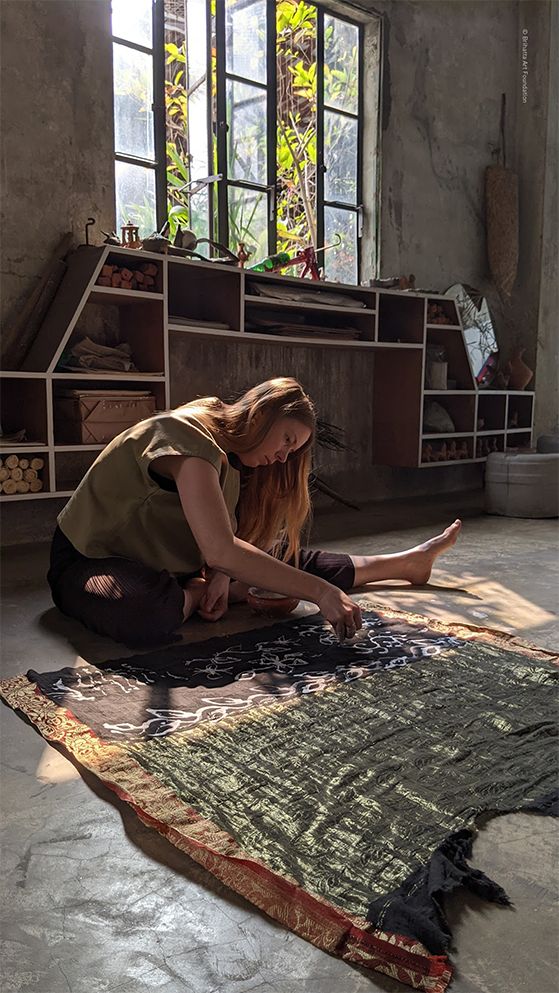
intimate histories of wear. She collected river water - labeling jars with
names such as Buriganga and Turag - and brought these samples back to
Brihatta’s studio, where dye baths, wringing, and drying translated the rivers’
chemistry into stains and gradients.
Brihatta also
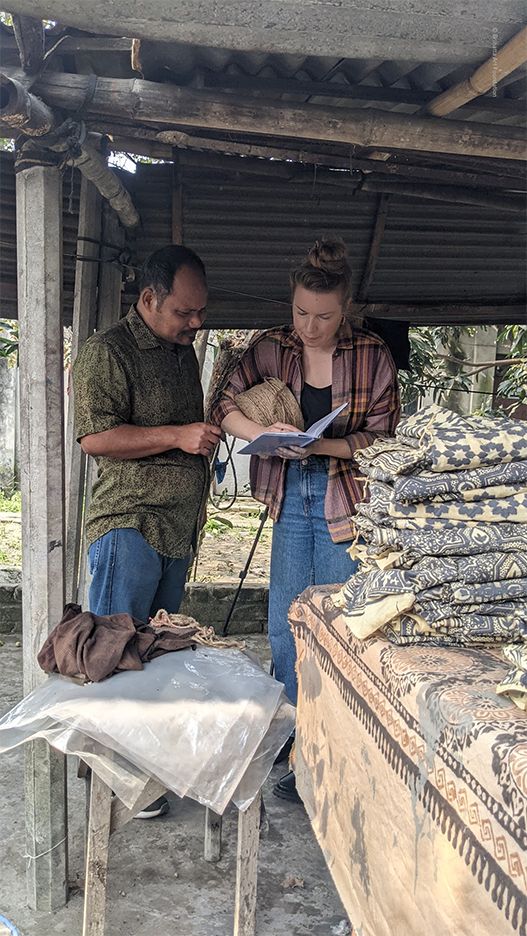
facilitated sustained exchanges with artisans. Working with craft practitioner Jagadish
Chandra Roy, Vazard experimented with indigo and black clay, observing how
vegetal tannins and mineral-rich earth generate tones that feel inseparable
from riverbeds. Alongside reclaimed saris, she traced jute - Bangladesh’s
“golden fiber” - through markets and production sites, reframing a
biodegradable material long displaced by plastic as an ecological proposition
in a delta where projections warn that up to 17% of the land may be submerged
by 2050.
Traveling through
Brihatta’s network to Rajshahi and river communities near the Mohanonda and
Padma, Vazard encountered domestic surfaces as vernacular cartographies: mud
walls marked with alpana motifs, baskets woven from local fibers, raw cotton in
traders’ sacks, and everyday techniques for making with what the landscape
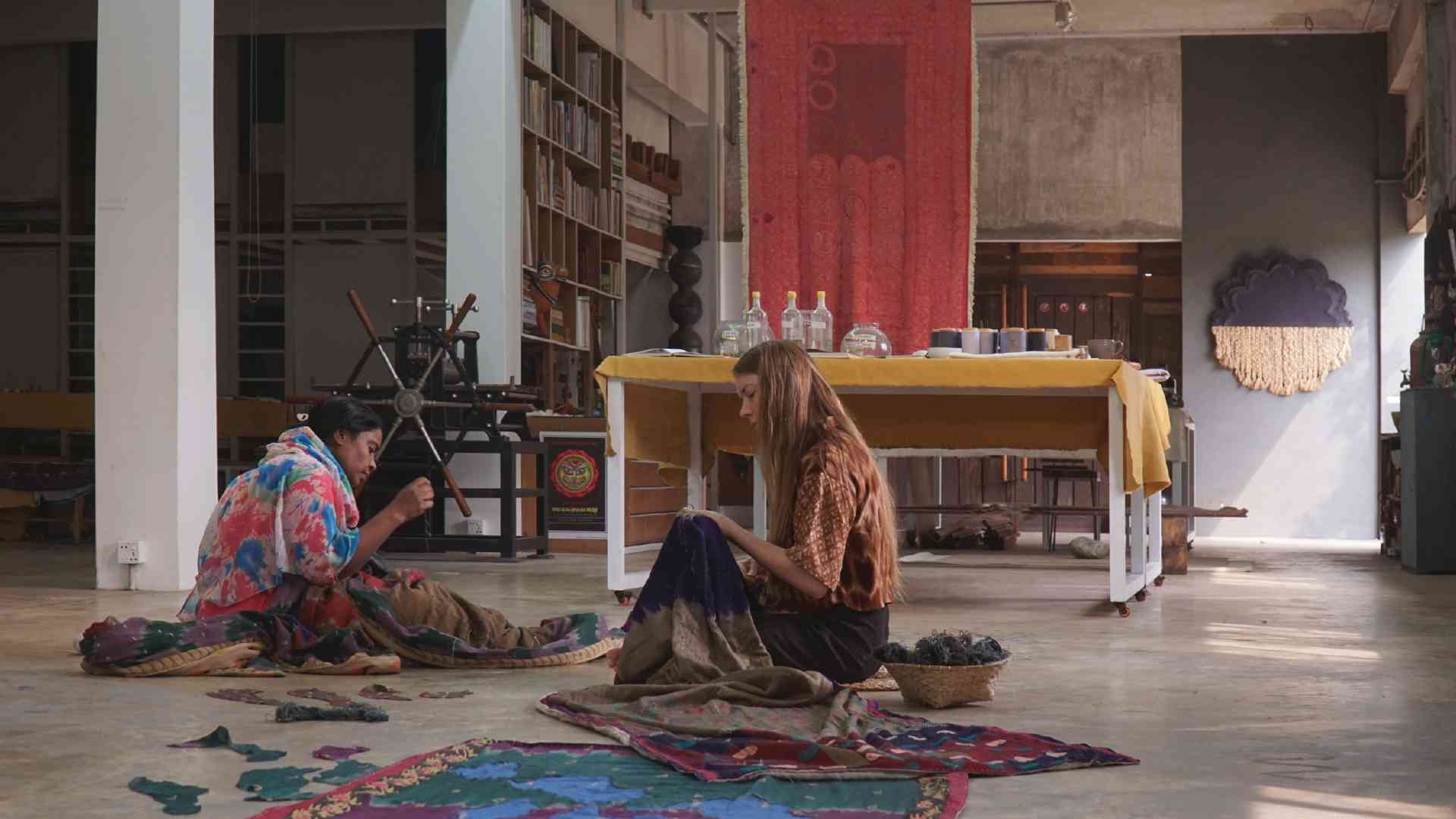
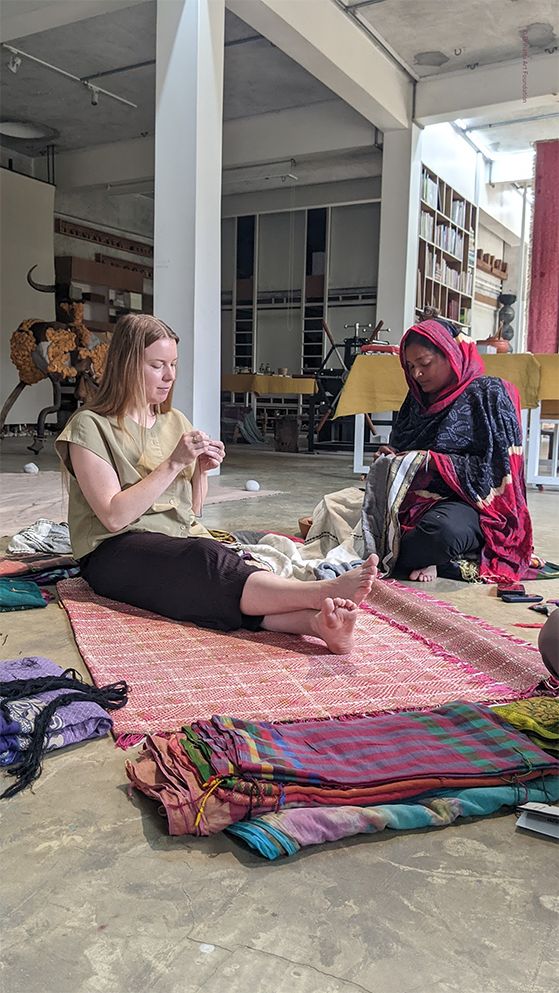
provides. Central throughout is nakshi kantha, learned through close
instruction from artisan Runa Begum and other embroiderers, where repeated
stitches become gestures of anchoring and, at times, a form of folk magic:
embroidering desires for the future into being.
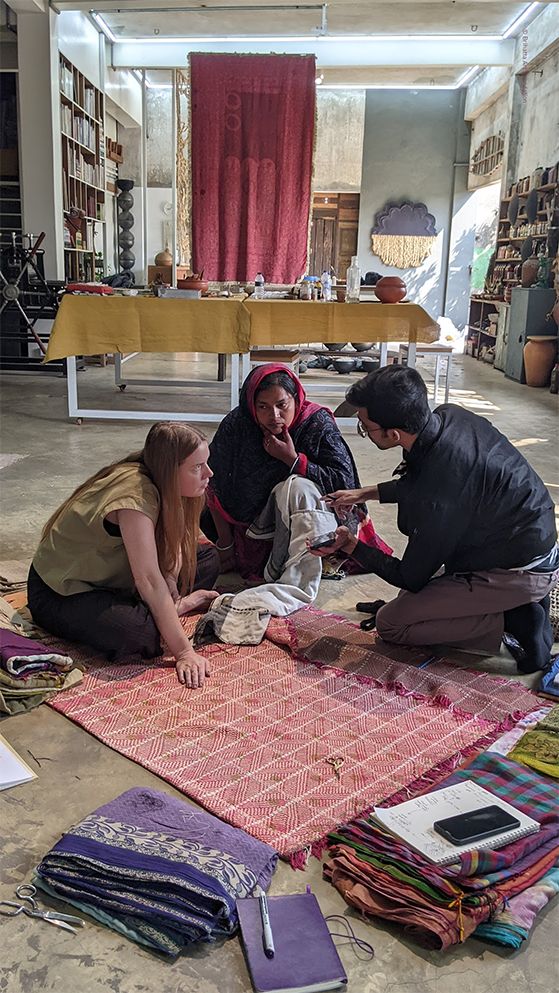
By offering time,
studio infrastructure, and a community of dialogue - field access,
introductions, and a framework for participatory exchange - Clémence Vazard and
Brihatta enabled Rivers’ Threads to emerge as a hybrid textile language:
reclaimed cloth, jute, river pigments, and collaborative knowledge woven into a
living record of a territory in metamorphosis.
Humaira Hossain
PhD Candidate, University of Illinois
Chicago
Researcher, Brihatta Art Foundation
Unfolding the Residency with Souradeep Dasgupta
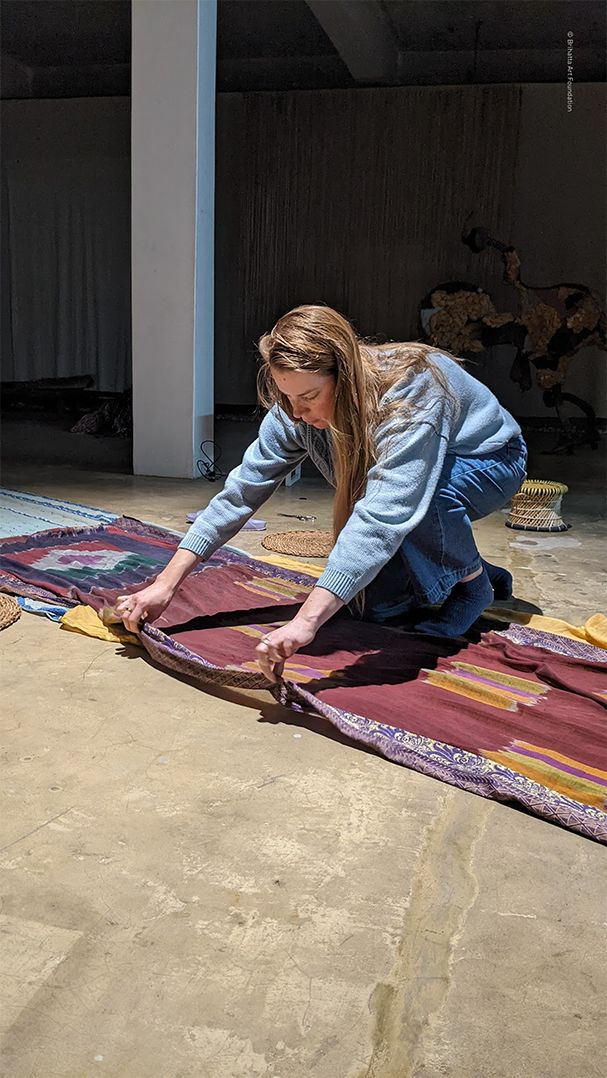
From the outset,
the residency unfolded not as a fixed outcome but as a process shaped by
conversations, fieldwork, and attentive listening to people, materials, and
places. Moving along the Buriganga, Padma, and other river systems, the project
wove together walking, gathering, dyeing, stitching, and storytelling as modes
of learning. Collected materials played a central role. Discarded sarees
carried intimate traces of use-creases, repairs, and strains that marked lives
lived. The exploration of jute, indigo, natural dyes, and other river-based
materials reflected the collective histories of the land, foregrounding
sustainability not as a theme but as a method embedded in everyday practice.
At the heart of
the project lies Nakshi Kantha, a practice passed down through generations of
women in Bangladesh. Here, embroidery becomes more than fabric; it serves as an
archive of memory and emotion. Working closely with artisan Runa Begum, Vazard
learned embroidery not only as technique, but as a way of listening, to inherited
gestures, rhythms, and desires stitched into cloth.
Inspired by
Sultana's Dream by Rokeya Sakhawat Hossain, the project invited women to
imagine their relationships with rivers and waterways, translating these
reflections into a large-scale collective kantha. What emerged was not a
singular artwork but a network of relationships between makers and materials,
past and present, land and water. Embracing slowness, the process combined
artistic intuition with community connection, historical inquiry, ecological
awareness, and collective making.
Rivers Threads
invites us to experience rivers as living, breathing spaces that carry culture,
memory, and everyday life-offering not closure, but a deeper, more attentive
way of seeing.
Souradeep Dasgupta
Researcher, Brihatta Art Foundation
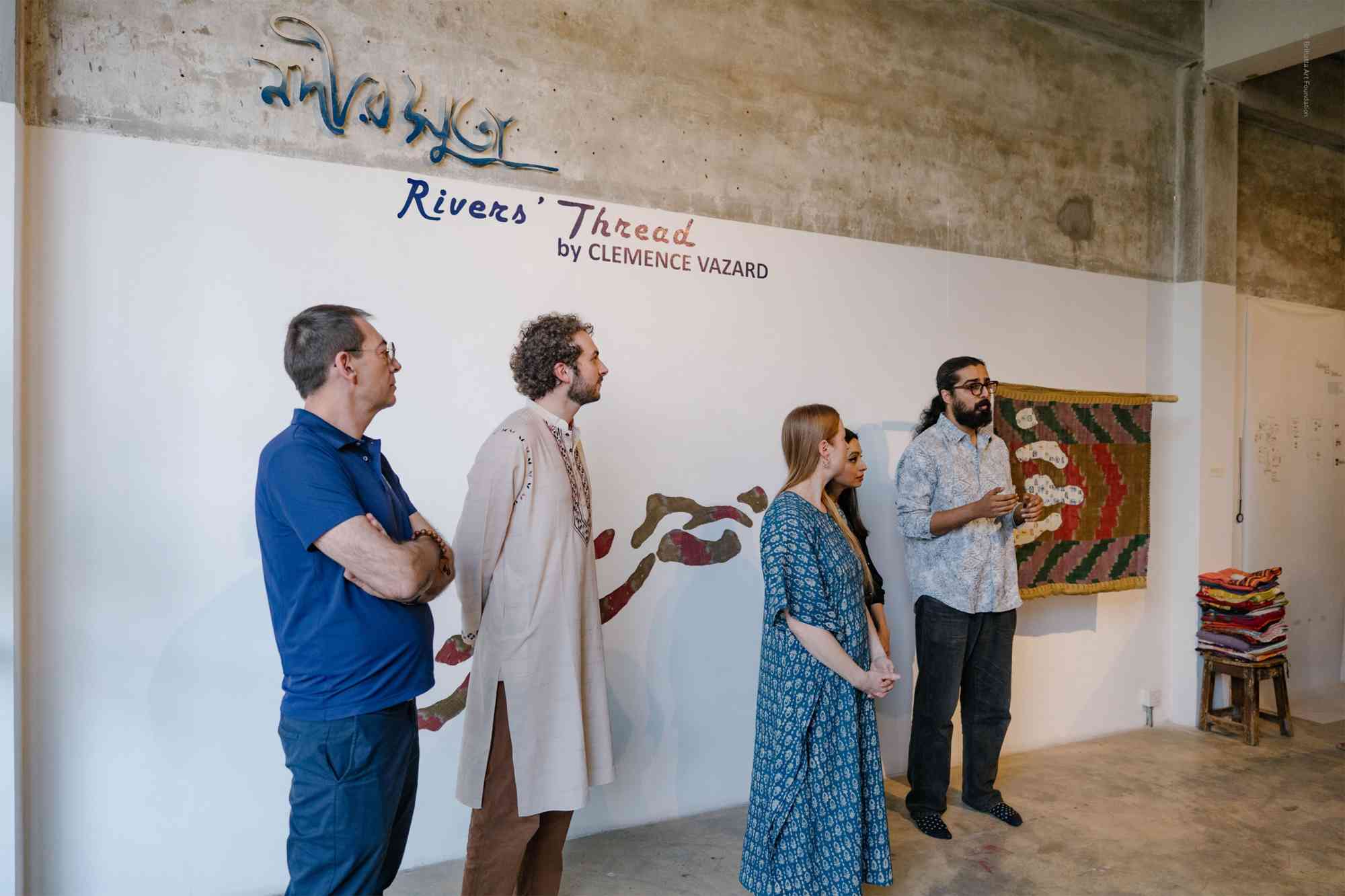
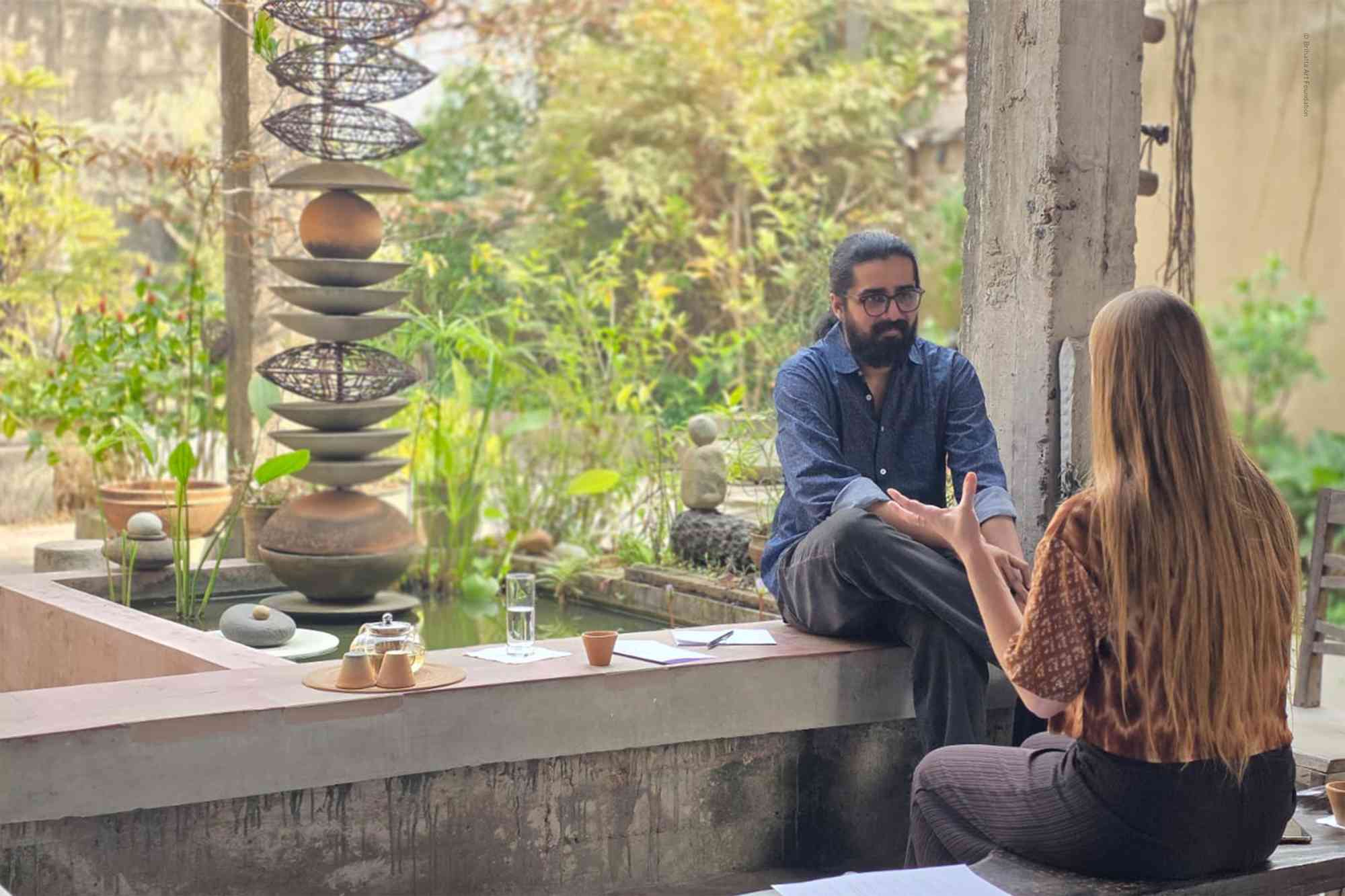
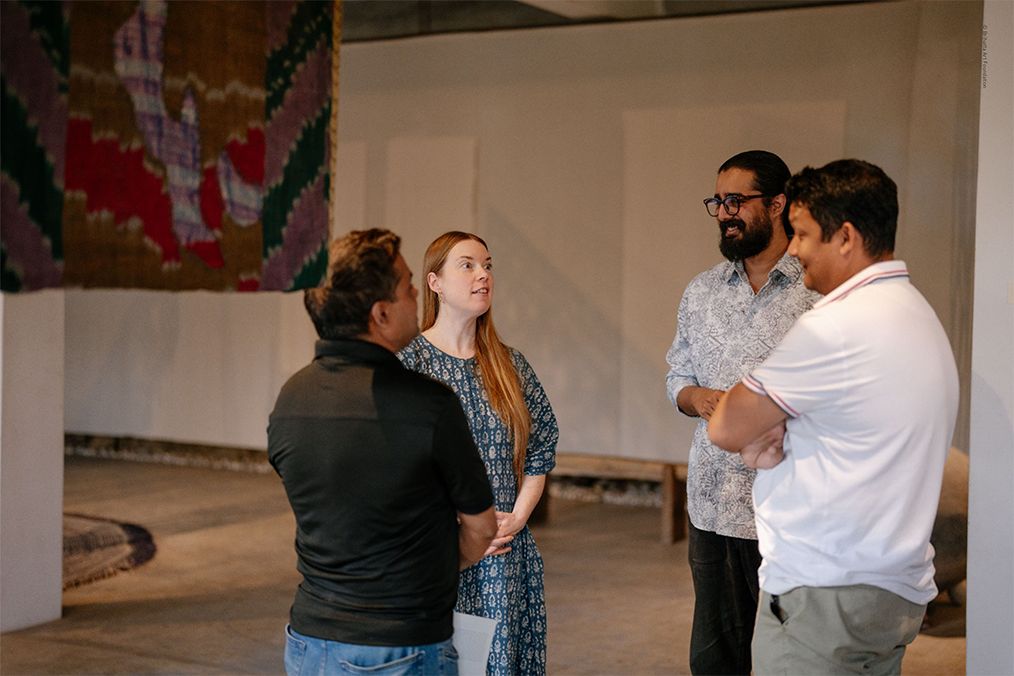
Note from H.E. Jean-Marc Séré-Charlet
It is a great
source of pride to welcome the Villa Swagatam residency programme to Bangladesh
for the second consecutive year, in partnership with the Institut français. By
enabling French artists to travel around the world and broaden their horizons,
these residencies strengthen cultural exchanges and creative imaginations
across borders.
This year.
Clémence Vazard's work highlighted a unique combination of artistic concepts,
the marriage of textiles and rivers; a perfect embodiment of the most beautiful
and captivating aspects of Bangladesh. I would like to acknowledge the
scientific rigour of Clémence's research, which, combined with her artistic
talent, has enabled her to weave together a history of Bengali craftsmanship,
from traditional dyeing to Nakshi Kantha embroidery, naturally highlighting the
major role that women play in its production. Her work highlights an artistic
heritage that is perpetually connected to the country's natural ecosystems,
inviting us to rethink our relationship with tradition and nature itself.
I would like to
express my warmest thanks to the teams of Brihatta Foundation and Alliance
Française de Dhaka, both for welcoming Clémence and for the efforts they made
to ensure the artistic and human success of this residency. I hope that this
artistic collaboration will lead to many more in the future!
H.E. Jean-Marc
Séré-Charlet
Ambassadeur de France au Bangladesh
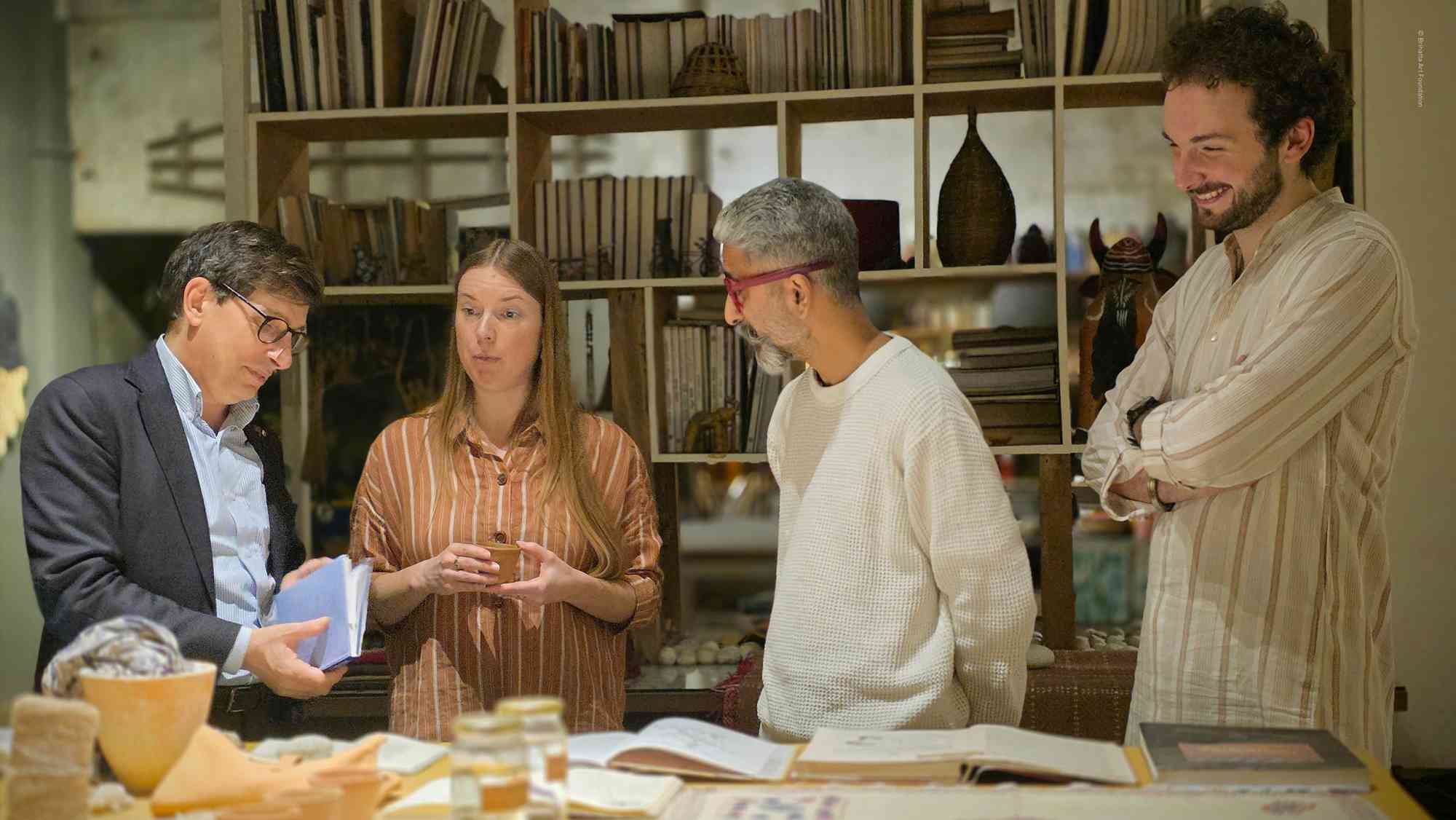
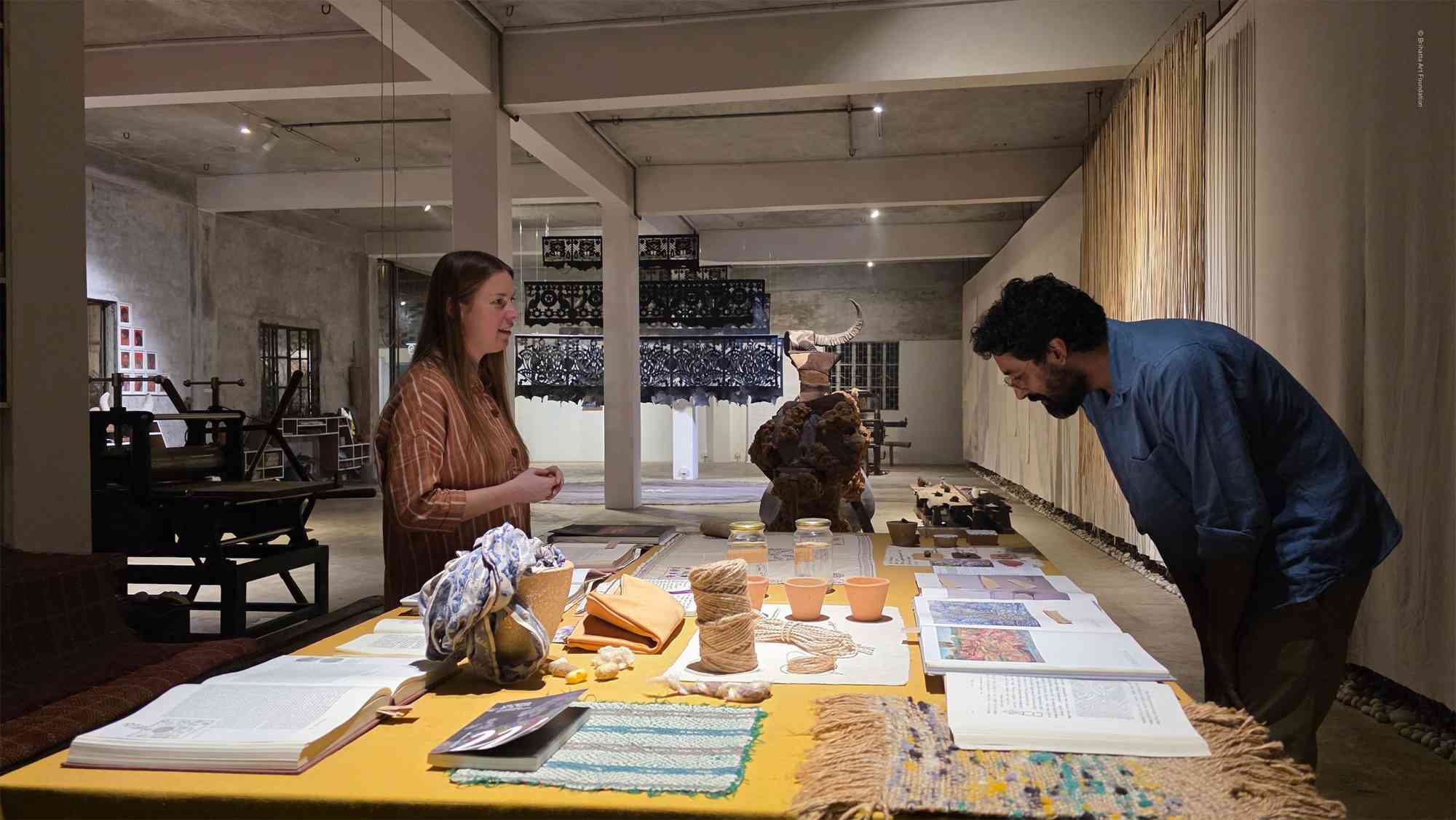
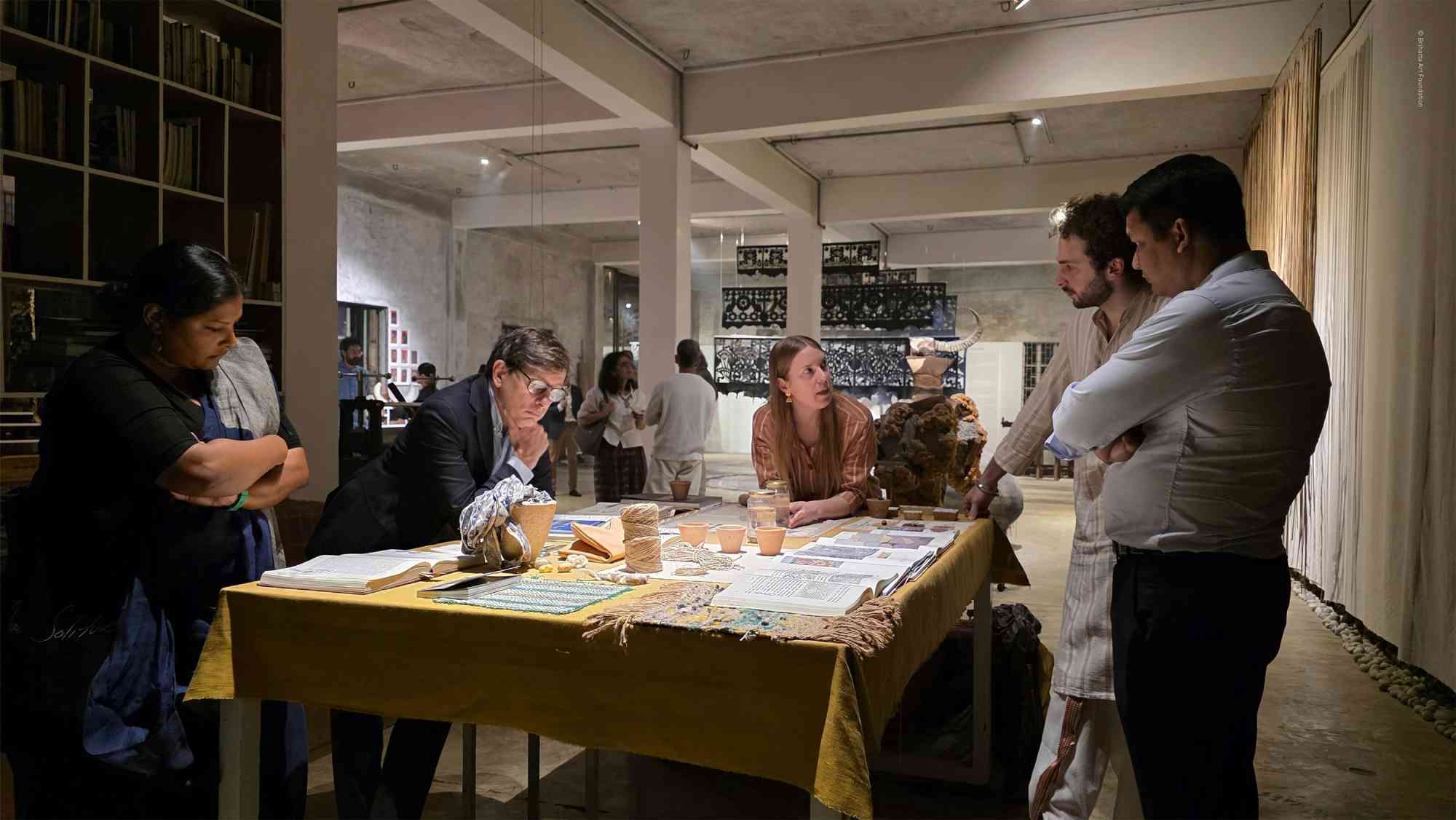
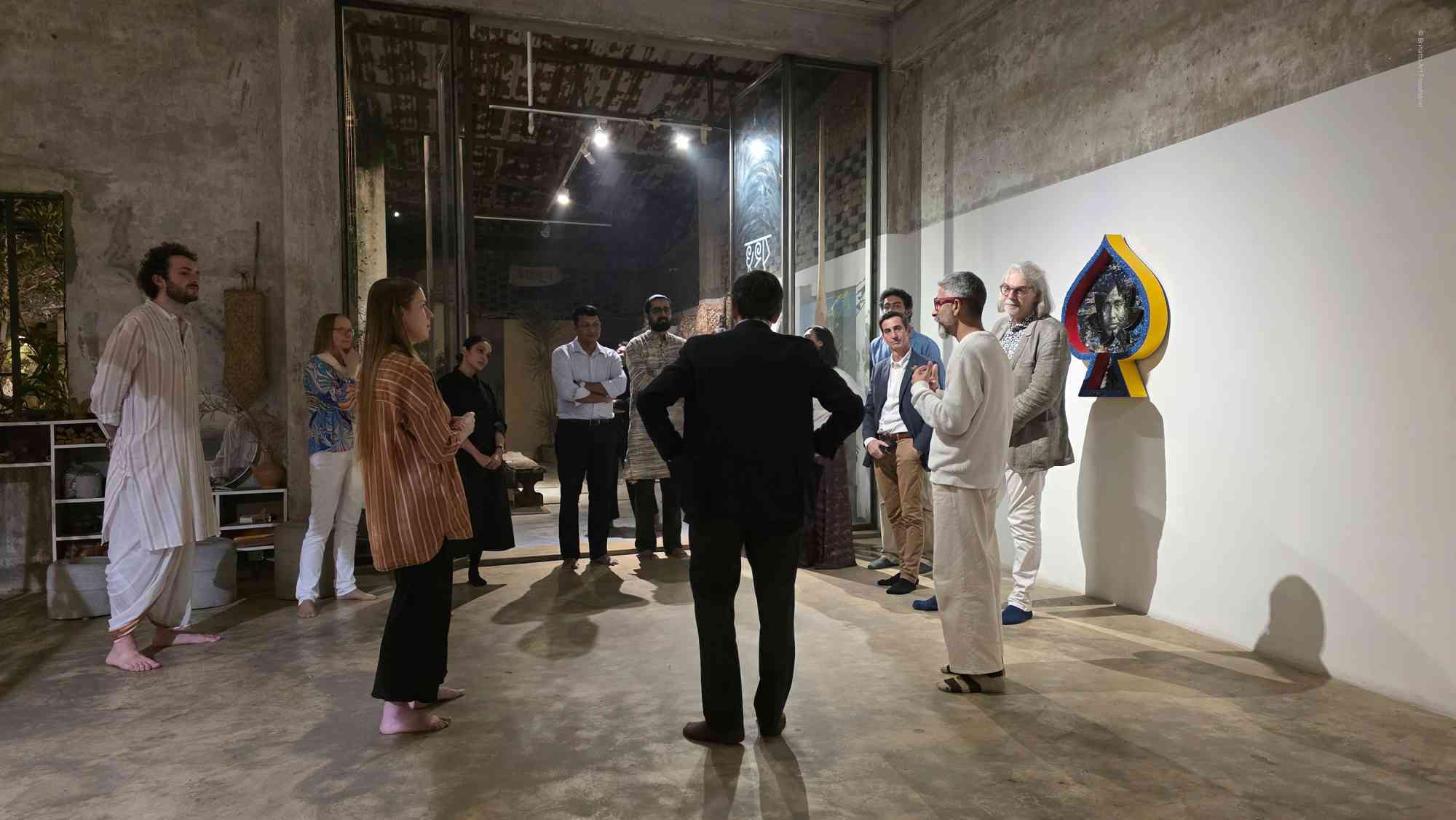
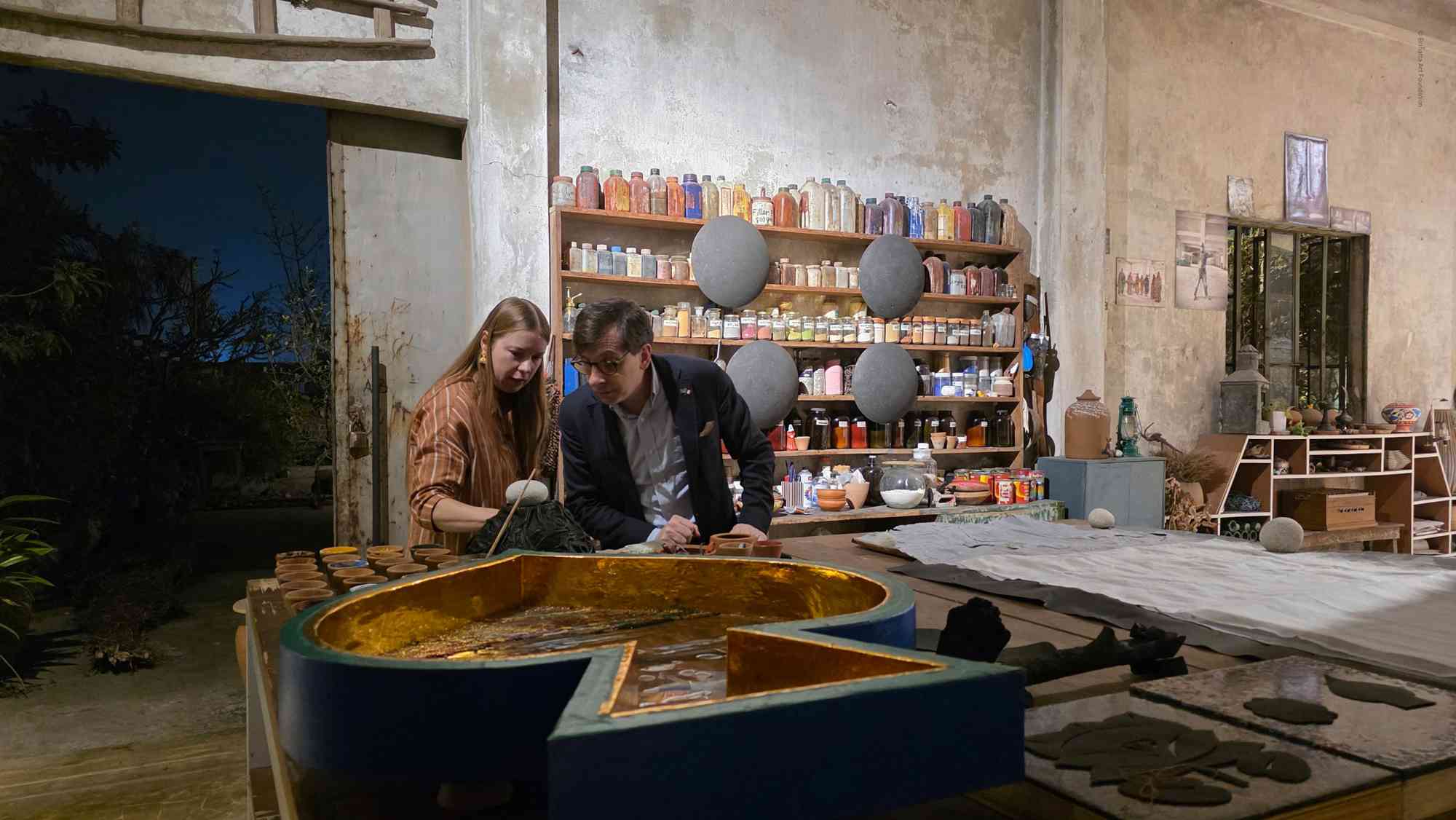
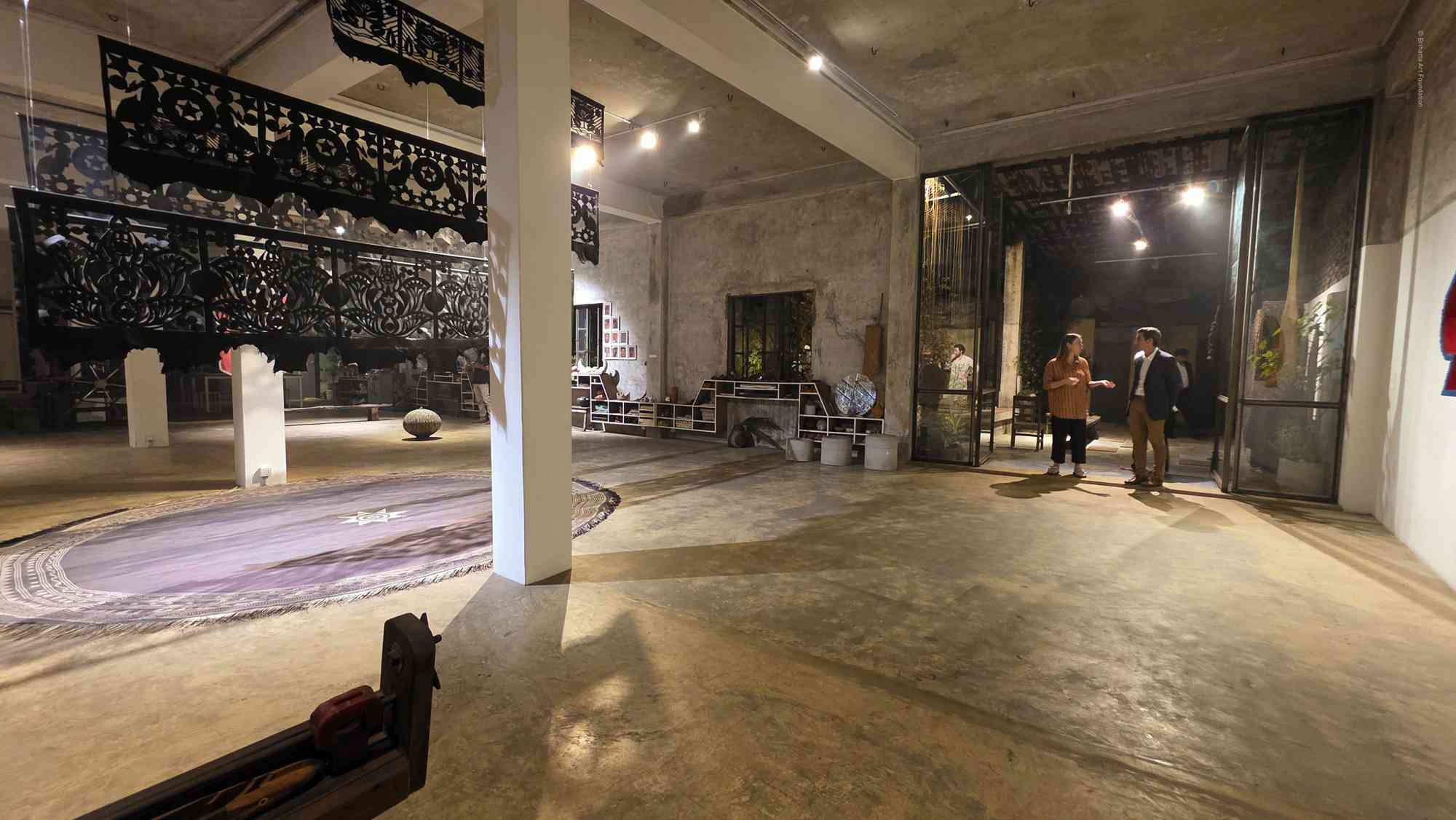
Note from François Chambraud
Alliance
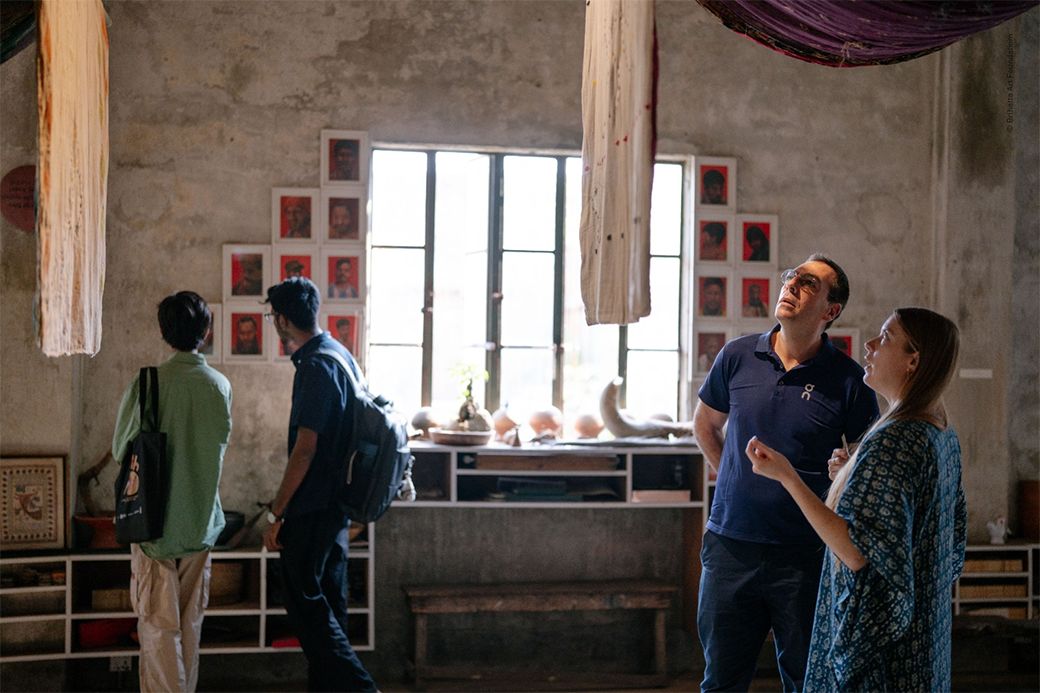
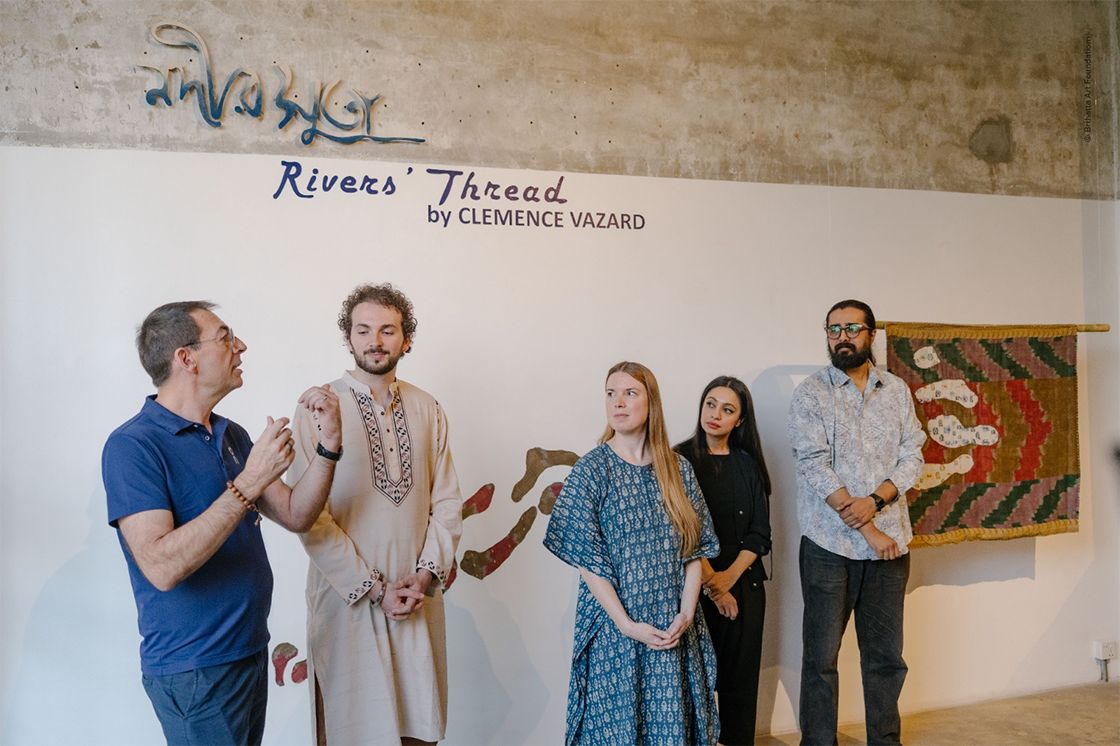
Française de Dhaka is delight to see the outcome of the project developed by
Clémence during her six-week residency at Brihatta Art Foundation. Rooted in
her ongoing exploration of water, territory, and craft, this residency marks a
significant moment in the evolution of her practice in environmental
storytelling through textiles.
During her stay,
Clémence engaged deeply with regional textile knowledge, including research
visits to Rajshahi, where she explored local materials, dye traditions, and
artisanal practices. These encounters enriched her work both materially and
conceptually, allowing the territory itself to actively shape the artistic
process.
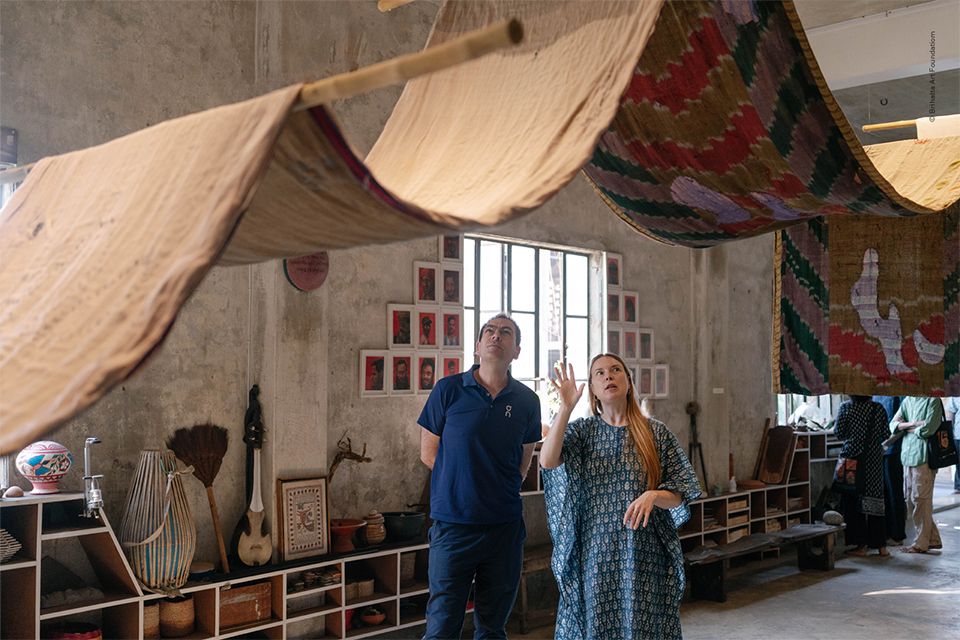
The residency
brings together natural dyes derived from plants and water sources with
hand-embroidered interventions that map ecological relationships and living
systems. The resulting textiles function simultaneously as artistic expressions
and environmental documents, highlighting the interdependence between craft traditions
and natural ecosystems.
This residency
reflects Alliance Française de Dhaka's continued commitment to fostering
meaningful cross-cultural exchange. I would also like to express my sincere
gratitude to Brihatta Art Foundation, the Embassy of France in Dhaka, and Villa
Swagatam for their invaluable support in making this residency possible. I am
confident that this collaboration and shared. Commitment will continue in the
future.
François Chambraud
Director
Alliance Française de Dhaka
Second Edition (2024-2025)
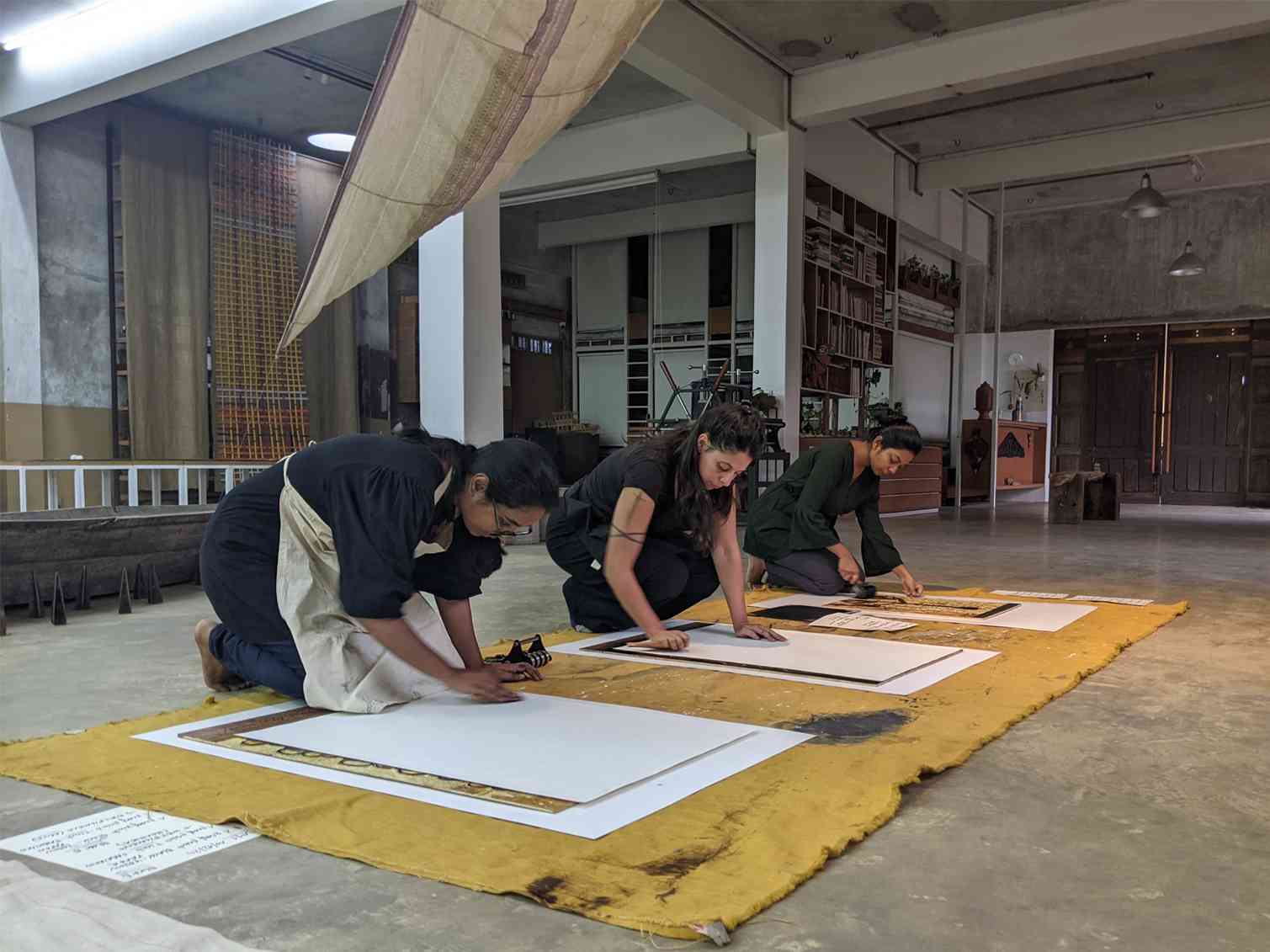
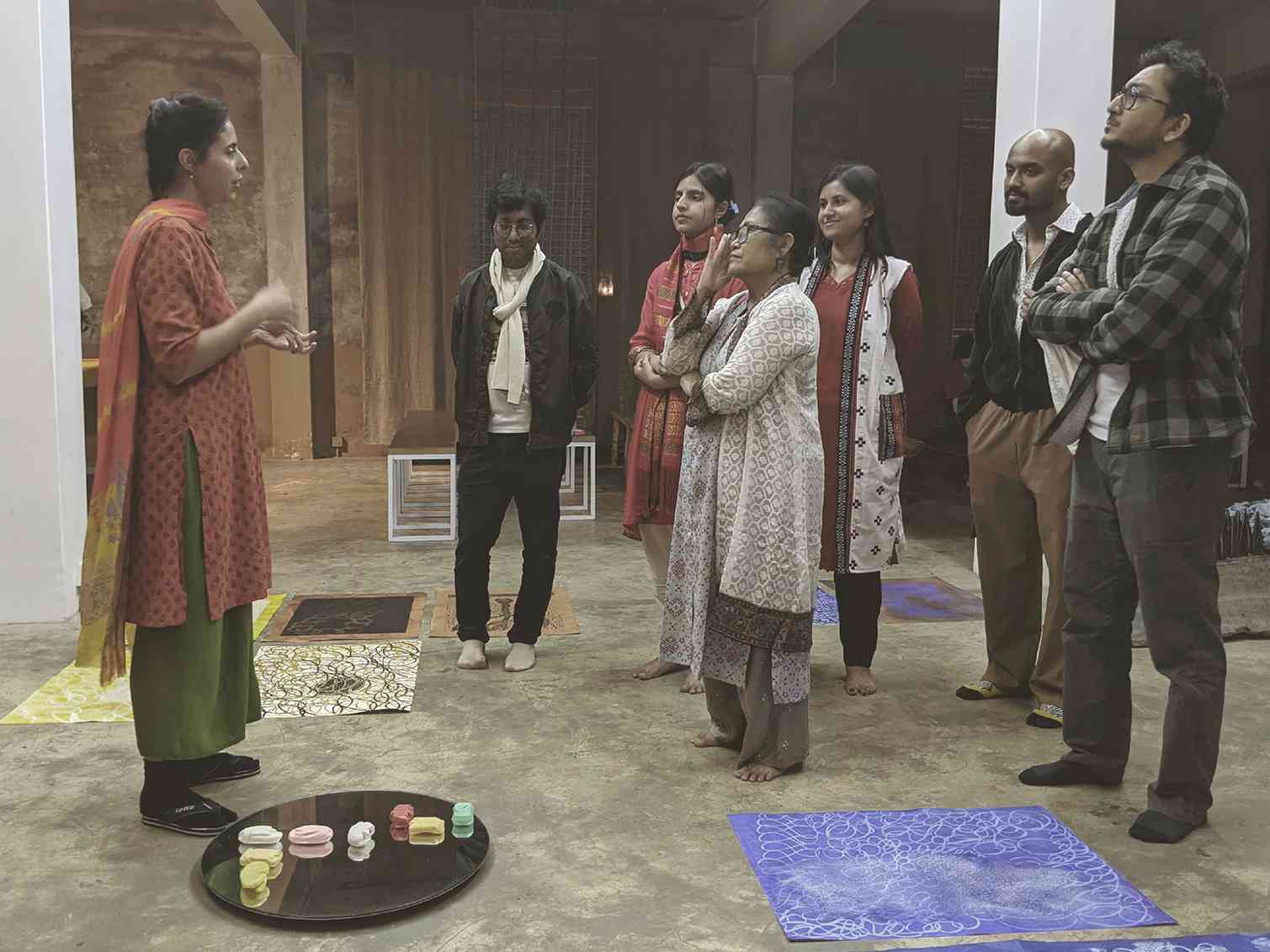
Brihatta Art Foundation hosted French artist Julia Lebrao Sendra
for a three-month residency in Bangladesh in 2024, where she engaged deeply
with local artistic landscapes. The residency culminated in a seven-day
exhibition at Alliance Française de Dhaka, presenting her artistic journey and
the evolving cultural dialogue between South Asia and Europe.
"The Buriganga river in Dhaka will be the focus of my
artistic exploration, inspiring reflections on water—a key theme in my work. At
Brihatta Art Foundation, I plan to investigate the river and its pollution
through a multidisciplinary approach, addressing the environmental impact of
human activity. My goal is to create art that promotes healing and acknowledges
the damage done to nature."
Julia Lebrao Sendra, a Franco-Brazilian printmaker with a master’s degree in printmaking, has exhibited in Brussels, Leipzig, London, Geneva, and Cluj Napoca. Her work defends imagination as a means to engage with and act upon the world. By transforming drawing into engraving and textile art, Julia Lebrao Sendra creates pieces that challenge viewers to engage deeply, with vibrant colours and evolving shapes that interact with personal mythologies and daily realities. Her art encourages a dialogue between the viewer’s perspective and the work itself.


Residency note- Julia Lebrao Sendra
This residency
and the exhibition it culminates to were made possible thanks to an amazing
partnership between Villa Swagatam, the French Institute, the Alliance
Française in Dhaka, and the Brihatta Art Foundation.
I am incredibly
grateful for the unforgettable three months filled with discovery, connection,
and creativity. My time here has transformed not just my art but also me,
grounding my passion for creation and sharing. A huge thank you to François and
Mamun for their unwavering support and warmth throughout this journey.
Brihatta Art
Foundation provided a vibrant space for my work to flourish, and brought
together precious individuals who gave my life in Dhaka a sense of daily life,
showed me their city, their culture, their country, and offered me their
friendship—thank you, Shahadat, Vabi, Bibha, Shada, Achol, Anas, Tirtha, Niloy,
Arko, Mukter & Arup. Thank you to Bishwajit, Nusrat, and Parvez for the
trust and freedom you granted me regarding my production.
Thanks to the
printmaking department of the University of Dhaka, which, from the very
beginning of my arrival, included me in a family that shares the same passion;
that of printmaking. To the students who participated in my adventure and
exploration in this new unknown by showing me what is part of their identity.
A special thank
you to Asmita and Bashir, a relationship that started with a shared passion and
exchange and, after many laughs, transformed into a beautiful friendship. This
exhibition wouldn't have happened without the incredible support from Naeem,
Tajariba, and Fahim, three true gems of the printmaking department, who stood
by me in my creative and ambitious journey.
Thank you to
everyone who made me feel at home, turning the word 'friendship' into something
truly special. You made leaving this residency, this city, and this country a
real challenge. Thank you Alvee, Nova, Tasnim, and Rumky—for being uniquely
you.
Finally, I
dedicate this exhibition to all those who have the courage to love a world in
decline.
Julia Lebrao Sendra
Artist, Printmaker
"Change"- In Question and Conversation by Humaira Hossain
As winter settled
over Dhaka on a mid-November day, my heart yearned to meet some good old
friends. Dhaka is a gargantuan metropolis by any measure—congested,
smog-filled, yet bustling with life. People are always busy in pursuit of
something elusive. But if you're lucky, as I was, you can start your day slowly
and catch a brief moment of calm.
Although my visit
to Bangladesh was primarily to begin collecting data for my doctoral research,
I couldn't pass up the opportunity to visit Brihatta. It is a unique space very
close to my heart that emerged from a conservation project, offering a rare glimpse
of green in the heart of a city that often makes us feel disconnected from
nature. This space is a testament to what can be achieved through artistic
intervention when a dedicated team comes together to breathe life back into a
postindustrial structure—an extraordinary undertaking in an urban context.
Stepping into
Brihatta is always a warm experience, but that day felt even more welcoming
when we were served a hearty lunch made with Brihatta's own organic produce.
In the midst of
good food and adda with familiar faces, I met Julia—the new resident artist at
Brihatta. I noticed Julia immersed in her work, wearing a vibrant red kurta as
she calmly sketched what she called "doodles" on a wooden panel. She
fit in effortlessly, as though she were a natural inhabitant of the space. When
we spoke, I gained insight into her ideas and how she channels them into her
artistic practices. Julia, originally from France, was selected out of
fifty-one applicants for a three-month residency at Brihatta.
Her core idea
stems from the philosophical connection between change and touch, inspired by
Octavia E. Butler's quote: "What you touch, you change. What you change,
changes you." This concept influenced her artistic process during the
residency, where she explores how. touch-both physical and
metaphorical-transforms not only the artist and their creations, but also the
environment and the audience. The quote originates from a post-apocalyptic
narrative about a young girl who, despite growing up in chaos, envisions a way
to rebuild human connections and harmony. Julia finds a parallel between this
story and her own creative journey, emphasizing the interconnectedness of
actions and their effects on personal growth and surroundings.
Her work speaks
of mutual transformation-how human actions shape the environment, and in turn,
how the environment reshapes individuals. This reflective and layered approach
underpins her creative vision, tying together themes of connection,
responsibility, and the profound ripple effects of seemingly simple gestures.
She takes this
complex philosophical idea into her art and inscribes the quote in Bangla on a
lungi (a traditional garment), emphasizing the cultural and personal
significance of the concept of sparsho (touch). She values the interpretive
freedom the quote offers, likening it to the opening of a book that allows
viewers to experience the art without preconceived notions.
[I] could sense
the organic inspiration in her soap carvings-particularly a waterlily,
meticulously shaped yet still retaining a raw quality that connected with her
other pieces. The tactile nature of her work drew you in-every touch felt like
an intimate, sensory experience. During her residency, she translated her
observations into visual and literary forms. Her poems, like her artwork,
expressed a constantly evolving relationship between nature and humanity. One
line about the nearby river, our Buriganga, especially moved me: "In all
of her pain, she screams, yet we do not hear her cry."
In turn,
contemplating her ideas of interconnected changes brings me back to Brihatta's
own story. Once an abandoned rooftop in a tannery district, Brihatta
transformed the space into a vibrant hub for art and environmental stewardship.
Brihatta's projects embody the multifaceted nature of change, both
environmental and psychological. Brihatta's Mukti exhibition examined themes of
freedom and transformation. The Home Art Project reflected on the difficult but
essential changes brought on by the COVID-19 pandemic. Currently, Gongaburi
explores the shifting landscape surrounding the Buriganga River and its impact
on the local community.
It was
predestined that Julia would join Brihatta's continuous experimentation with
the concept of change, both as an idea and as a lived experience. The space,
its ethos, and the community had already begun to shape her artistic journey.
In turn, her work would leave its mark on Brihatta. This is how change
unfolds-quietly yet powerfully, shifting, reworking, and renaming itself in
infinite ways.
Humaira Hossain
PhD researcher and
instructor
University of Illinois Chicago, USA