
বৃহত্ত্ব / Immensity
November, 2016– February 2017
বৃহত্ত্ব
/
Immensity, an
independent, non-profit initiative, fosters interdisciplinary exchange among emerging
artists. In 2017, it brought together students from printmaking, painting,
sculpture, and poetry for an immersive residency in the remote landscapes of Lama,
Bandarban. Participants reflected deeply, honing their artistic voices and
expanding their skills in dialogue with personal creative inquiries. The
residency concluded with a month-long open studio and exhibition at Dhaka’s
Abinta Gallery of Fine Arts, offering a platform for public engagement with the
artists’ evolving practices.


Programme Notes
Immensity is an independent and nonprofit art project intended for students in various disciplines of the arts. At its core, Immensity proposes to its participants to examine alternative understandings of their artistic practice. It relies on the belief that students must get the opportunity to reflect on their own individual expression and to develop skills that are in tune with their own understanding of what they wish to express.
The selection of participants to this project was a defining factor. This selection was not only made on the specific skills or academic merit of participants but also on their capacity to be creative and think "out of the box" and across disciplines.
On view in this exhibition is the first interaction of Immensity, which started as an art residency project in December 2017. The residency was deliberately held in a remote rural area in Bandarbans, the Fasiakhali Range of Lama. There, in the middle of green valleys and hills, far from the city they inhabit all year long, participants were invited to connect with the essence of nature and develop new or different aesthetic concepts.
After this residency, participants could further their ideas during a one-month open studio program in the premises of Abinta Gallery of Fine Arts in January, 2018. The open studio was a time dedicated to practice, during which participants transformed their ideas into specific individual works in different disciplines. Finally, preparation for the exhibition also constituted a central phase of the project. The discussion with the curator to develop a visually compelling body of work, the collective development of material for the exhibition publication, and the various post-production activities were an important first for many participants. They plan to take this further during the entire length of the show, during which they will arrange several tours for art school students and talks for the greater community.
Bishwajit Goswami
Curator and Co-founder, Brihatta Art Foundation
বৃহত্ত্ব
/ Immensity
is a journey.
The scope of this experimental student art project is not merely to produce, but document human behavior, in an open space where established conventions are put on pause, so that our curiosities are able to manifest itself against the banal complexities of real life. It is a process of discovery.
Our likes. Our dislikes.
Our dreams. Our fears.
Our heaven. Our hell.
Nusrat Mahmud
Co-founder, Brihatta Art foundation
The
Student Art Project "বৃহত্ত্ব/Immensity" was created
as a sequel to the resident art camp at Lama, Bandarban.
Bishwajit
Goswami, visual artist and faculty member of Fine Arts at Dhaka University
conceptualized and curated the entire student art project to encourage the
rising talents in Bangladesh to create artworks of greater dimension. The
variation of individual artwork was recognized and students from different
disciplines were able to develop their skills to a higher level.
While
they were on the month-long open studio art practice session at the premises of
Abinta Gallery of Fine Arts, the participating students were seen to give their
best efforts not only to their individual artworks but also displayed a strong
sense of harmony and collaborative bondage with each other. Talent and
perseverance of each artist came into clear relief during the workshop.
Abinta
Gallery of Fine Arts has been promoting artworks of Bangladeshi artists,
particularly the young rising talents. Our commitment for giving support to
these artists had inspired us to collaborate with Bishwajit Goswami for holding
the art workshop.
On
behalf of Abinta Gallery of Fine Arts, I would like to thank all the students
who took part in the art project. I would also like to express my appreciation
for Bishwajit Goswami for the great idea of the art project as well as for the
time and effort he has given for the project. My sincere appreciation also goes
to Ms. Nusrat Mahmud of Mahin Group for her contribution to organize the art
project.
I wish all success for "বৃহত্ত্ব / Immensity"
Nilu
Rowshon Murshed
Chairperson
Abinta Gallery of Fine Arts
The education
system of our Fine Arts Faculty has a deep-rooted traditional background. We
deliberately tend to keep the old methods alive.
“Education system of Fine Arts is going
through a radical change across the globe. In comparison, we are quite far from
the shift.”
Some of the
youngest of our teachers went abroad for studies and are now researching different
educational content. Equipped with keen eyes and bold techniques, they are
creating a strong impact in the contemporary art scenario. One such
distinguished artist is Bishwajit Goswami, the curator of this art project, who
also happens to be a lecturer at the Faculty of Fine Arts.
From what I've
seen, this project added a valuable new dimension to our fine arts academia
here in Bangladesh.
We, like other
art facilities, have several departments. We provide eight majors in our
faculty. But such collaboration in a project among students of various
departments is missing nowadays. In the past, we used to have a combined
foundation programme, which was done by the 1st and 2nd year students.
I noticed a
number of interesting things. Participants from outside the Fine Arts Faculty are
also here, including ones from photography or engineering backgrounds. Creating
diversity with this multi-disciplinary character in an open-minded space like
this has been the purpose of this project.
Secondly, when an
art camp is held, participants usually visit these arrangements as tourists.
They go there, (and perhaps) paint some landscapes, make some sculptures or
installations, and that's it. But accomplishment goes further in this art
project. We notice the tendency to engage in deeper thought in contemporary art
practices. Picking up on the realisations and understanding after visiting a
place, enriching these views with different takes along with the environment
and the nature, connecting the feelings with the interacting people, exploring
all the different layers. The new experiences they will get here will relate to
the perception of nature, the place, and understanding each other. They return
after staying a few days and get to work immediately; that's not how it works.
A more contemplated understanding, planning is needed. One must understand the
whole perspective. The art project ran for a month in this manner. Abinta Kabir
Foundation provided them with this opportunity.
Our faculty could
have been considered for the site, but doing this at the gallery was indeed a
blessing in disguise. If they were to work at the campus premises, their
structured activities would get in the way. Their habitual routine would've
worked against them there.
Rather than
hanging out with friends and sharing things with them, they solely focused on
the studio work and shared things among themselves. They discussed everything
at the gallery without external influence.
I suppose the
traffic jam of Dhaka worked in their favour. Returning from a place is also
very tough, not easy at all. But when they went there, they made total use of
their time. I was very impressed.
The process of
their work is very innovative, creating the layout, gradually moving forward
through the process. Bishwajit worked with them as well. It must have been a
great opportunity to watch his work more closely, along with the other processes
of the students from other disciplines, especially for a graduate pupil
watching the work of a master's student.
Our previous
education system used to take 4-5 years for a first-year student to reach a mature
level. But at present, talent is so important, the significance of innovative
ideas or concepts is often the case that a second-year grad student can express
himself better than a senior, to think and observe more maturely.
This is why “I liked the
selection process very much. When I saw everyone's work, they were so mature. They
did it very successfully. I think Bishwajit could share this project's
experience with the young teachers as well, which can make a big change in the
academic system.”
We have students
who are lost, who don't know what to do. The support they are supposed to get,
they don't find it here. We do not have this subject in our course curriculum.
The students here have the quality. But they do not know how to arrange all
this. They have no idea what they will do after their graduation. They don't
know how to build themselves, how to organise an exhibition, or how to express
themselves properly. They have the quality, but they do not even know that they
are capable of doing these. They cannot identify themselves. They don't go through
the proper practice here.
So I am really
amazed by this art project. I think the people who fostered this project should
inspire more people to do the same. They should also realize that this is the
right way. I think this is a way that the Bangladeshi art scenario can improve
in the coming days.
Nisar Hossain
Dean, Faculty of Fine Arts
University of Dhaka
Talk about the "Immensity" project with Bishwajit Goswami, its initiator and curator, and a mischievous smile is likely to light up his face. "The project is a bit different from what we usually do at the Faculty", says the Professor. "It encourages artists to dig into themselves to find their own voice. They have to be active in this process, and cannot just rely on following a curriculum".
The claim to put young artists at the center of their creative process may seem trite, but the project initiates a welcome opening in the local academic system, often based on authority and repetition. It allows participating students to elaborate on what they are normally told to do, and to experiment with or indeed deconstruct their learned baggage. In that sense, "Immensity" does not counter academia, but rather complements it.
Another important feature of the project is its multidisciplinarity. Students training as print-makers and painters, aspiring sculptors and poets gathered together during a residency in a remote area of the Bandarbans. Participants spent their days practicing there, while they could elaborate on their endeavour during group discussions in the evening. Goswami screened documentaries about internationally acclaimed artists to further expose them to different approaches and thinking. Participating artists, therefore, agreed to be exposed to the scrutiny of their pairs in this discursive approach; it compelled them into structuring their own thinking and finding strength in the collective examination of their works. The method encourages students to think by themselves and voice their own opinions, things they rarely do elsewhere.
A close observer of the Bangladeshi art scene, I am always struck by the strength of its collective spirit. Perhaps more than elsewhere, artists here have a tendency to organise themselves in all sorts of groups, collectives, and movements. Together, they innovate, try out different approaches from what they were taught, and overcome the many challenges they face in their practice. In encouraging artists to reach out to their inner creativity, in forcing them to expose themselves to the group, Goswami has found a resonance with that spirit in "Immensity".
Hadrien Diez
Freelance Cultural Journalist
Grantees
Auntora Mehrukh Azad
The
modern relationship between nature and humanity is the central focus of Auntora
Mehrukh Azad’s work. She emphasizes how wilderness landscapes have been shaped
by human influence over time. Through an artificial color palette and a
‘citified’ representation of natural elements, she illustrates how urban
structures control and limit our lives, much like traffic signs.
Auntora’s installation is a large-scale panoramic landscape composed of two parts. One is a painting based on a reference photograph of a land art intervention created during her stay in Lama. The other is an archival photographic print of the same reference image, horizontally rotated. The photograph represents nature itself, while the painting functions as its reflection—citified, more vivid, yet sketch-like. Areas intentionally left blank in the photograph are meant to evoke the wounds and scars inflicted upon nature through human alteration, suggesting damage beyond healing.


Azizee Fawmi Khan
For this project, she examines the
relationship between womanhood and nature. She explores the inner expressions
of the women around her and seeks to transform their deepest feelings through
bold gestures and the prominent use of black. She blends elements of
traditional rickshaw painting into this expressionist language, using motifs
and forms inspired by nature. In doing so, she contrasts the beauty of familiar
natural elements with the resilience of strong women trapped in daily lives
they did not choose.


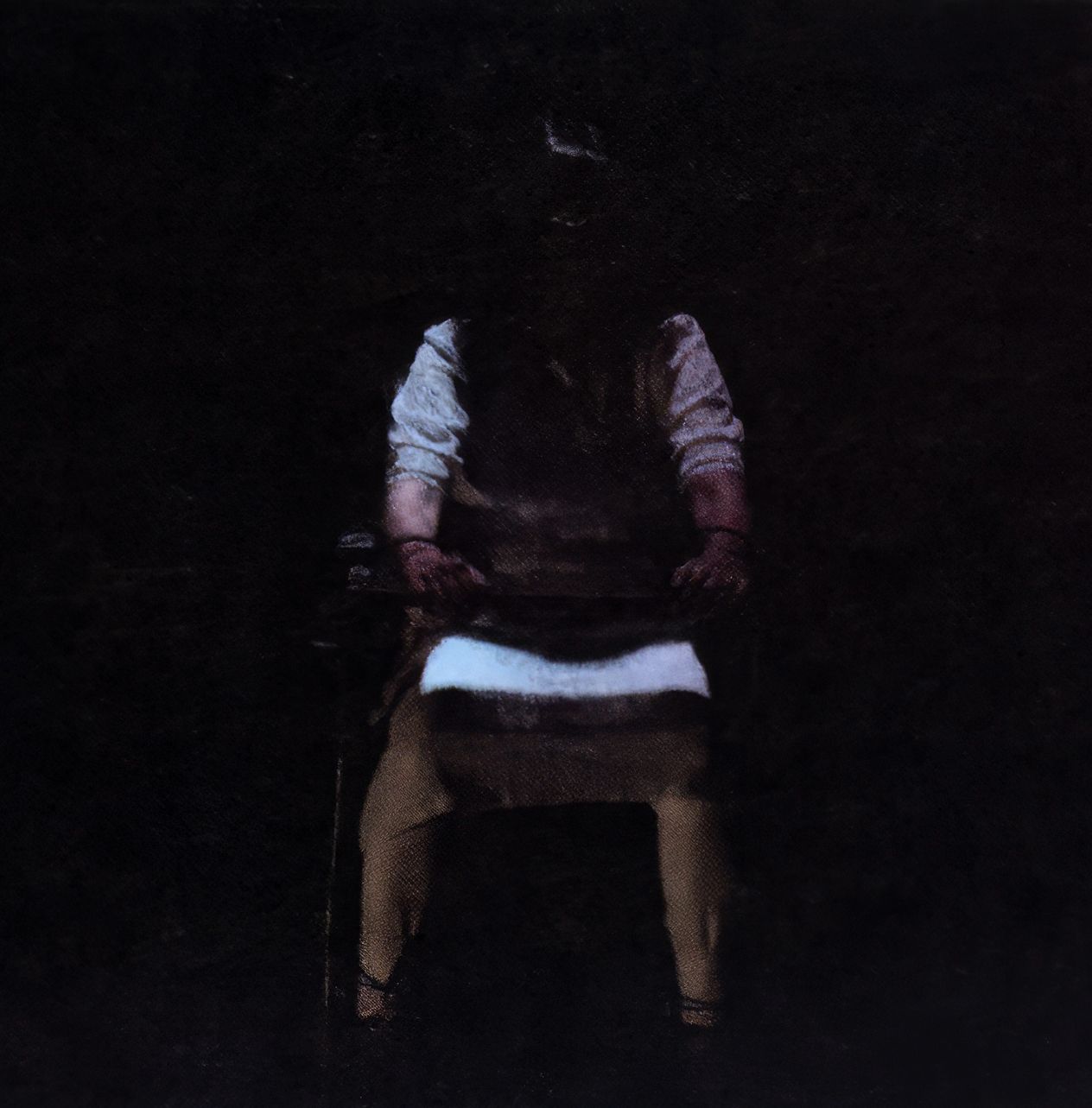
Chhobi Zulfiqure
Some nightmares bring people back to reality,
while others force them beyond their realistic mindset. Chhobi engages with
this idea in her performative installation, which explores themes of entrapment
and the passage of time. When a person loses the joy of living within a closed
house, all of her freedom becomes restrained. She sits on a chair, enclosed by
four walls, locked in place for hours.


Imam Mahdi
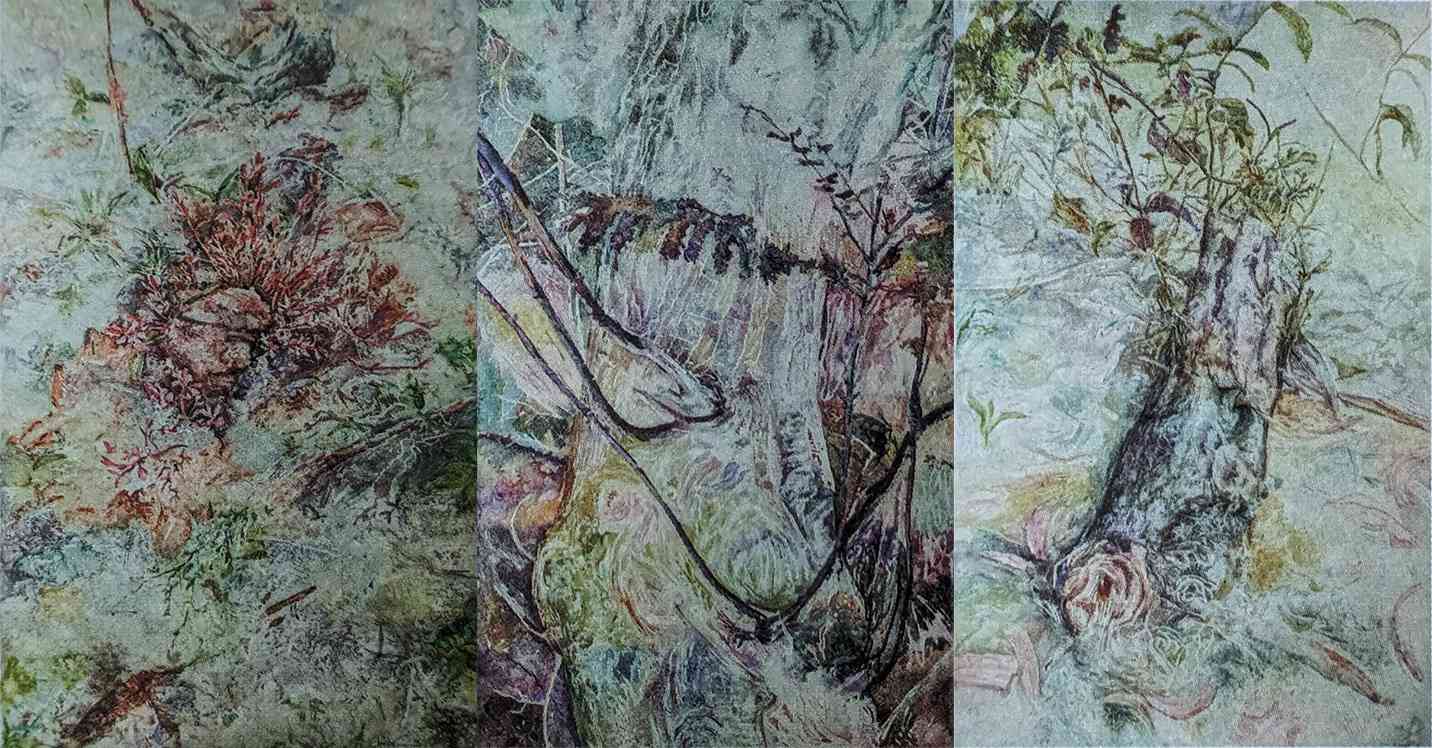
Imam relates more strongly to pencil drawing
than to other media. For this project, he took inspiration from nature by
collecting photographic references of natural elements—trees, trunks, leaves,
and more. He then identified the most striking parts of each photograph, which
he decomposed and magnified, gradually losing the representational connection
to the original subject. Branches morph into forms that could suggest galaxies,
the meeting of two souls, a mystery, or indeed anything else. He refers to this
technique as ‘Goosebumps’, as it imbues the subject matter with a sense
of vibration, current, and energy.


Jayanta Sarkar John
Jayanta Sarkar John’s art centers on
people—their dreams and fears—and the unevenness, as well as the symmetry, of
life and society. In this project, he reinvents nature in a romantic and deeply
personal way. By experimenting with various watercolor techniques and a diverse
color palette, he gradually arrives at his final works, seeking to recreate the
fresh, first impressions that newly discovered nature made upon him.


Kutubul Islam
Kutubul thinks of art as a language for
communicating with people. This approach led him to examine his own feelings
and taught him to empathize with those around him. While exploring nature for
this project, he closely observed the impact of urbanization on the
environment. The wild is no longer a home for wild animals; instead, it has had
to make room for humans, and non-human populations have begun to gradually
disappear. Through his artworks, Kutubul hopes to reveal the true picture of
what we call nature today.


Mohammad Ariful Islam Apu & Mohammad Atiqur Rahman
A photographer interested in poetry meets a
poet who works with images, and their journey begins. Photographer Kamol and
poet Apu’s collaboration produces works in which images speak through poetry,
creating their Rhythm of Reflection, or “Aaina Kabbya”.
The photographs captured by Kamol are
presented alongside two-line poems written by Apu, who responds to the images
with his words. Their works typically focus on everyday life, the nature around
us, and the challenges and solidarity they find within it.


Prosun Halder
Prosun’s work is generally concerned with the
lives of women. In this project, he examines Mother Nature as depicted through
the various stages of a woman’s life—love, beauty, agony, spirit, and care. To
this end, he selected famous Western masterpieces and combined them with
illustrated Bangladeshi female figures. This juxtaposition emphasizes the
universal nature of a woman’s journey across cultures and geographies.

Sakib Salim
As we enter modern times, elements belonging
to past epochs are slowly fading away. Despite living in the modern era, Sakib
Salim has developed a strong interest in history, ancient civilizations, and
the extinct animal kingdom. By studying ancient artifacts such as coins, gems,
stones, and the remains or representations of extinct animals, historians can
date and interpret much about the eras to which these objects belong. Sakib has
chosen to focus on extinct animals, ancient civilizations and cultures, and
artifacts from the past. Through his art, he explores these early ages,
bringing their stories to the fore.


