
পুনরায় / Punaray: A Return to Process
June 2025- January 2026
At Brihatta, we believe creativity exists in the unseen—moving
through time, language, and tradition. It does not seek repetition, but
renewal.
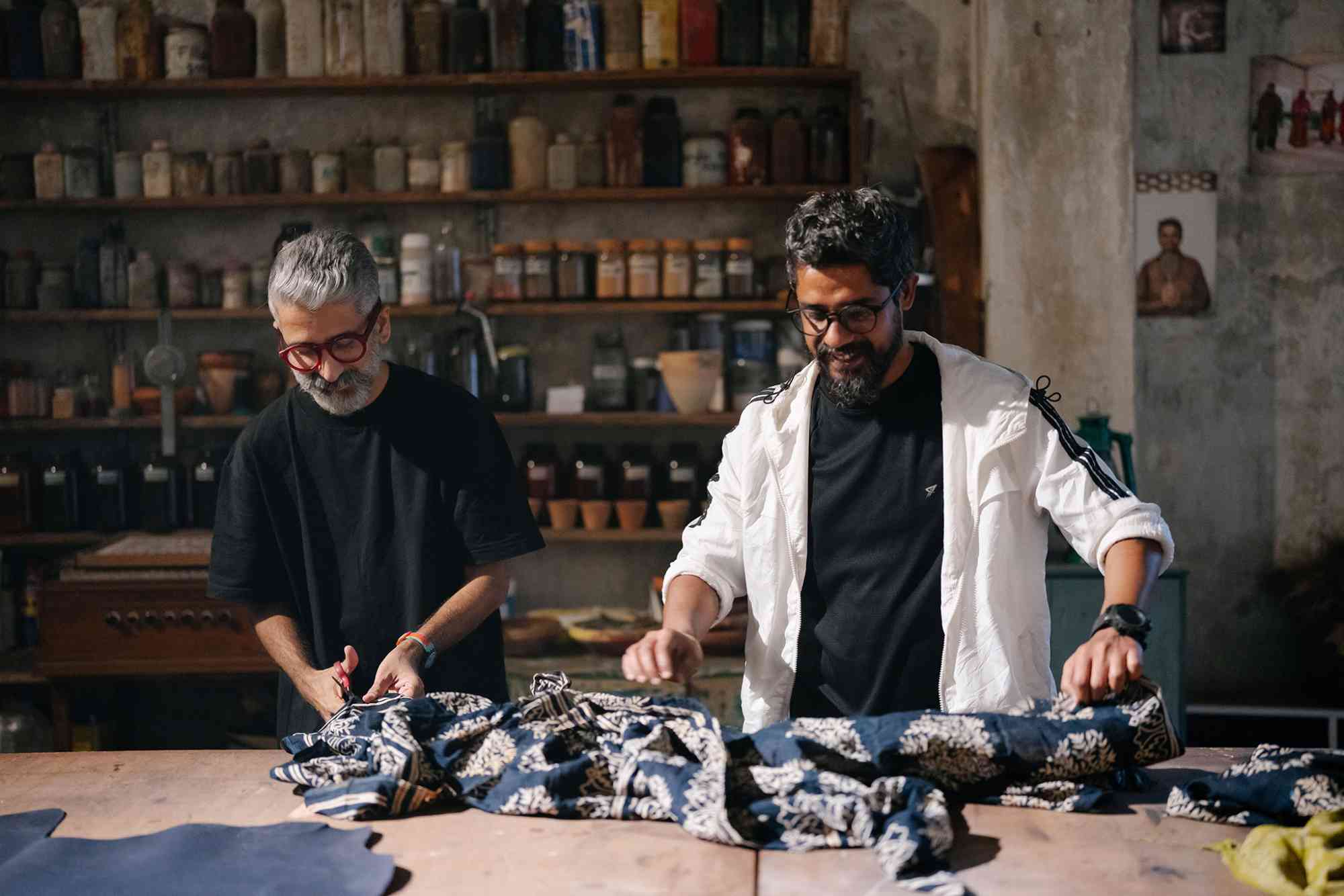
পুনরায় | Punaray (Anew) is an invitation to reimagine familiar forms with new perspectives, to pause and listen before acting, and to embrace practice as an ongoing dialogue. Running across eight months, পুনরায় | Punaray brings together artists, architects, craftsmen, and researchers in residence at Brihatta. The programme emphasizes collaboration and exchange, where ideas, materials, and people meet and evolve through shared processes of making.
Through painting, weaving, assemblage, and collective experimentation, পুনরায় | Punaray searches for new possibilities of seeing—rooted in everyday life, yet open to the transformative horizons of what art may become.
Talk 01: Weaving Resistance: Textile, Memory, and Feminist Storytelling in Bangladeshi Contemporary Art by Kashfia Arif
July 2025
Kashfia Arif, in her research paper, positions textile as an active, mobile force that carries stories, bodies and resistance across time and space. She discusses the textile-based works of 3 Bangladeshi artists: Tasleema Alam, Najmun Nahar Keya and Yasmin Jahan Nupur, and how they use textile not only as a tangible medium, but as a methodology that connects past and present. Kashfia discusses the textile-based work of three female Bangladeshi artists: Tasleema Alam, Najmun Nahar Keya, and Yasmin Jahan Nupur, bringing their distinct, yet interconnected, practices together to explore how each artist mobilises textile as a medium of resistance, continuity, and transformation, translating past knowledge for the present.
Alam’s Symbols of Power, created in collaboration with Jamdani artisans, reimagines heritage motifs within one of Bangladesh’s most iconic textile traditions. Guided by the principle that “tradition is new ways of doing old things,” she positions Jamdani not as a static heritage, but as a living form of cultural endurance.
Keya’s The Spell Song translates Khona’s bochon (folk proverbs composed by the medieval astrologer) into a text-based sot sculpture, created from Tangail sarees, reviving feminist knowledge through voice, language, and material.
Nupur’s participatory performance Let Me Get You a Nice Cup of Tea invites viewers to share tea and stories, seated around a table mapped with textile representations of colonial trade routes—foregrounding the enduring impact of empire on everyday rituals and identities.
Through practices of weaving, stitching, and storytelling, these artists use textile not only as a medium, but as a methodology: erasing erasure, translating memory, and stitching together alternate futures and world-making. They create transformative affective archives that connect past and present, oral and material culture, body and land, and the individual and collective. By braiding their work into a single narrative, Kashfia positions textile as an active, mobile force—a carrier of stories, bodies, and resistance across time and space.
Kashfia Arif is a cultural scholar, curator, writer, and editor. She is currently
pursuing her PhD in Theory and Criticism at Western University, Canada,
researching absurdism and creative practices in contemporary visual culture. 
Talk 02 : Memory, Migration and Adaptation of Katan weavers of Mirpur by Farzana Yusuf and Saifur Rahman
July 2025
Farzana Yusuf and Saifur Rahman delve into migration history, skill transmission - and its silent transformation- of Mirpur Katan, a craft currently in decline. With relocation, artisanal processes are inevitably reshaped, adapting to new environments and circumstances. This quiet yet significant movement not only carries with it the tangible aspects of craftsmanship, but also the intangible history embedded within the fabric of Katan. Saifur and Farzana examine the historical trajectory and cultural adaptation of the Katan weaving community in Mirpur, Dhaka, focusing on the socio-material implications of pre- and post-Partition migration from Varanasi. Drawing from firsthand interviews, observations, ethnographic fieldwork, and textile material and process analysis, they investigate how stories of generational memory and adaptation are embedded in the processes of making, and how displacement has reshaped not only the individual and collective identities but also the craft of their forefathers.
Their study unpacks how these
processes have evolved in response to constraints of the new environment, shifting
market demands, and generational knowledge transfer. It situates the evolution
of the Mirpur Katan saree within a broader framework of urbanization,
marginality, and intangible cultural heritage, and argues that the weaving practices
of this community represent more than artisanal continuity; they constitute
acts of resilience and re-invention that negotiate belonging in the face of spatial
and cultural rupture. The research contributes to scholarship on migration-affected
crat ecologies, diasporic cultural production, and the politics of heritage in
South Asia.
Farzana Yusuf is an impact
strategist and a researcher working at the intersection of sustainability,
entrepreneurship, and textile design. A member of the Executive
Committee of the National Crafts Council of Bangladesh (NCCB) and an advisor at
Women Forward International (WFI) in Washington, DC, Farzana continues to
advocate for sustainable, culturally rooted design practices.
Sk. Saifur Rahman is a multifaceted
professional whose work spans journalism, fashion, and cultural preservation. A
senior journalist and former Deputy Editor of Prothom Alo, he is also an executive
committee member and former General Secretary of the National Crats Council of
Bangladesh (NCCB), and has contributed to numerous publications both nationally
and internationally.


Traces of Us: A Collaborative Art Encounter || An art workshop by Artist Ioana Palamar
July 2025

The workshop explored the idea of recycling fragments from our unconscious—retrieving buried images, sensations, and memories, and bringing them into the light of conscious awareness. The process began with reflecting on a deeply personal experience, whether comfortable or unsettling, that has left a lasting imprint.
The
workshop explored the idea of recycling fragments from our
unconscious—retrieving buried images, sensations, and memories, and bringing
them into the light of conscious awareness. The process began with reflecting
on a deeply personal experience, whether comfortable or unsettling, that has
left a lasting imprint.
Through this introspection, each artistic gesture became an act of transformation. Drawing and colour were deliberately linked to specific emotions or personal memories, so that every line, shade, and texture acted as a bridge between the inner world and the external artwork. A strong emphasis was placed on the sensorial dimension of creation, particularly the tactile experience—feeling the texture of the paint, the resistance of the surface, the physical presence of colour. This haptic connection reinforced the intimate relationship between artist and medium, enabling a deeper embodiment of the emotional and psychological states being explored. In the first phase, participants collaborated on a large-scale collective drawing on a long roll of paper. They then painted eyes or portraits on unconventional objects, such as plastic bottles, which were later assembled into a collective installation.
Conceived as a form of scenography, the installation incorporated spotlights, transforming the space into a play of light and shadow, where the painted objects themselves became the actors on stage.


Programme Note
My
work explores personal memories rooted in childhood, whose influence persists
like hidden roots in the unconscious, waiting to surface into awareness.
Inspired by Alejandro Jodorowsky and Marianne Costa’s Metagenealogy, as well as
Freud’s and Jung’s theories on the unconscious and collective memory, the
artworks address inherited patterns, intergenerational trauma, and the human
search for self beyond imposed identities.
My paintings focus on human vulnerability in all its dimensions—psychological, cultural, historical, and philosophical—symbolised by the image of flesh (Flayed series of artworks). This unsettling metaphor provokes viewers to question the realism and meaning of the imagery. The initial reaction of discomfort acts as a threshold, inviting deeper reflection on consciousness and shared human experience. Material details are rendered with such precision that they create visual tension, pushing the viewers beyond their comfort zone. Each object is unique in form and dimension, conceived as a rebellion against rigid social order and a metaphorical act of breaking invisible constraints. This liberation—breathing beyond societal masks—reveals the essence of being.
Some
of my artworks (Memories, Back to past, Layers of soul series of artworks)
translate inner tensions into unconventional mixed techniques, embedding
emotional and psychological depth into the materiality of the works. Recurrent
motifs such as eyes and distorted portraits embody moments of solitude,
introspection, and moral deformation, ultimately striving for a sense of
spiritual balance visible in the palette, technique, and process.
Ioana Palamar
Artist
পদ্ম / PODDO - LOTUS
August 2025
This series is part of
artist Bishwajit Goswami’s ongoing art research project, হাজারীবাগ / Hazaribagh (A Thousand Gardens)—a
multidisciplinary exploration of reconnection through memory and
transformation. Goswami, through his travels, examines Hazaribagh as a
contested landscape shaped by histories of displacement and movement often
challenging human capacity for renewal. পদ্ম / PODDO centers
on the resilience of migrant women who have resettled in Old Dhaka after losing
their homes to natural disasters and economic hardship in different parts of
Bangladesh. These women, now engaged in the informal plastic recycling trade
along the Buriganga River, have forged paths of survival and self-empowerment
through waste picking and sorting. Their labor—often invisible, yet
indispensable—speaks to broader themes of sustainability and the power of
collective adaptation.
Goswami’s mixed-media
works incorporate recycled materials, archival photographs, found objects, and
natural earth elements, executed on wooden panels and resin. The pieces mirror
processes of layering and preservation where each object, like each life,
carries an imprint of the past with a possibility of transformation for the
future.
Commissioned and collected by Brihatta Art Foundation




Letter to the Lotus: Imaging, Not Imagining, a Conversation
By Ahmed Tahsin Shams
Dear Lotus,
I am
writing this letter to you because I have realized I want to learn how to be a
gem amid dross, as you rise from mud without denying the mud. I am in love with
your transformation technique. Teach me.
Lotus: Why?
What troubles you?
ATS: In the age of climate crises, our
screens, cameras, technical tools, and servers are not neutral but complicit in
the crime if there is a court for climate justice. They are dug from the same
earth my film claims to defend. I work inside that compromise. I want that discomfort
to teach me.
Lotus: What
will you learn first?
ATS: To stop spectating and start
witnessing. Spectating asks for clean views and quick meaning, like
advertisements, but witnessing stays with bodies, matters, textures, and time.
It does not rush to fix. It listens. It stays with the trouble, it celebrates
the discomfort. It uses all the senses to preserve the experience in the
memory. Let me rewire the sensory patterns: witnessing with ears and listening
with eyes can transform the audience into an artist.
Lotus:
Where did you learn to listen with eyes and see with ears?
ATS: At the Brihatta Art Foundation, I
find the space functioning as a medium to introduce a different lens for seeing
Hazaribagh, Dhaka, by the Buriganga River. I met climate migrants (women) who
sort plastic for a living. Their hands map the city’s afterlife. They showed me
how survival is created from waste, how care can begin with a pile of scraps.
At Brihatta, I learned that art can be a place where industry and hope
intersect without giving the illusion of comfort and redemption.
Lotus:
Without the “illusion of redemption”? How?
ATS: The action of saving or being saved
from sin is the literal meaning of redemption, which is the core ground of
religion. Art exceeds this concept and decenters authorship. Brihatta, as a
space, showed me what collaborative art with multispecies authorship is, beyond
human mastery, but shared inquiry. To me, the action of saving is less
important than the action of responding. I will get back to it later.
To speak of
“how,” I can start by naming the tools, the mediums, the vessels. Contrary to
the commodity aesthetics [of the bourgeoisie] that hides the process, Brihatta
reveals it. I get to ‘sense’ the ‘matters’ (not
only see). Yes, materiality matters. It inspired me to think of… if I can name
the tools, make them visible in my art: metals and watts in my filmmaking
process, if I can keep the glare that burns the image and the wind that ruins
the sound, there I may encounter a counter pedagogy and an anarchive: not a
vault that closes, not a top-down teaching method, but a living bundle of
traces that stays open to weather and error.
Lotus: Why
honor error?
ATS: Error is evidence of a relation. Not
every wound heals. We must accept nature’s duality. Fire destroys and also
enables making. The lotus-in-muck figure fits (Bangla: gobor-ey poddophul):
beauty emerges from contamination without pretending the muck is gone. If I
keep the window open, I will also get dust, bacteria, and viruses, along with
summer sunshine and autumn breeze. These are two sides of one coin. I can’t
expect only one side to be correct. I should accept the storm, too.
Coming back
to your question of “error,” I won’t say it’s honoring or not; I would rather
say it’s an action. As promised earlier, to define action: here, it is not a
promise to heal everything, but it is “response-ability,” as Donna Haraway puts
it [not responsibility]. The only way to be able to respond to any species,
matter, human, or nonhuman is to learn to communicate. There comes the creative
arts. If science excels in discoveries and innovations, the creative arts
provide it with a medium —the body —to communicate with the world and other
species.
Lotus: What
kind of space can hold that conversation?
ATS: Brihatta has already done that and
continues to do so. New visitors to this space in Hazaribagh should consider
the following questions: How does this space affect your body? How does it
shape time and space for you? As a visitor, it taught my body to respond to art
by listening with my eyes!
Lotus: So,
how do you plan to hold on to that inspiration?
ATS: Bishwajit Goswami’s project
Poddo [Lotus, 2025] reveals how contamination can be a
teacher, human limits can be forms, slowness can be a method, and shared
authorship can be a practice. Here comes our film Lotus in the Wasteland. I
wish to film with “the world,” not about the world. I wish to craft a pedagogy
of collaborative art through this film, undoubtedly inspired by Poddo.
Lotus: When
shall we meet again?
ATS: We will be meeting soon—where the
city’s waste meets the river’s breath, either in the form of these bodies we
hold on to for now or on the elemental bridge—in the form of the air, dust, and
soil/mud.
—ATS
Ahmed Tahsin Shams
Filmmaker, Author, Graduate Researcher, and
Associate Instructor, Cinema Studies,
Media Arts and Sciences, Indiana University Bloomington, USA;
Former instructor at the University of Chicago, Illinois,
and Notre Dame University, Indiana, USA.
Material Encounters with Bishwajit Goswami
August, 2025
An open, participatory space that allows
for shaping, assembling, and reimagining. The activities echo core themes of
reuse, adaptation, and collective creativity found in Goswami’s recently
commissioned series পদ্ম / PODDO
(LOTUS) by Brihatta Art Foundation.
Highlighting the stories of informal waste workers who form a vital- yet
invisible- part of the plastic recycling industry in Old Dhaka, Material Encounters
offers an intimate way to connect with Artist Bishwajit Goswami’s পদ্ম / PODDO (LOTUS) series and the communities it honours.
Participants were invited to experience art as a bridge between conversation
and creation at Brihatta Art Space, Hazaribagh, through an artist talk, guided
tour, and hands-on material encounter.


A Narration by Amrita Bhadra
A Narration by Amrita Bhadra (Participant,
Material Encounters)
Department of English and Humanities
University of Liberal Arts Bangladesh (ULAB)
From the womb of the river,
A goddess appears;
to bless and curse,
And delve into her mighty power.
These fragile humans
exude reverence
For the destroyer
and the Creator.
A celebration of life;
A continuation.
In the creation of this line or a flow of phrases, is from the experience I
had today at Brihatta Art Foundation. When I came here and I saw the artist
himself speak about পদ্ম / PODDO. It reminded
me of how from the mud the পদ্ম / PODDO blooms. পদ্ম / PODDO is a
symbol of a goddess. With water there comes creation. It is also this water
(the same water) that destroys. We see these women shifting lives; the same
woman who harvests is the same woman who works with garbage. This was the
inspiration behind the artwork.
It has been a memorable day; one of those days which transforms
us.
মনির _পুনঃসংযোগ : An Afternoon with Artist Monirul Islam
October 2025
Honoring
the child’s mind within us opens pathways to art that is courageous and deeply rooted,
in both self and place.
By
cultivating this practice, how does an artist come full circle — to leave,
explore, and ultimately find a way back to their roots, both physically and
spiritually?
“মনির_পুনঃসংযোগ : An Afternoon with Artist
Monirul Islam”,
weaves together personal narratives, meaningful conversation, and spontaneous
creative exchange between the artist himself and participants seeking to deepen
their connections with spaces that surround them.




Artist Monirul Islam bio
Monirul
Islam
b. 1943, Chandpur, lives and works in Dhaka and Madrid
Monirul
Islam is known for his constant search for new methods of painting and
print-making. Organic methodologies carry a lot of weight in his artistic
process and he makes his own paint and paper as part of his practice. His
techniques and devotion to the craft propels him to find materials and pigments
from his surroundings, and use elements in unconventional ways and scenarios.
Islam
completed his studies at the East Pakistan College of Arts and Crafts, Dacca in
1966. He was a teacher at the same college from 1966-1969 and left teaching for
higher studies in Spain, studying mural paintings at the Madrid Academy of Fine
Arts. Even while abroad, he remained in touch with Bangladeshi artists and
conducted workshops when visiting Dhaka in order to pass down his
methodologies, making him one of the most influential living artists currently
in Bangladesh
For
his esteemed accomplishments in art, he received two of Spain's top civilian
honors: the Cross of Officer of the Order of Queen Isabella (2010), and the
Commander Spanish Order of Merit (2018), and Bangladesh Government's civilian
award Ekushey Padak in 1999.
Programme Note
I
have known Artist Monirul Islam for nearly two decades — as both a remarkable
creator and a person of rare humility. Having worked on several projects
featuring his works, I have come to understand not only his mastery of form and
material but also the depth of his artistic philosophy. To comment on an artist
of such stature is never easy. Monirul Islam’s practice transcends conventional
categories — his art embodies silence, spirituality, and a timeless dialogue
between man and nature.
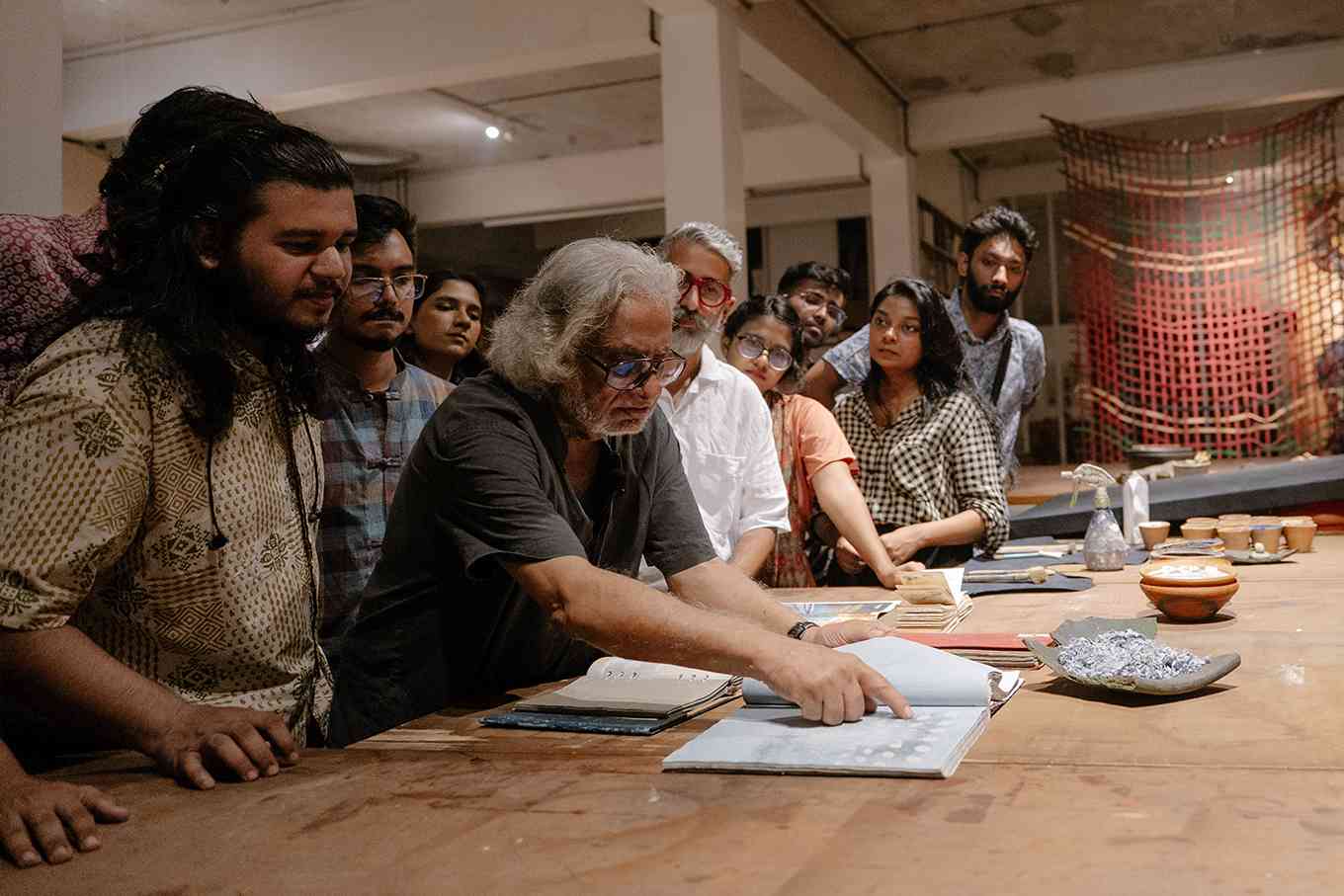
During
the Brihatta session, what impressed me most was the atmosphere he created
around him. Young learners listened with deep concentration and quiet reverence
— a scene that echoed the traditional ‘Guru–Shishya Parampara’ rather than the
formal detachment of the Western white-cube model. The session felt alive,
fluid, and human — an open dialogue rather than a lecture.
His
generosity in sharing knowledge went far beyond style or geography. He spoke
effortlessly about materials, techniques, and the philosophy of picture-making,
inspiring those around him through both thought and demonstration. I have
always admired his ability to express profound truths in simple words — especially
his belief that an artist’s true connection lies between nature and society.
I
found my connection in his words. Having spoken with him on several occasions,
even during personal visits to his home, I am always reminded of his humility
and sincerity. He once told me, and repeated on the day for all “Some artworks are for galleries, for sale —
but some are personal; I will never show them to anyone.” That statement
encapsulates the essence of Monirul Islam — an artist guided not by the market,
but by an unwavering devotion to inner truth and sincerity.
Bipul Mallick
Visual artist & Educator
Trustee Brihatta Art Foundation
Talk 03: গঙ্গাবুড়ি / Gangaburi & River Chants
October 2025
RIVER CHANTS is a multidisciplinary project at the intersections of climate change and migration, shifting the narrative from those who leave to those who remain. It explores these global challenges through folk songs tied to waterways, emphasising women, who often preserve these musical traditions and are less likely to migrate. It observes these phenomena through a “sonic and poetic hydrology,” where water is an element for connection.
Led
by artist Giuditta Vendrame and director Ana Shametaj, the project draws on the
academic expertise of Bishawjit Mallick (climate change and migration),
Costanza Sartoris (feminist new materialism), Radha Kapuria and Priyanka Basu
(ecomusicology).
RIVER
CHANTS is a research project granted by Creatività Contemporanea of the Italian
Ministry of Culture – MiC under the Italian Council program (2024) and Stimuleringsfonds.
The
‘গঙ্গাবুড়ি / Gangaburi’ River
Heritage Project was launched in 2023 by Brihatta Art Foundation, with support
from the EUNIC Bangladesh cluster, including Alliance Française de Dhaka, British
Council, Goethe-Institut Bangladesh, the EU Delegation in Bangladesh, the
Embassy of Italy in Bangladesh, and the Embassy of Spain in Bangladesh. The
second phase, initiated in 2024, was supported by British Council Bangladesh.
The
title of this project is inspired by the song “Gangaburi” by Kafil Ahmed.


Programme Note
পুনরায় / Punaray Talk 03 brought
together two projects – River
Chants
and Gangaburi; in their
own ways, with an attempt to listen to the river not as landscape, but as a
living archive of emotion, memory, and belonging.
In
a time when environmental discourse often centres on catastrophe, these
projects offer something quieter yet deeply rooted within. Both River Chants
and Gangaburi turn away from distant observation and lean toward closeness in
an approach shaped by listening, sensing, and being together.
The
‘river’ here is not a backdrop; it’s a participant, a co-narrator.
In
River Chants, artist and researcher Giuditta Vendrame and her collaborators
approach the river through sound; what she calls a “sonic and poetic
hydrology.” They listen to the voices of women who remain in climate-affected
regions, women whose songs and memories flow like tributaries of resilience.
Here, listening itself becomes a form of research practice that treats water as
a living narrator, dissolving the boundaries between human and environment, body
and current, voice and echo.
Gangaburi
approaches the Buriganga through visual and material languages: painting,
photography, sculpture, installation, and collective storytelling. It connects
artists and communities around the river to reimagine its presence not only as
a site of loss, but also as a space of reconnection. Through this
collaboration, Gangaburi restores the river’s presence within contemporary
consciousness; transforming its polluted, neglected body into a site of reflection,
empathy, and renewal.
If
River Chants gives voice to those ‘who’ remain, Gangaburi gives form to ‘what’
remains.
পুনরায় / Punaray Talk 03
ultimately delved into the finding that both River Chants and Gangaburi are not
simply about rivers, they are about ways of being in relation. About belonging,
endurance, and the fragile beauty of staying connected – to a place, to a
community, to an ecosystem that sustains us even when we fail to sustain it.
They show us that engaging with a river is also engaging with time.
We see what flows, what
stays, and what returns.
Souradeep Dasgupta
Researcher
Brihatta Art Foundation
Stories of Sundarbans: A workshop in collaboration with Shwasmul Arts at Brihatta Art Space, Hazaribagh
December, 2025
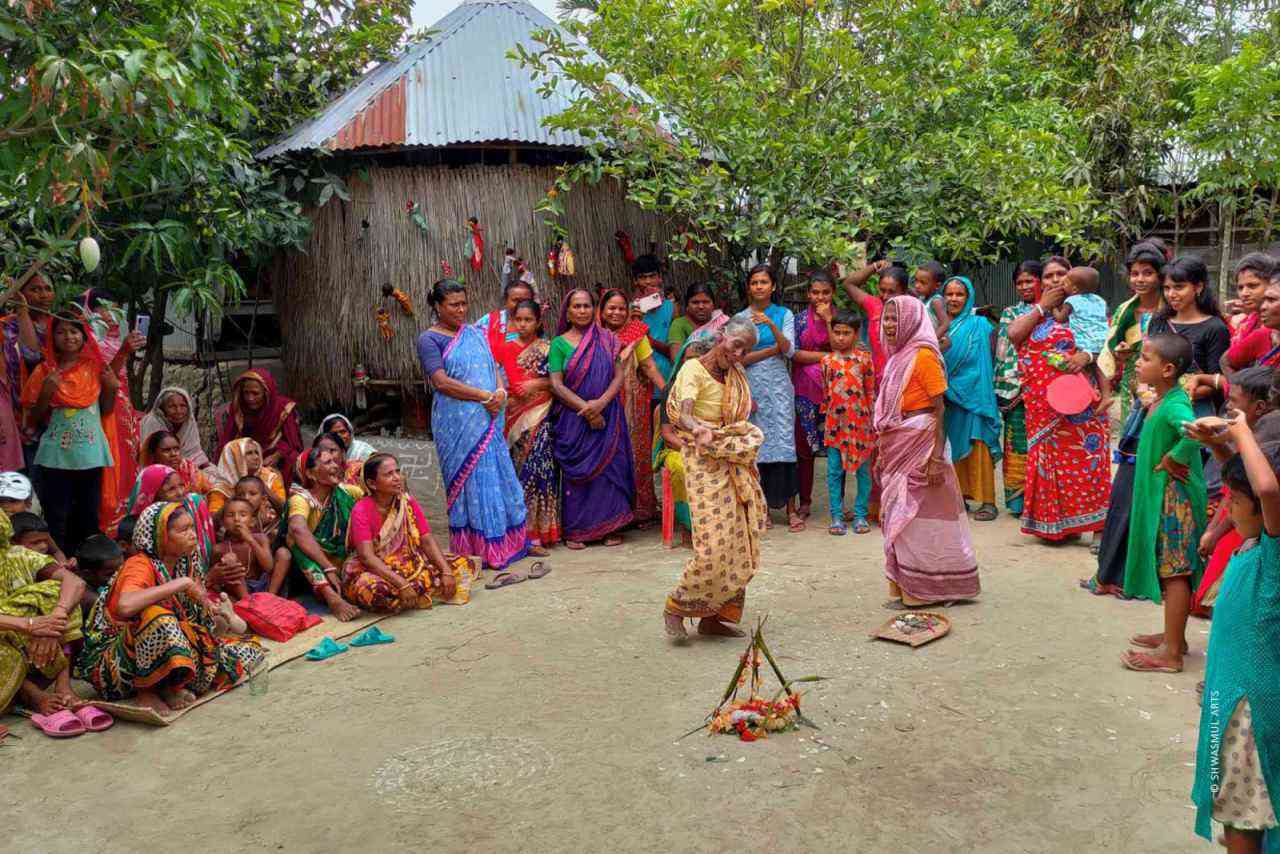
Intertwined with the narratives of humans, animals, rivers, and soil, Stories of the Sundarbans is not just about the forest itself. It carries memories born from the fragile yet enduring coexistence between people and nature.
"The soil and the forest form an in(di)visible entity."
Intertwined with
the narratives of humans, animals, rivers, and soil, Stories of the Sundarbans
is not just about the forest itself. It carries memories born from the fragile
yet enduring coexistence between people and nature.
"The soil and
the forest form an in(di)visible entity."
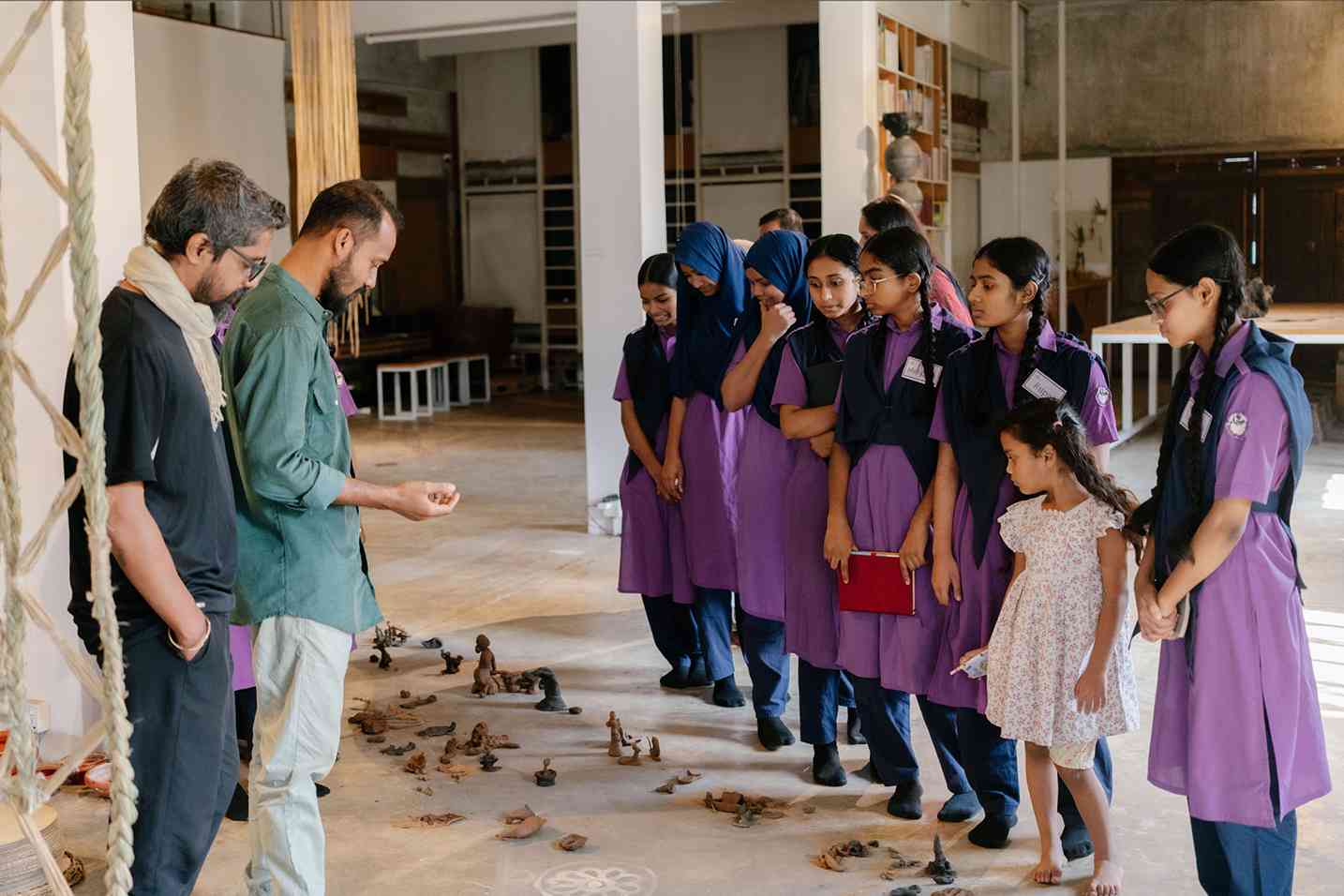
This workshop
invites us to rediscover the tender coalition between human and non-human
entities through a concise exploration of the historical landscape of the
Sundarbans, presented by Moni Majhi, along with narratives, recollections, and lived experiences
shared by Bishwajit Roy. Through this exchange, participants
will be invited to explore the earth's memories through a tactile workshop with
clay.
The program
concludes with an interactive session where participants reflect on and share
their personal encounters with the Sundarbans.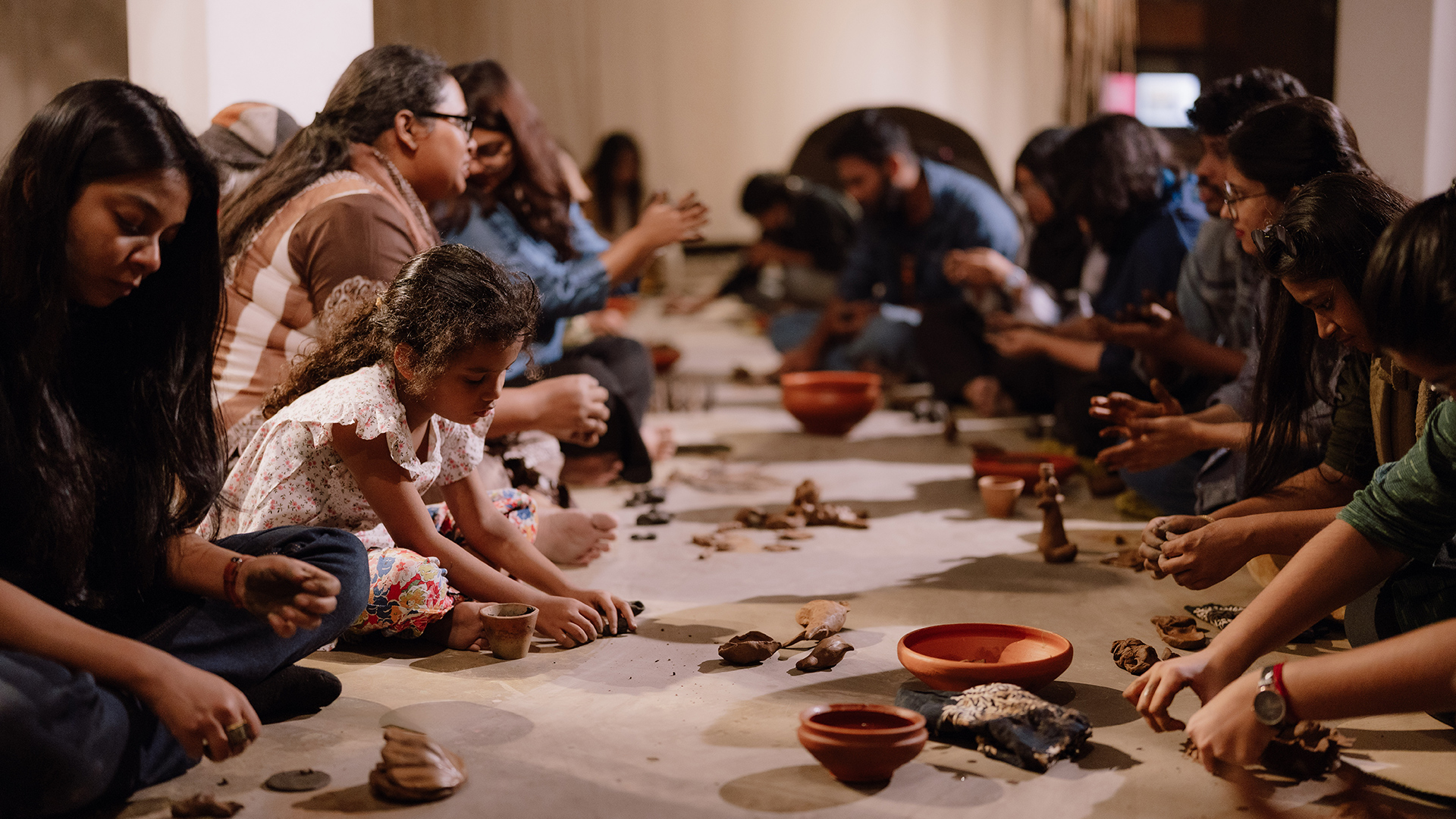


শ্বাসমূল আর্টস / Shwasmul Arts
Founded in 2021,
Shwasmul Arts is a contemporary art organization rooted in the cultural and
ecological landscape of Bengal. It operates through community-based art
practices, collective initiatives, and interdisciplinary approaches that merge
traditional sensibilities with contemporary thought. The collective seeks to
cultivate dialogues between local knowledge systems and global art discourses,
emphasizing collaboration, experimentation, and shared authorship.
"Nature
Study and Creation" is a long-term, community-based project that explores
the relationship between humans and their environments through art., education,
and collective engagement. This program reflects the organization's commitment
to connecting artistic practice with lived experience, drawing from rituals,
gestures, and materials embedded in local communities to shape new forms of
creative expression. Through residencies, workshops, exhibitions, and
collaborative projects, the organization engages artists, researchers, and
community members to explore the intersections of art., environment, and social
transformation.
Shwasmul Arts aspires to articulate a new
artistic language that reflects both the identity of Bengal and the complexity
of contemporary art practices. By promoting connections between regional
traditions and international contexts, it aims to construct a platform where
cultural memory, ecological awareness, and contemporary aesthetics coexist,
generating a critical and inclusive space for artistic dialogue and collective
imagination.
-
Moni Majhi
Moni is a Bangladeshi visual artist renowned for his community-driven work in painting and sculpture. He earned an M.F.A. in Painting from Rabindra Bharati University, India, in 2013, after completing his B.F.A. from Khulna Art College, Bangladesh, in 2008. He is the founder of Shwasmul Arts, an art collective in Khulna, Bangladesh, dedicated to supporting and advancing contemporary artists and art projects in his locality.
Bishwajit Roy
Bishwajit Roy is a Bangladeshi visual artist renowned for his community-driven work in sculpture and public art installations. He earned an MFA in Sculpture in 2019 and a second MFA in Design (Ceramic and Glass) in 2021, both from Kala Bhavana, Visva Bharati University, Santiniketan, India. His educational background also includes a BFA in Sculpture from Khulna University, Bangladesh, completed in 2015.
Roy is a founding member of Shwasmul Arts, an art collective dedicated to fostering creative expression and collaborative practices. His work is deeply rooted in an ongoing dialogue with nature and cultural heritage, particularly focused on the Sundarbans and its surrounding regions. Through land art and interactive installations, he transforms public spaces into immersive experiences that explore themes of ecological preservation and collective memory.
Programme Note
The
Sundarbans cannot be contained within one individual narrative.
It lives in its diversity – the flora and fauna,
the shifting water, and most importantly – in stories whispered between tides,
in rituals shaped by fear and faith, in hands that learn to read the forest
before they learn to name it. Here, culture grows from survival, and art is not
separate from life – it moves with it, quietly.
It was from this way of thinking “Stories of the Sundarbans” emerged. A two-day workshop organized by Brihatta Art Foundation in collaboration with Shwasmul Arts, as part of পুনরায় | Punaray, the workshop did not attempt to define the Sundarbans singularly. Instead, it opened a space to reflect on the deep, intertwined relationship between nature and human life through memories, materials, customs, and shared experience.
Each
day began with looking and listening. Artist Moni Majhi led a visual narration
where rivers, forests, animals, beliefs, and communities appeared as one
continuous body rather than separate elements. His approach connected the
participants with the experience of Sundarbans through a visual storytelling
journey. This was followed by artist Biswajit Roy, whose lived experiences of
the Sundarbans brought the communities and practices closer through fragments
of memory that resisted distance and romanticisation.
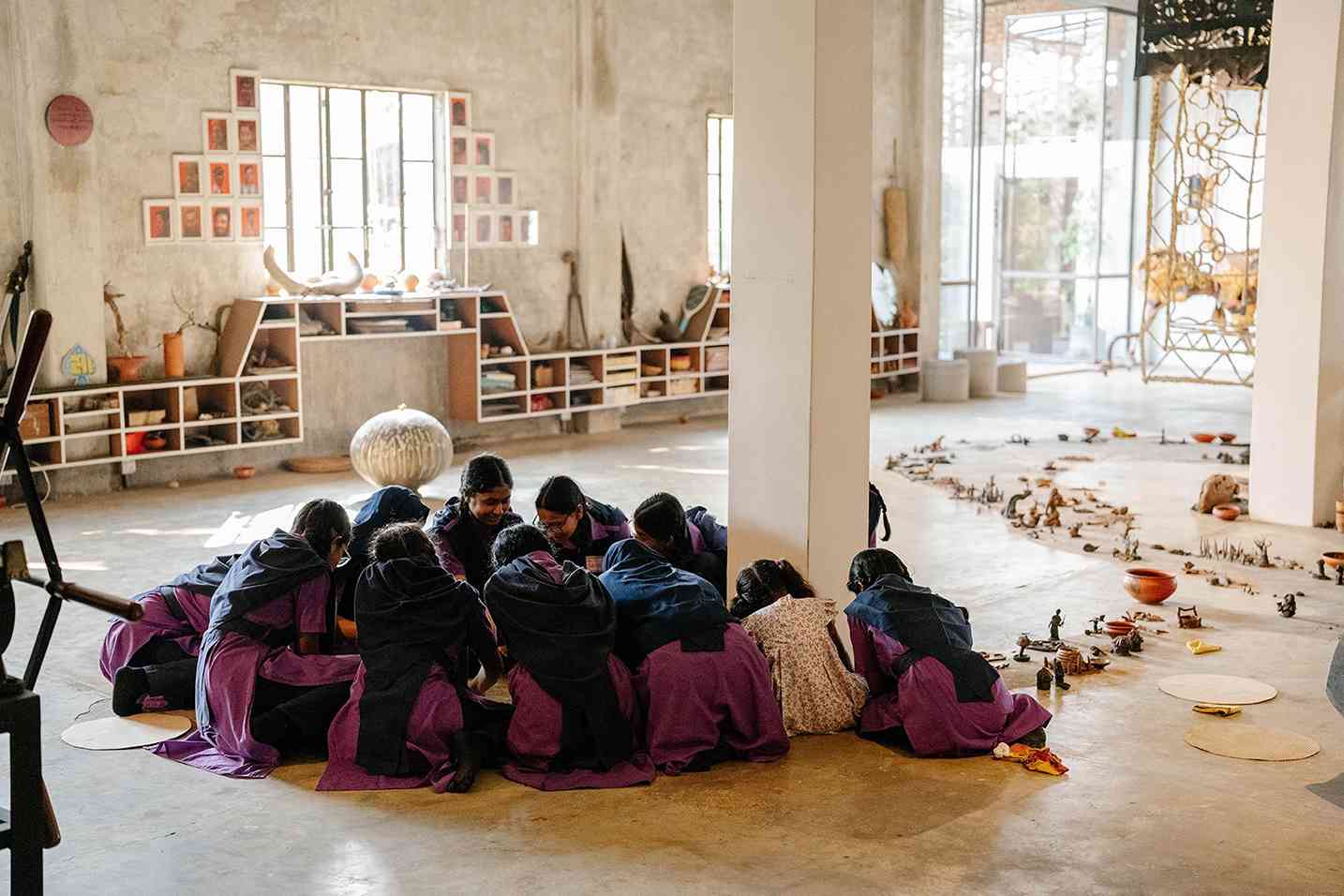
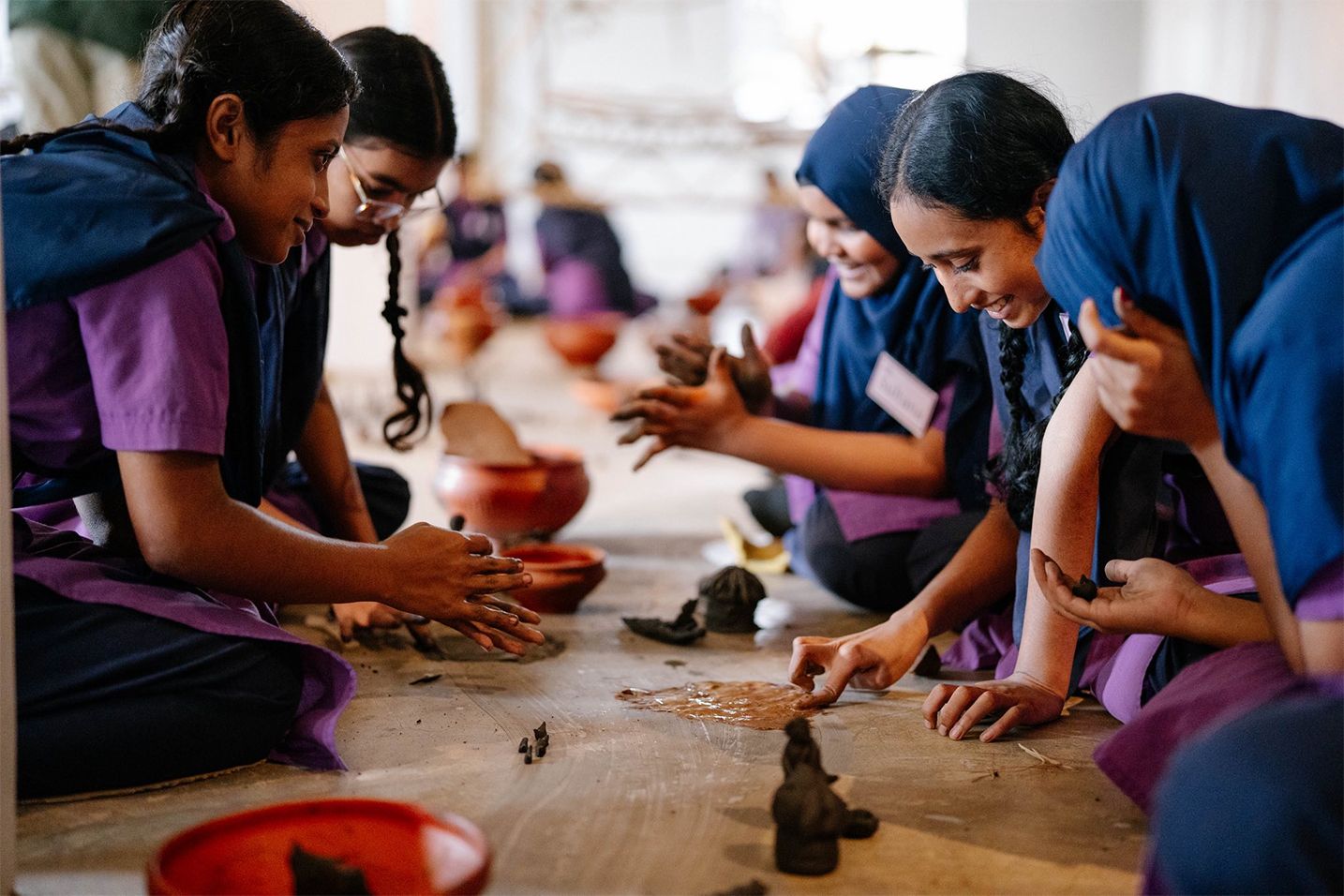
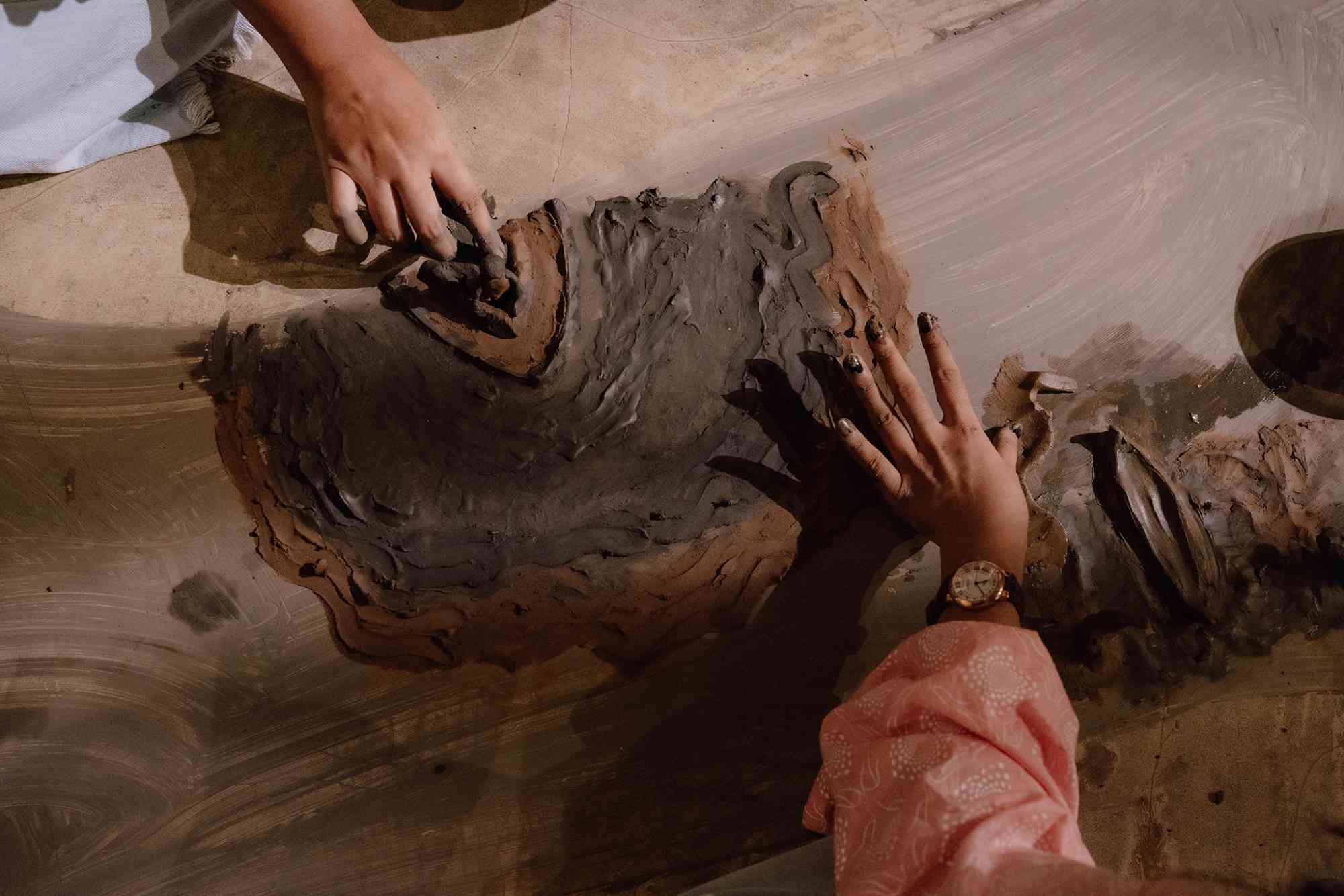
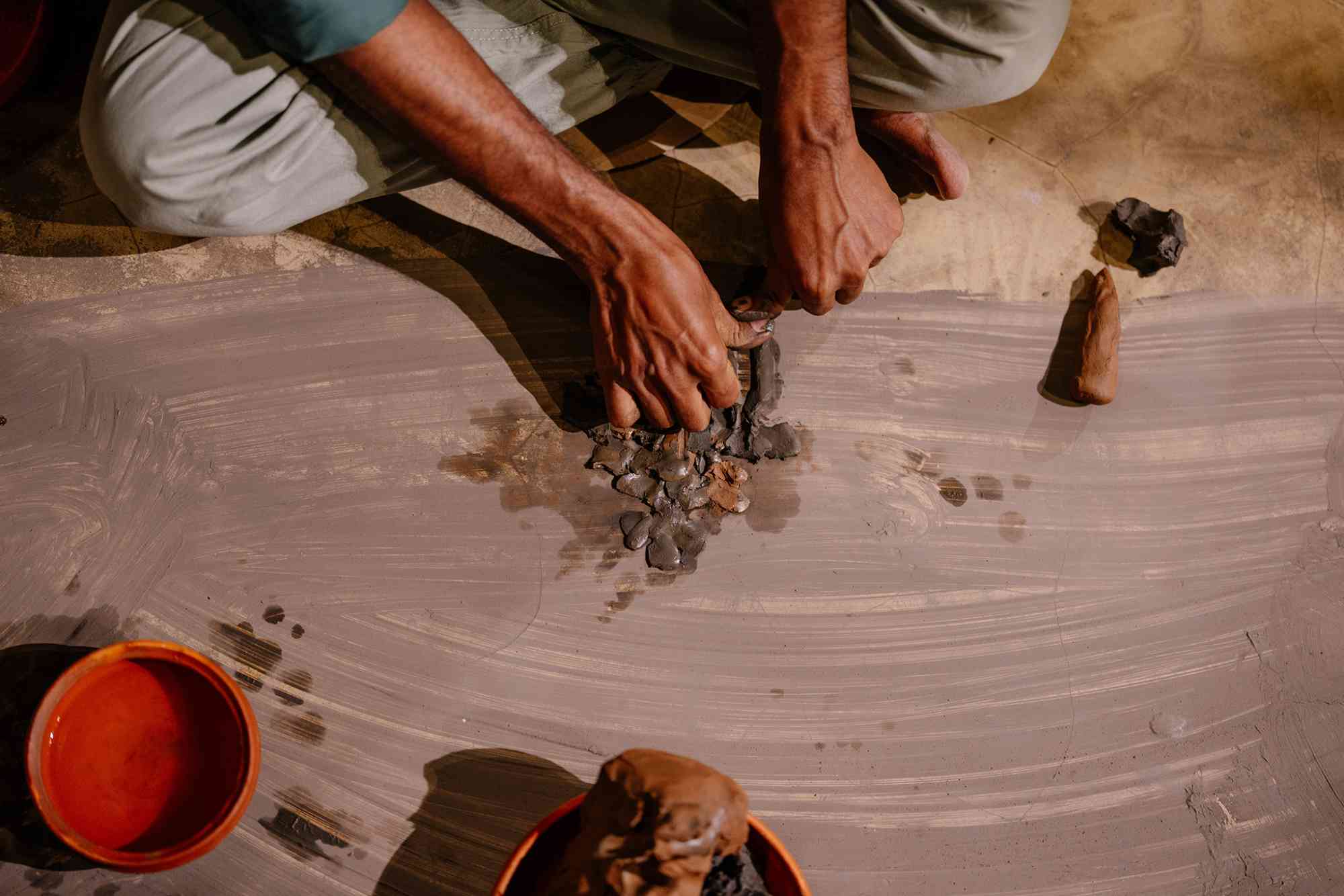
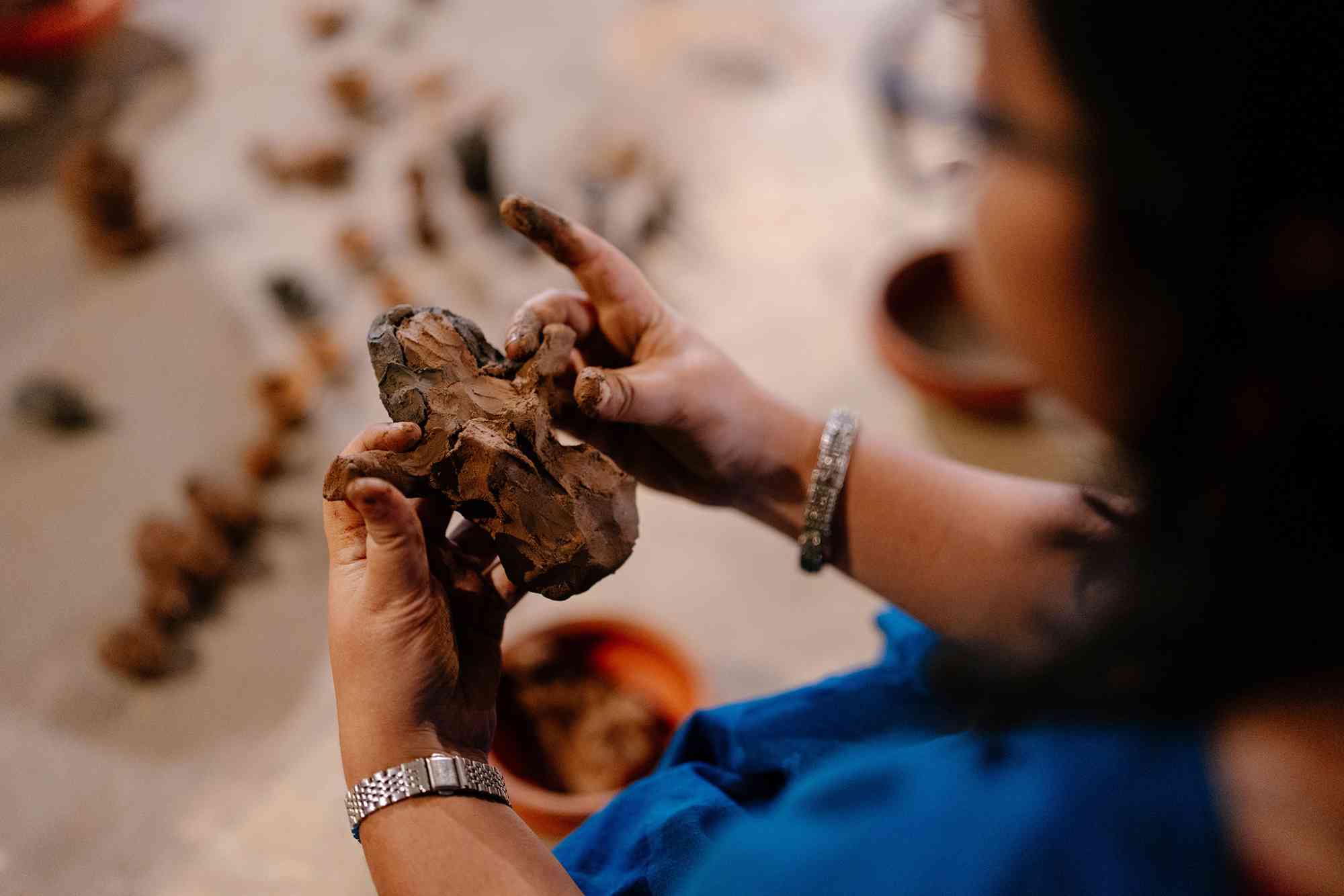
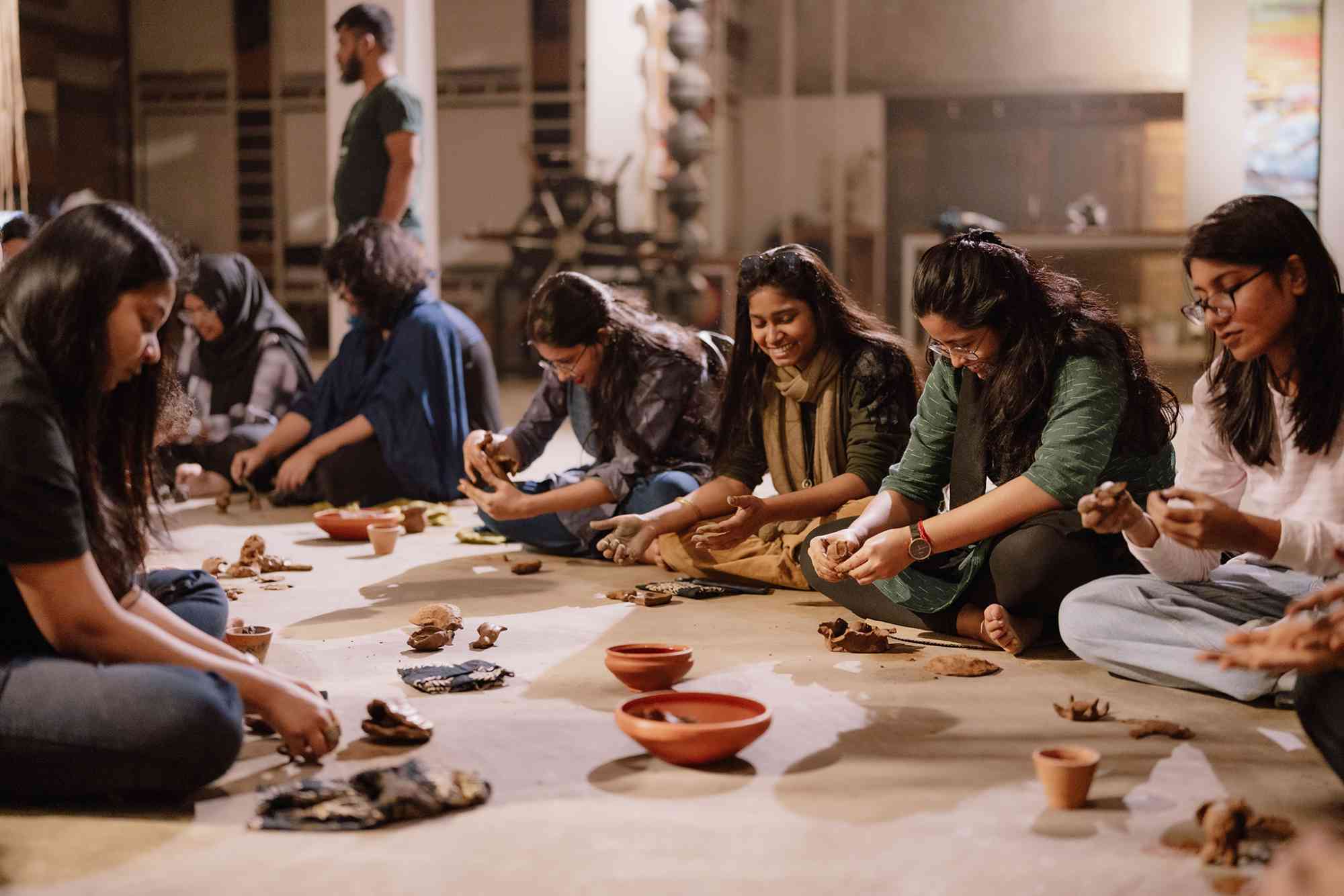
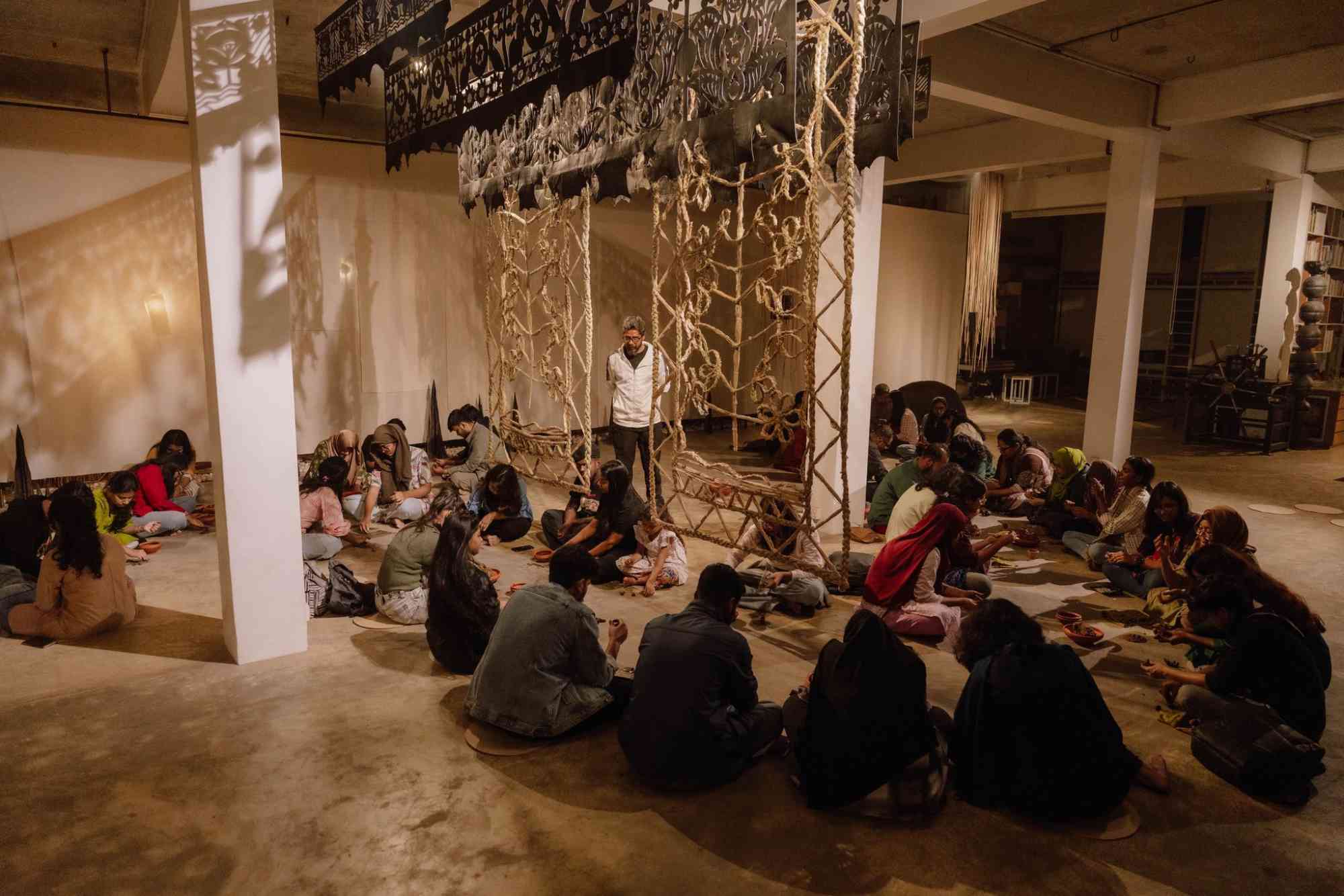
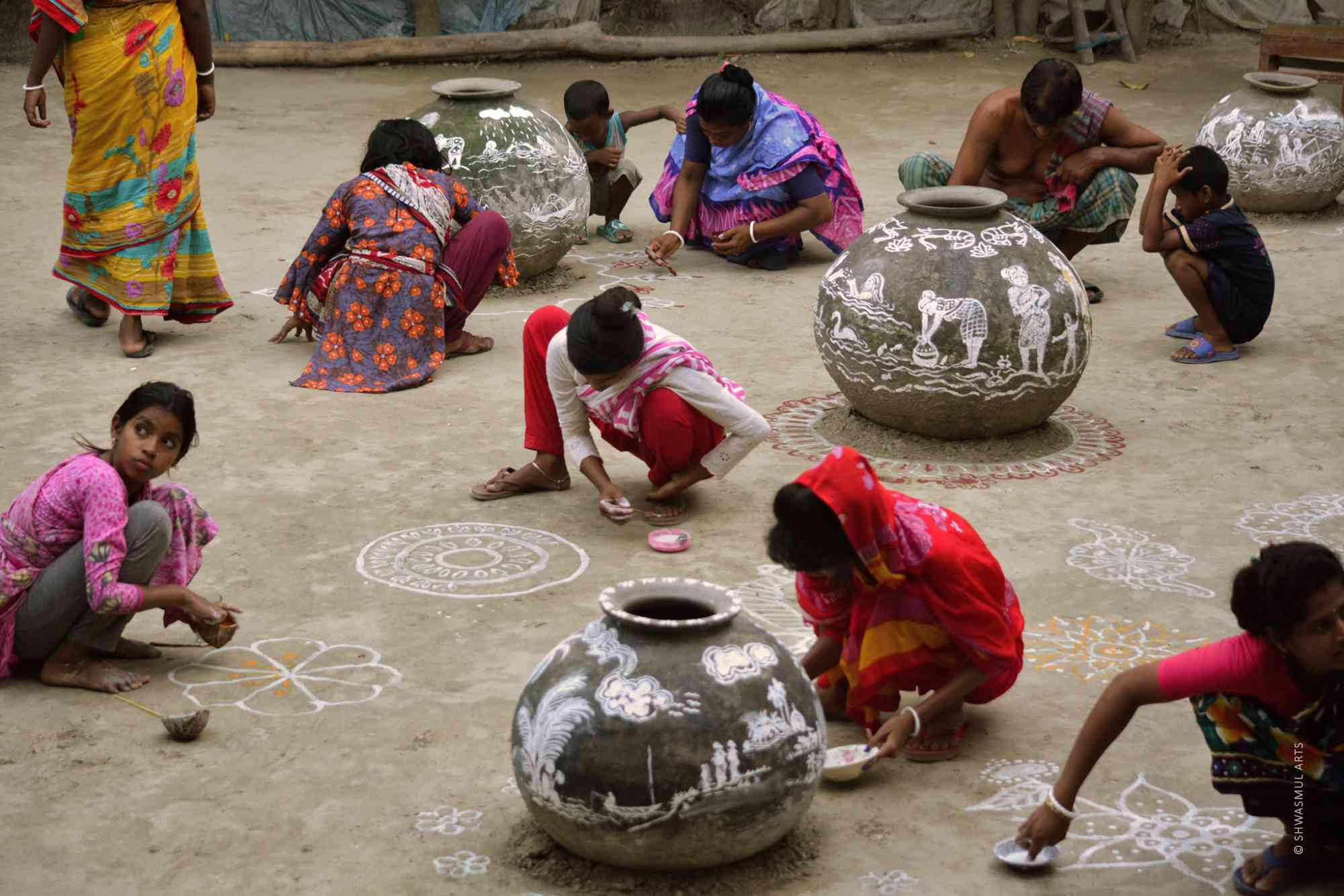
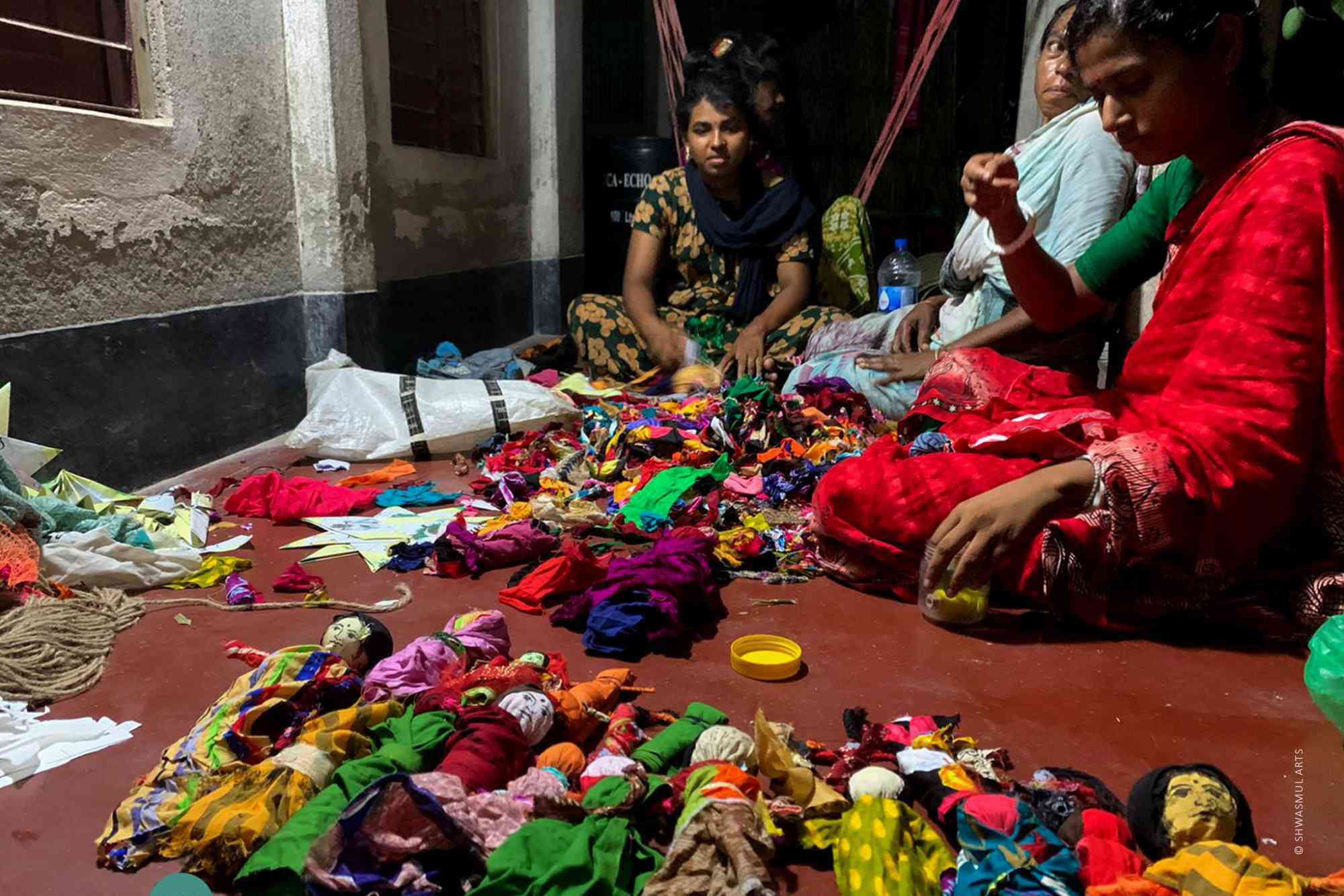
Followed by the conversations, the space shifted from listening to making. Clay, water, and time were offered to the participants. They were asked to shape whatever surfaced when they thought of the Sundarbans. Slowly, forms appeared – boats, figures, animals, mangroves, and so many more. When placed together, these individual gestures dissolved into a single flowing landscape, reading almost like a riverine landscape formed collectively.
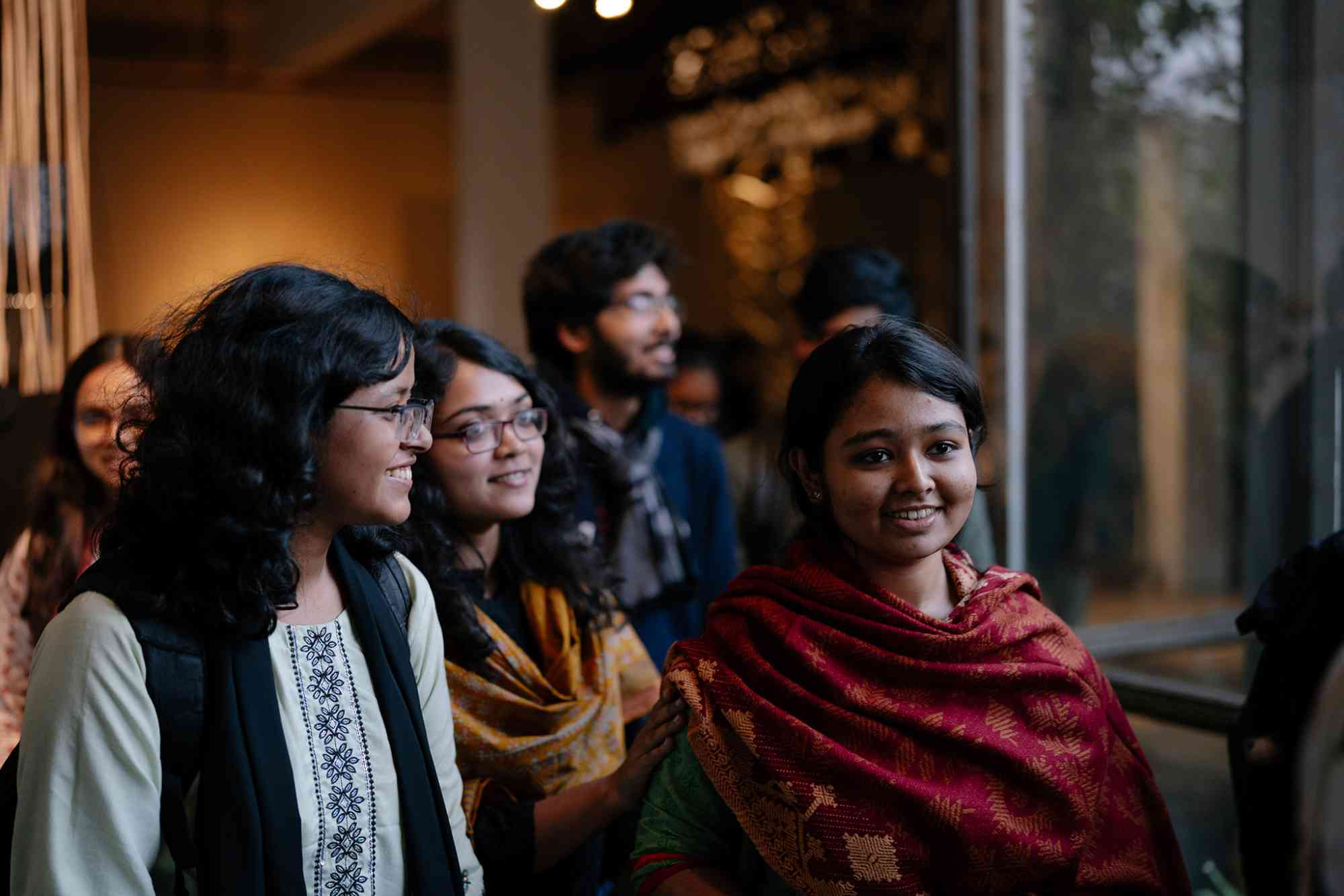
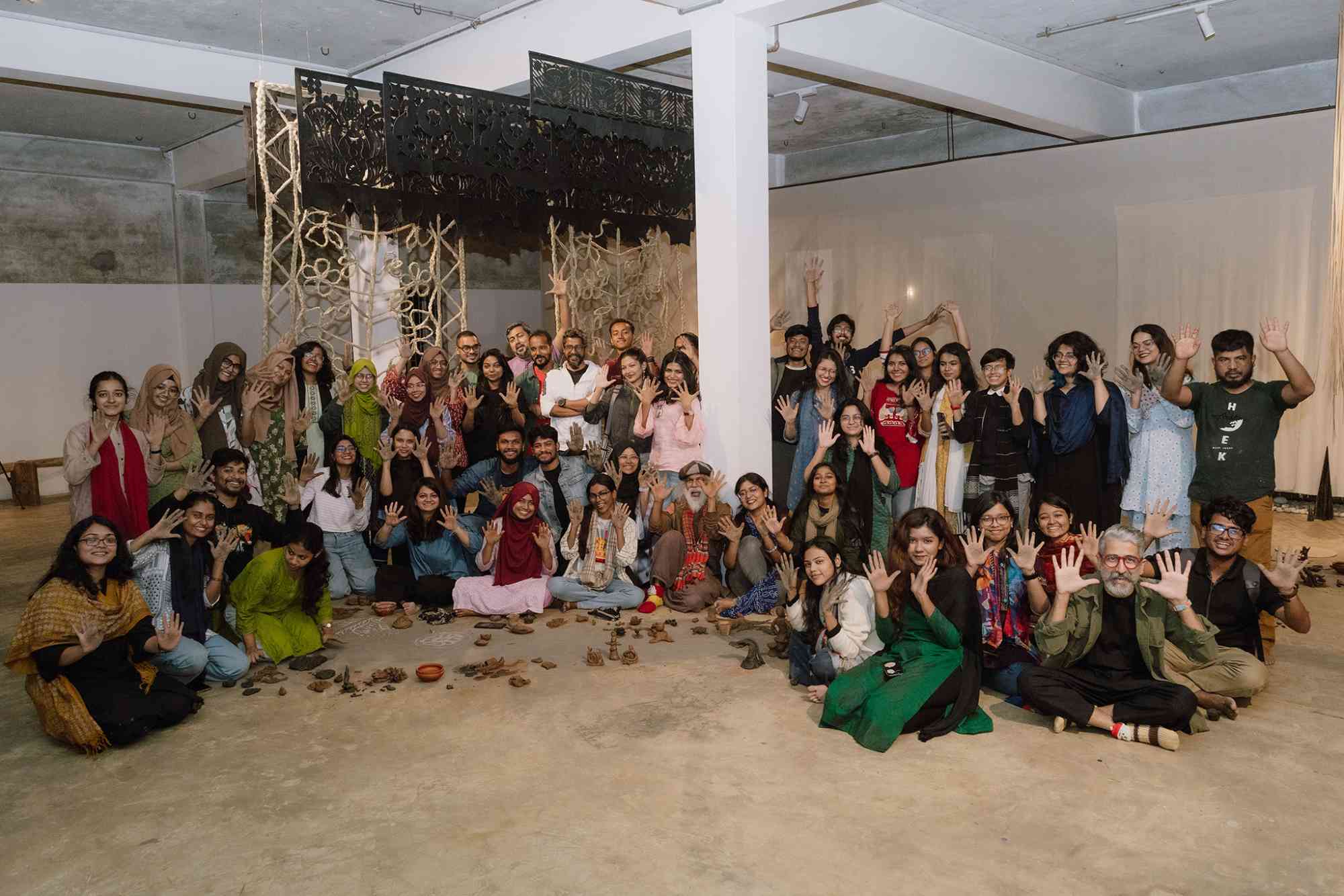
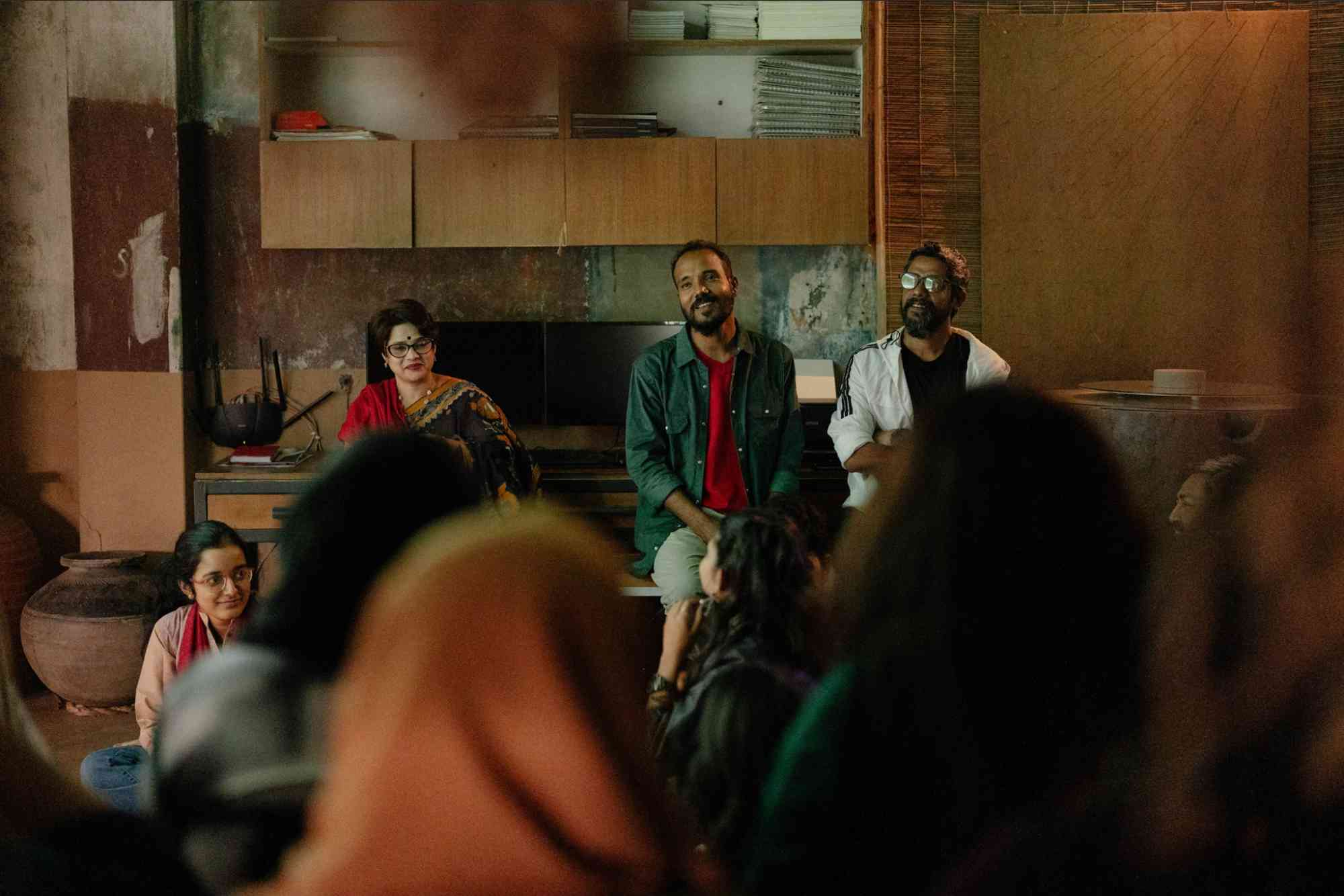
The first day was spent with students from the Department of Drawing and Painting, Faculty of Fine Art, University of Dhaka, and Charcoal – BUET Artista Society, BUET. Their engagement was reflective and measured. Many paused between gestures, negotiating questions of representation, ecology, and responsibility. The conversations were about how to approach a place like the Sundarbans without reducing it to imagery.
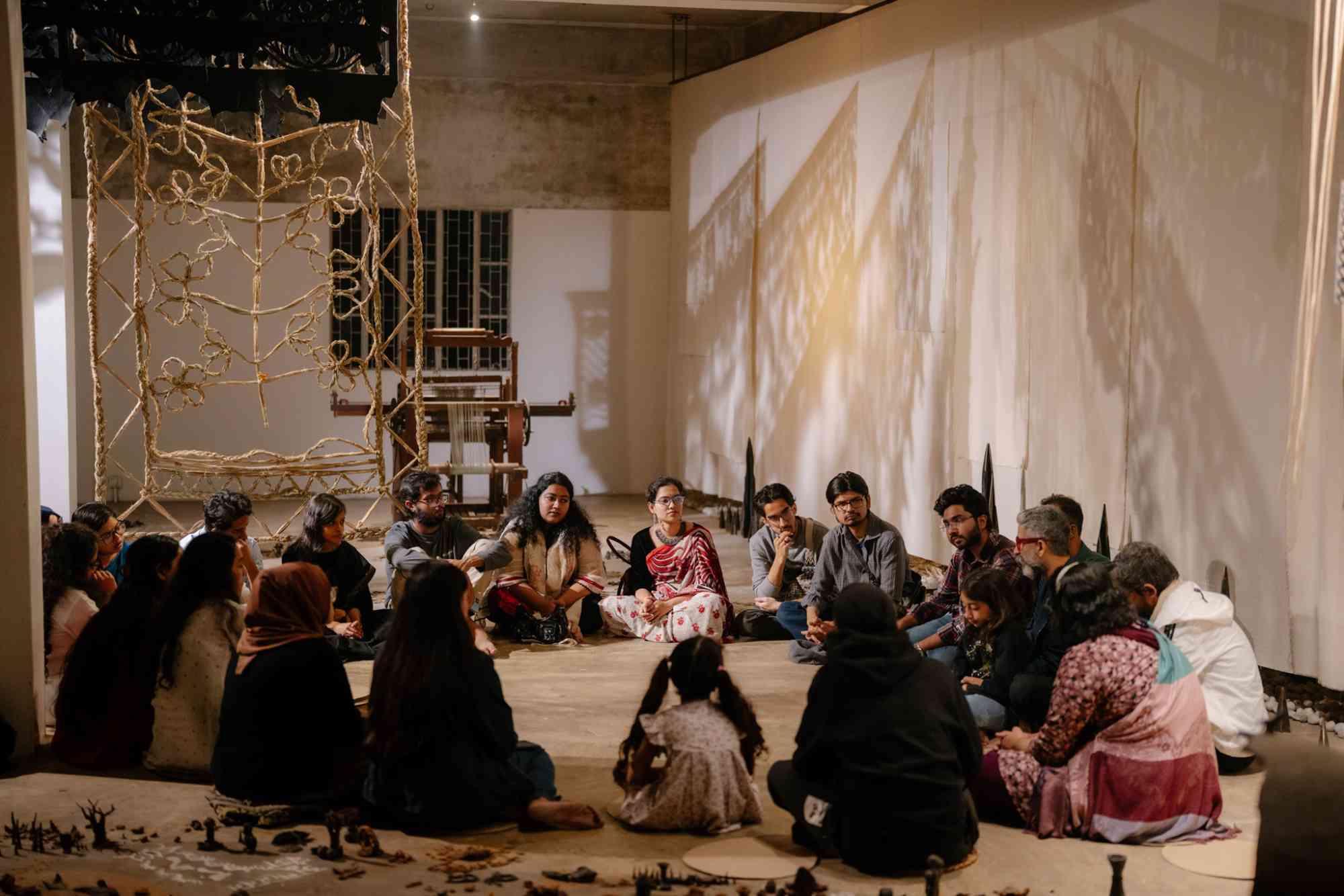
The second day felt different, and it stayed longer. Working with the children from the school of Abinta Kabir Foundation, the room was filled with curiosity. Alongside clay, the children painted alpona (traditional floor art style), inspired by the visual stories and community cultures of the Sundarbans they had just encountered. For many of them, this was their first experience of designing something like this. The act was instinctive, joyful, and deeply attentive. Later, sitting together on the floor in a circle, they spoke about what they once imagined the Sundarbans to be, what they learned through the workshop, and how they now see its cultures beyond fixed or ethnocentric ideas. Their questions were direct. Their reflections, unguarded.
What lingered was how gently the workshop took shape – for curiosity, for uncertainty, for listening. This is where it aligns most closely with Punaray: a programme rooted in returning, revisiting, and reshaping knowledge through dialogue, material, and shared labour. Art here was not an outcome, but a way of paying attention.
When the smeared clay on the floor and the alpona slowly faded from the floor, something remained unresolved in the best way. Like the Sundarbans, reminding us that some things are not meant to be captured, only to be listened to, and to be encountered.
Souradeep Dasgupta
Researcher
Artisan Residency
December, 2025
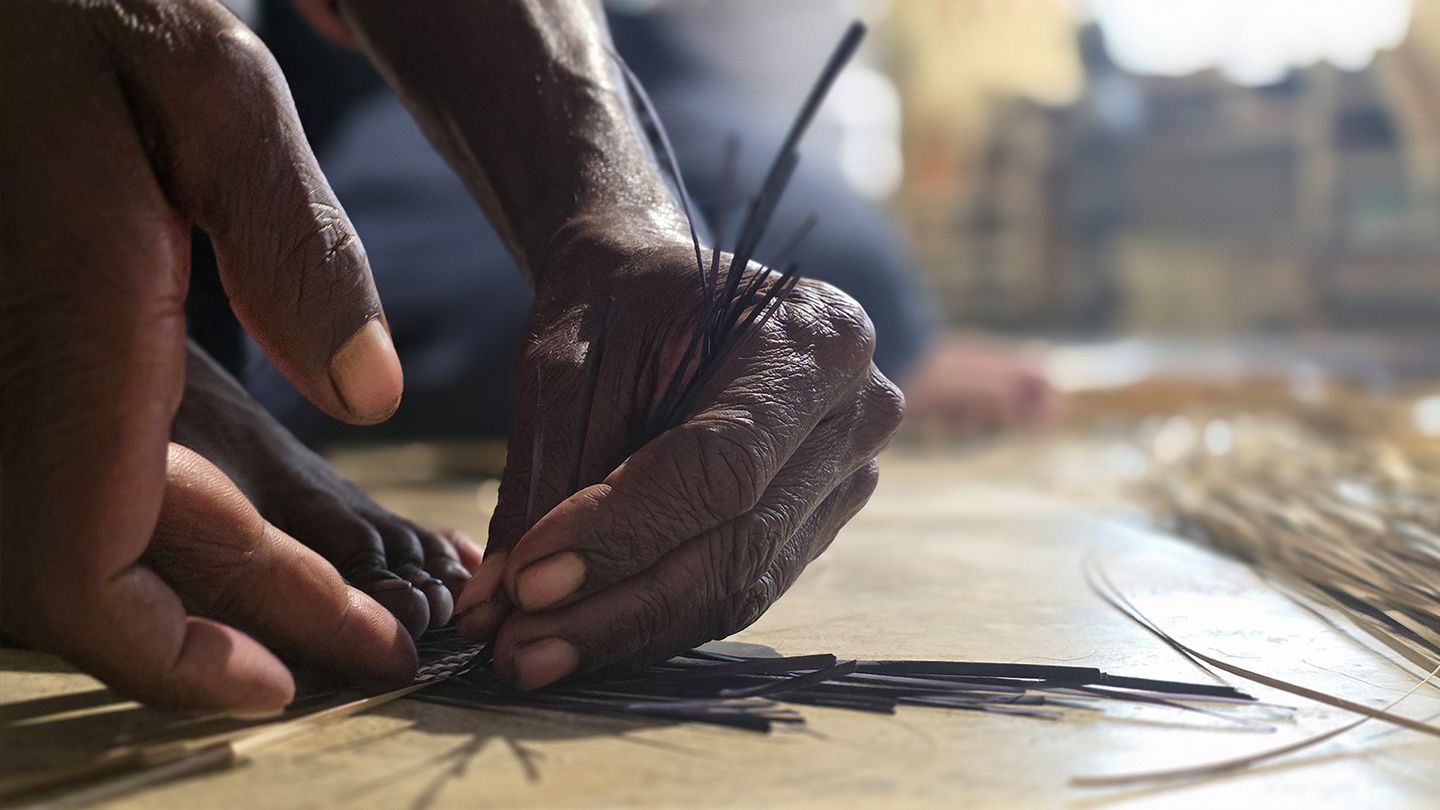
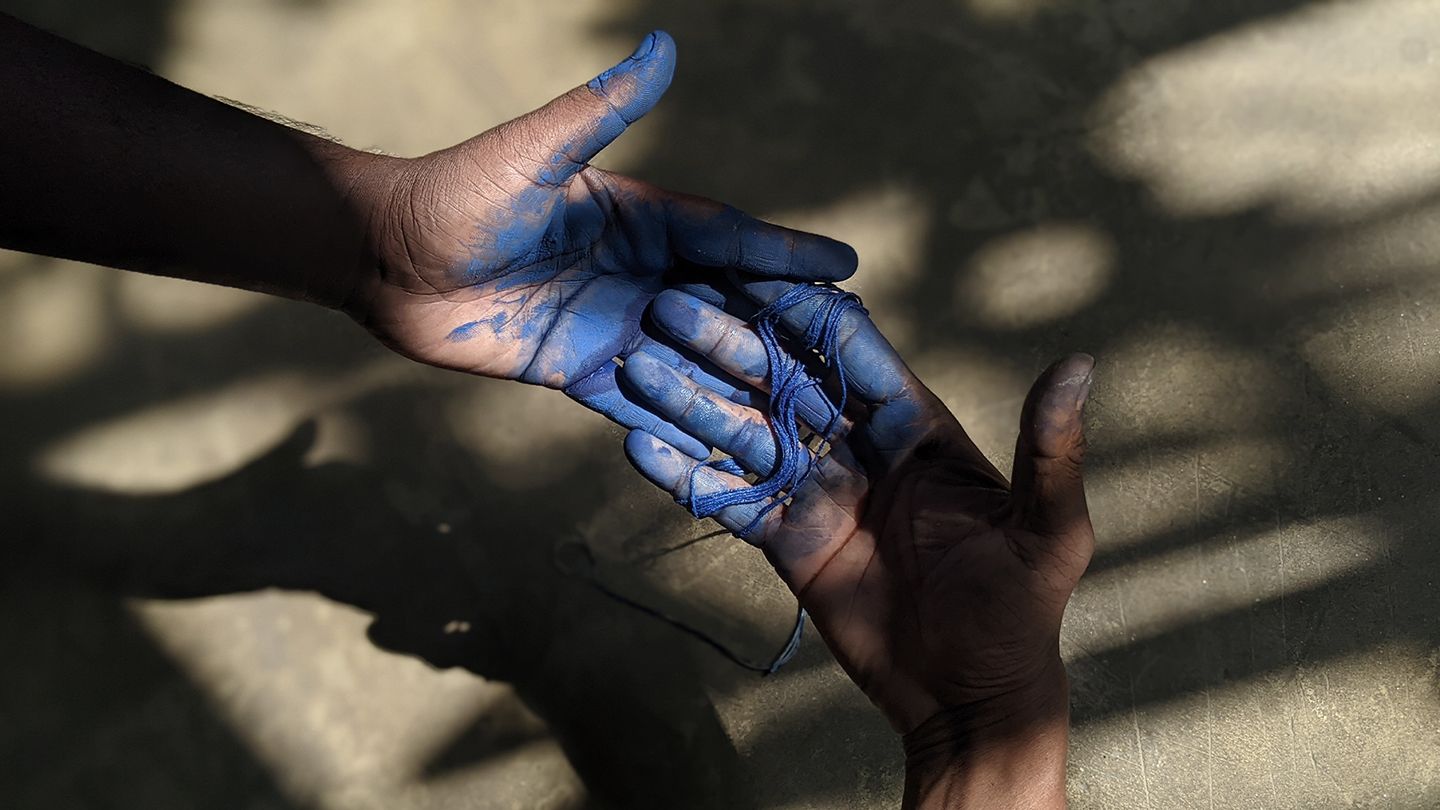
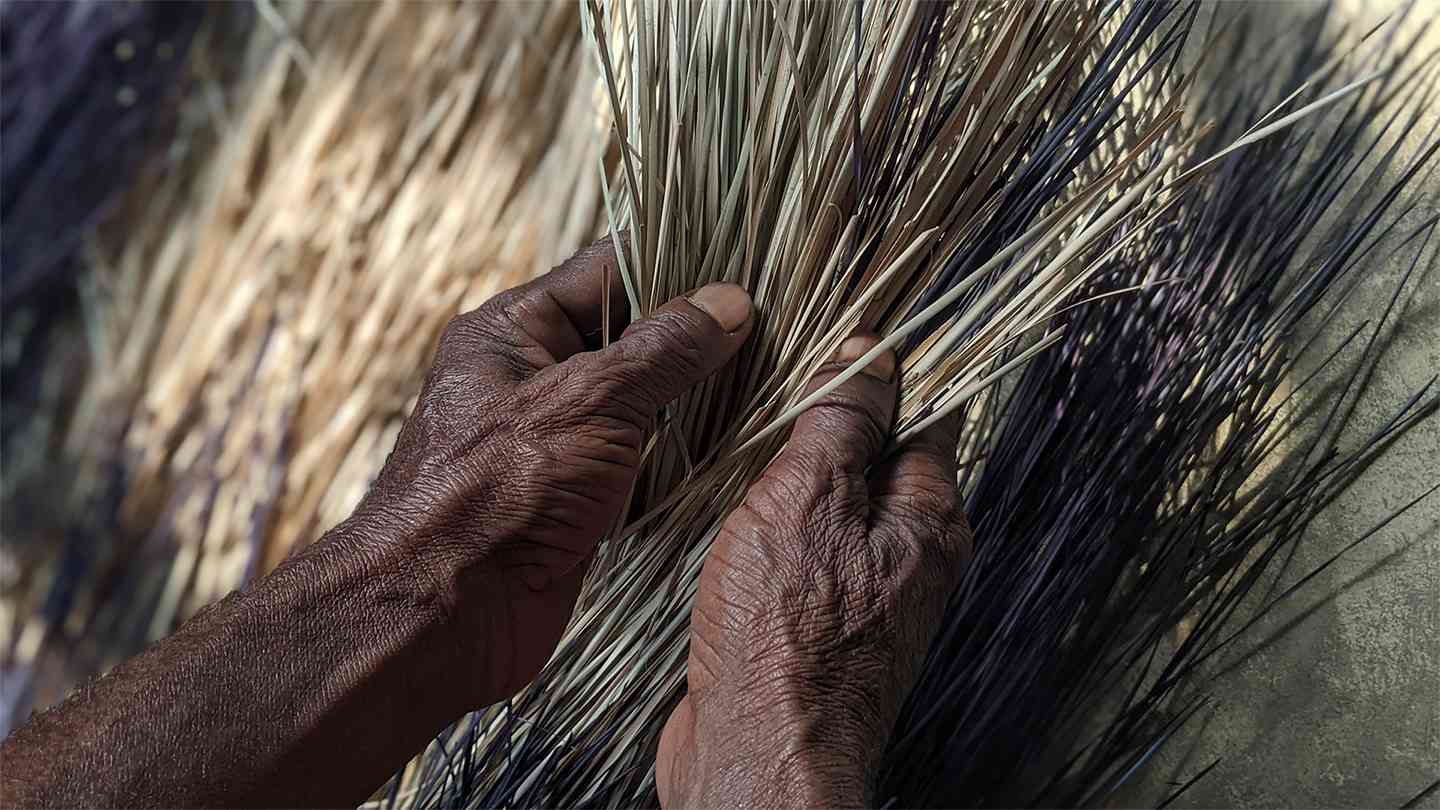
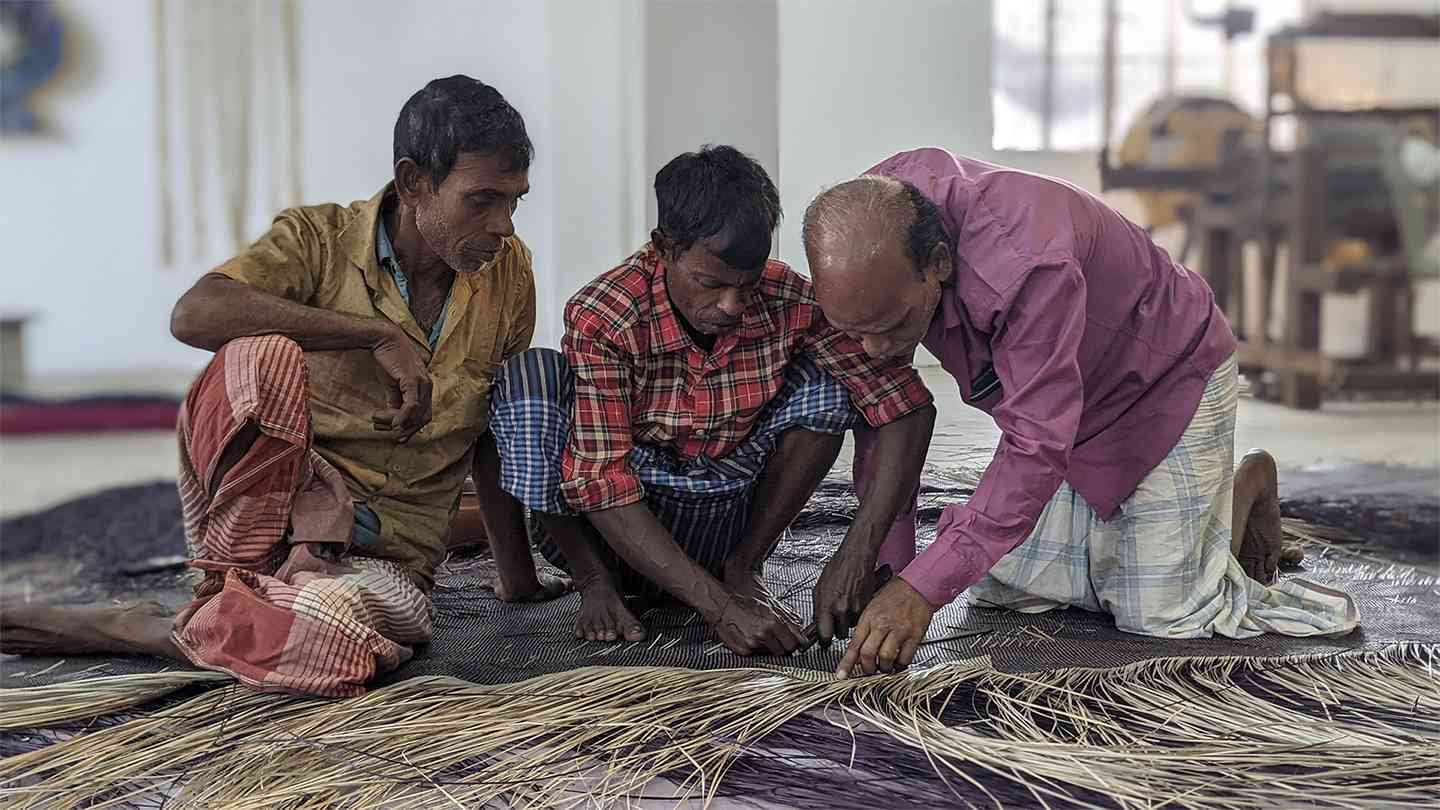
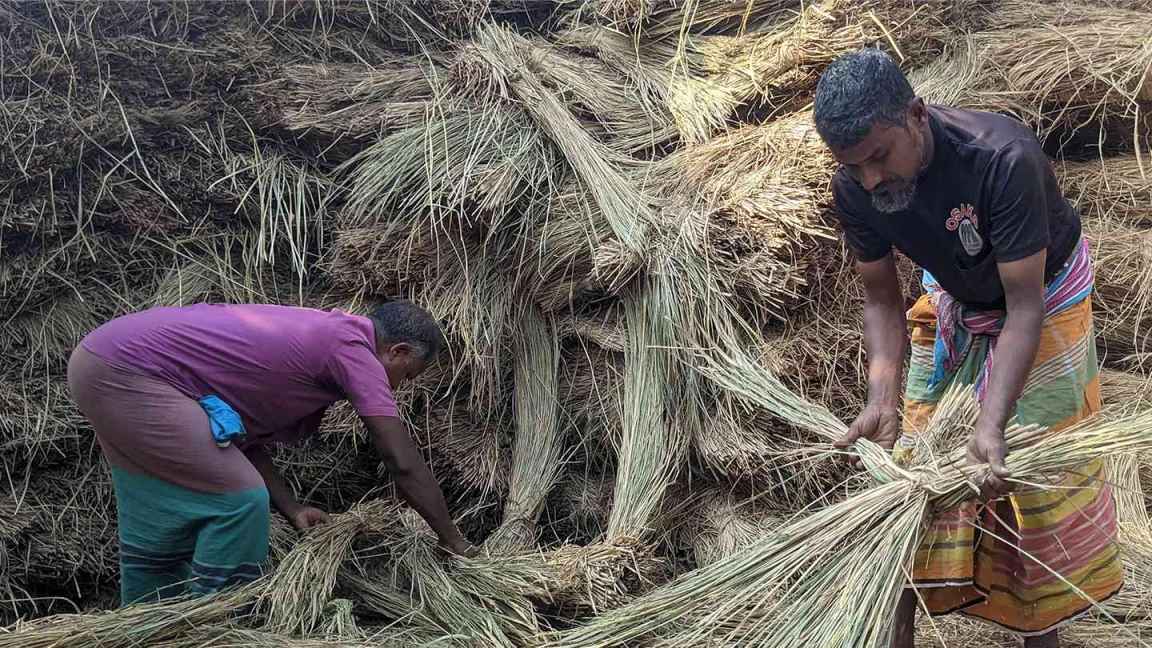
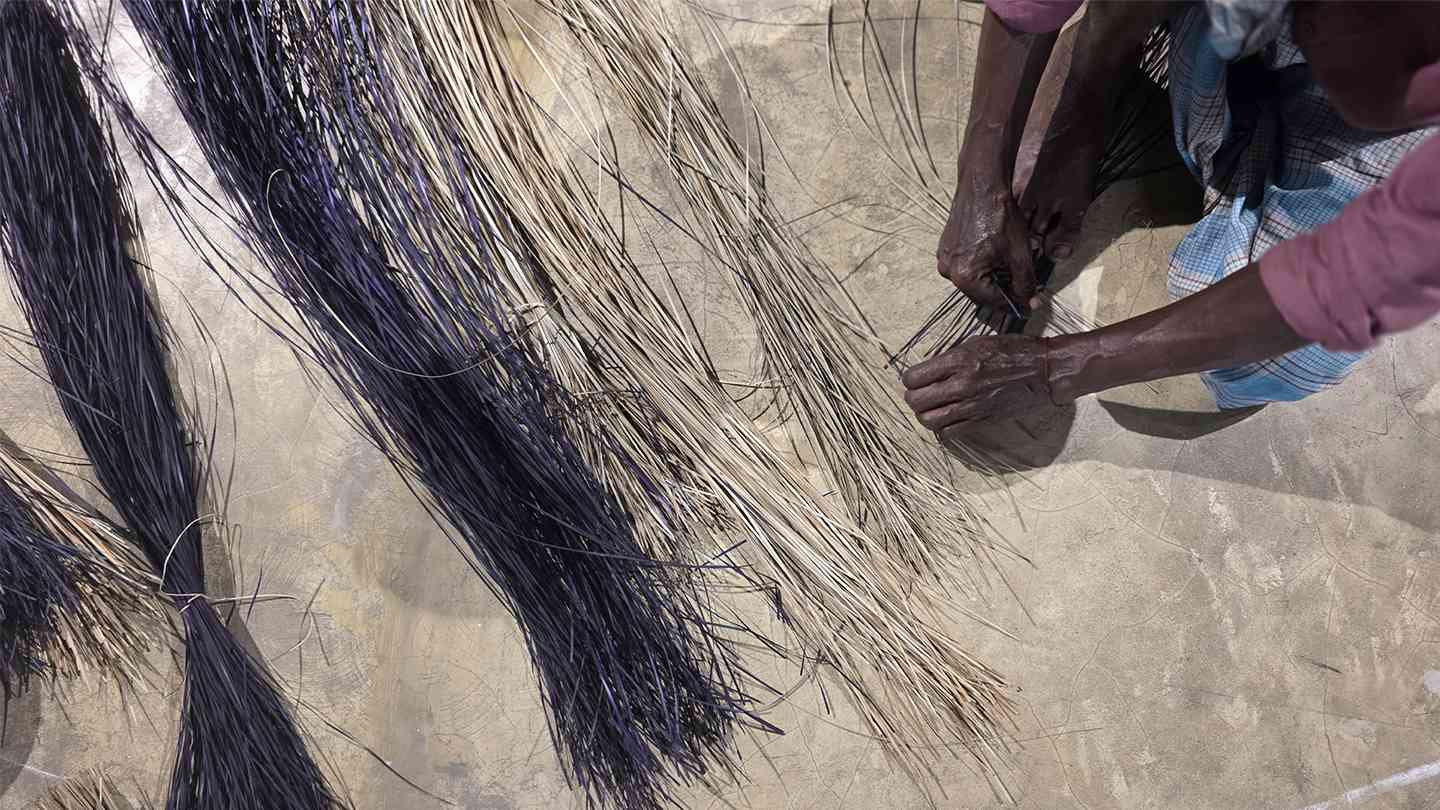
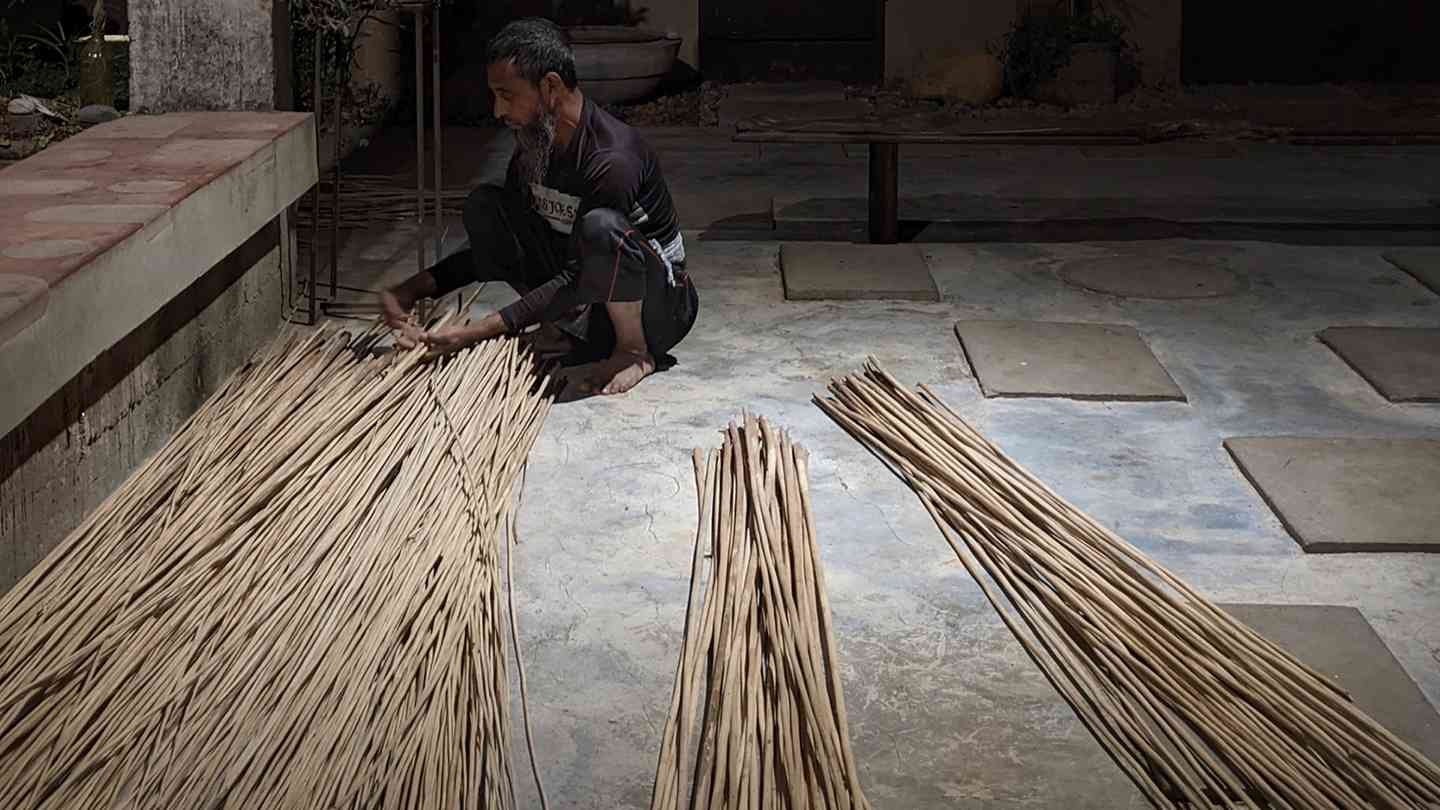
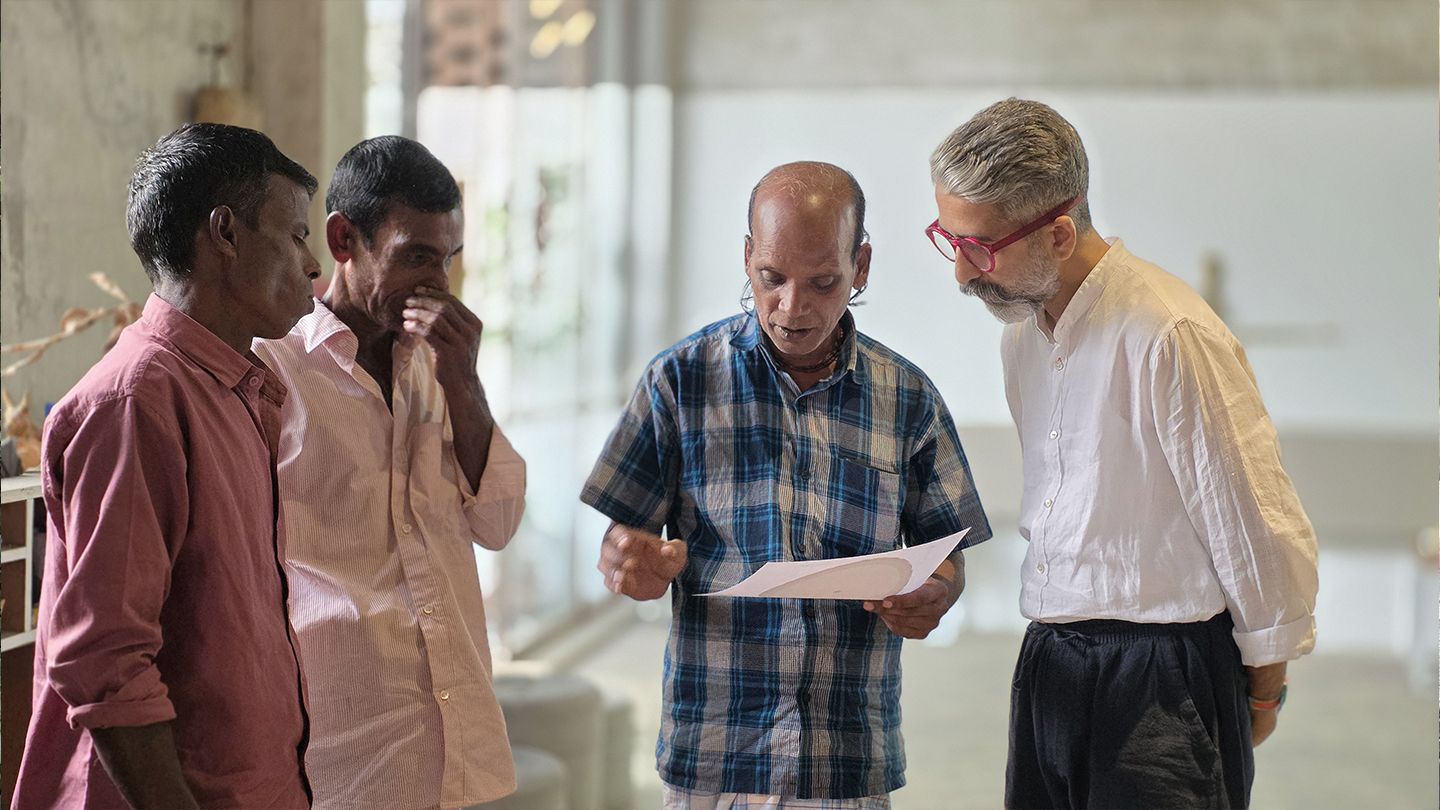
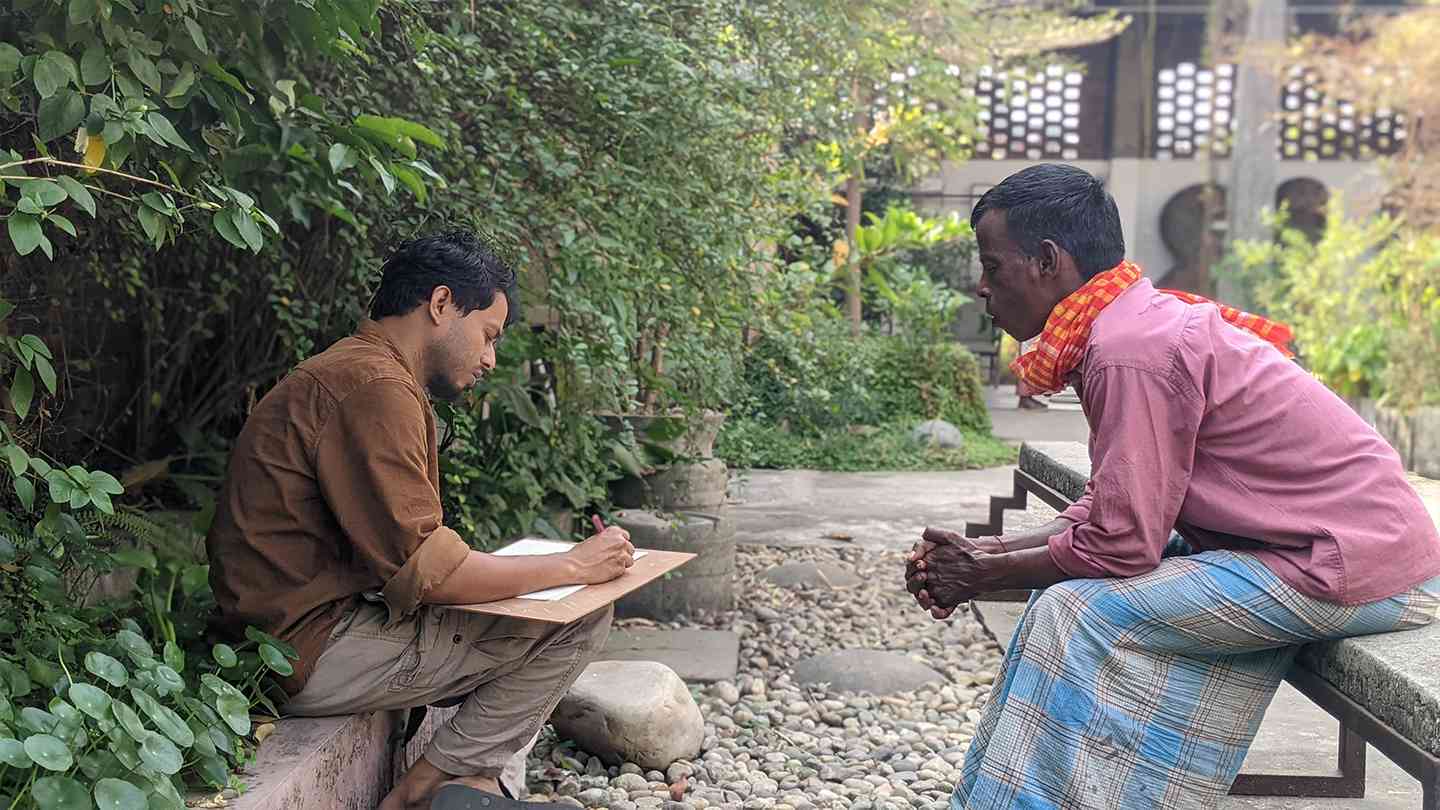
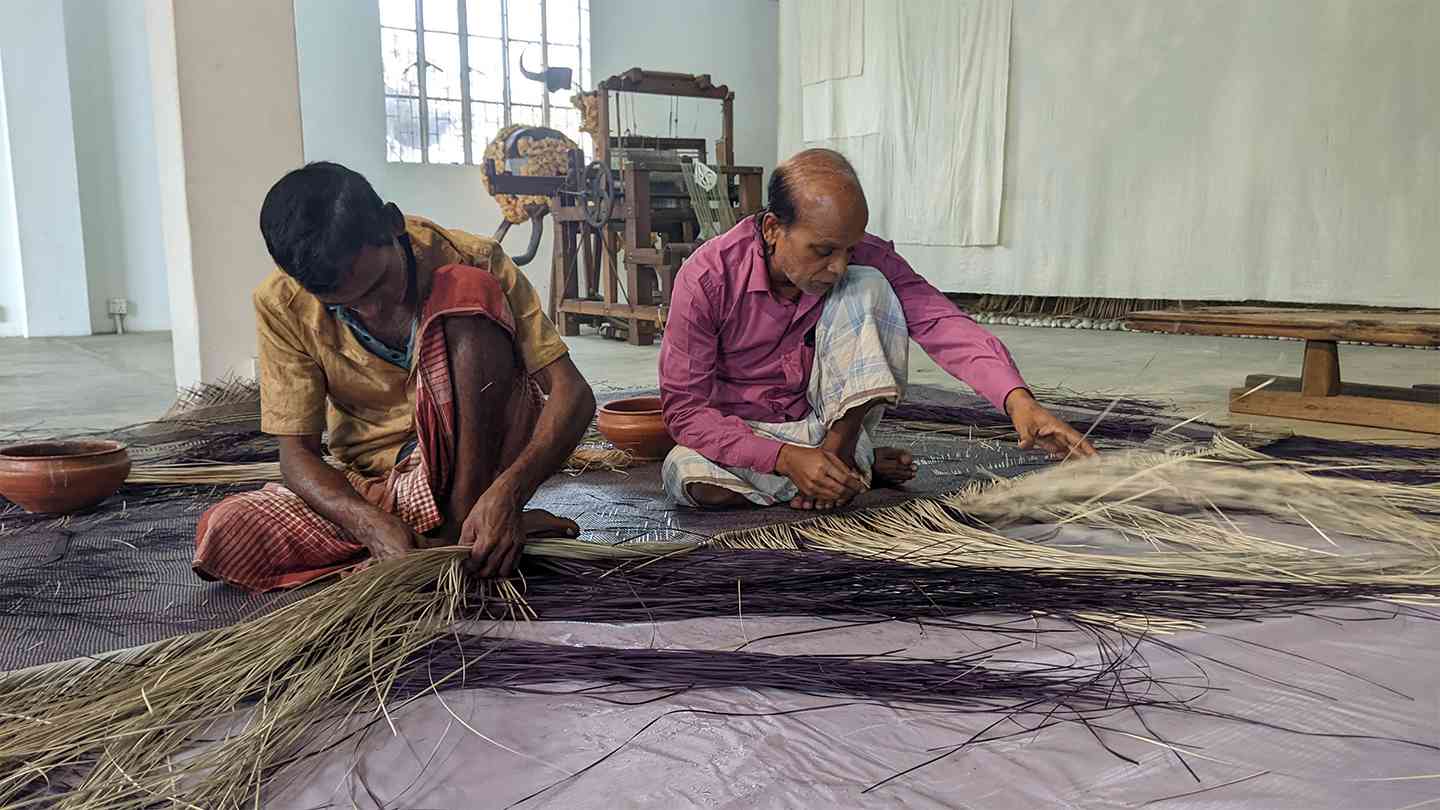
শীতলপাটি / Shitalpati is the traditional art of making handcrafted mats by weaving together strips of green cane known as murta. These mats are used across Bangladesh as sitting mats, bedspreads, or prayer mats. The primary bearers and practitioners of this craft are weavers living mostly in the low-lying villages of the greater Sylhet region, although pockets of shitalpati weavers exist in other parts of the country. Shitalpati weaving is not only a major source of livelihood but also a strong marker of cultural identity. Primarily a family-based craft, it reinforces familial bonds and fosters a harmonious social atmosphere. The Shitalpati rests as a circle—a bindu, the point of origin—woven by artisans-in-residence Horendro Kumar Das, Gobinda Kumar Das, and Shottendro Kumar Das under the creative direction of Bishwajit Goswami.
বৈঠক / Baithak
January, 2026
Running across
eight months, পুনরায় / Punaray brought together artists, craftspeople, and
researchers in residence at Brihatta Art Space, Hazaribagh. The programme
emphasised collaboration and open exchange, creating a space where ideas,
materials, and people met and evolved through shared processes of making and
conversation. That which is rooted in the everyday is often overlooked when we
focus on the bigger picture. What is process without intent? How is intention
meaningfully crafted?
Sometimes it is
as simple as looking around and connecting with our surroundings.
Sometimes it is
about making a pause.
At other times,
it is the power of dialogue—an exchange that sparks an idea or a methodology
waiting to emerge and be explored.
As we conclude
the programme, we realise that it is these small gestures that hold the power
to create transformative horizons for what art may become. As landscapes shift,
so do people and time. Processes transform and adapt according to place, but
the intention to create remains the purest and most vital part of the act
itself, as does the articulation of that intent within a safe and nurturing
space.
Nusrat Mahmud
Co-founder
Brihatta Art Foundation
-
Over the years,
Brihatta has invited dialogue between people, objects, and self.
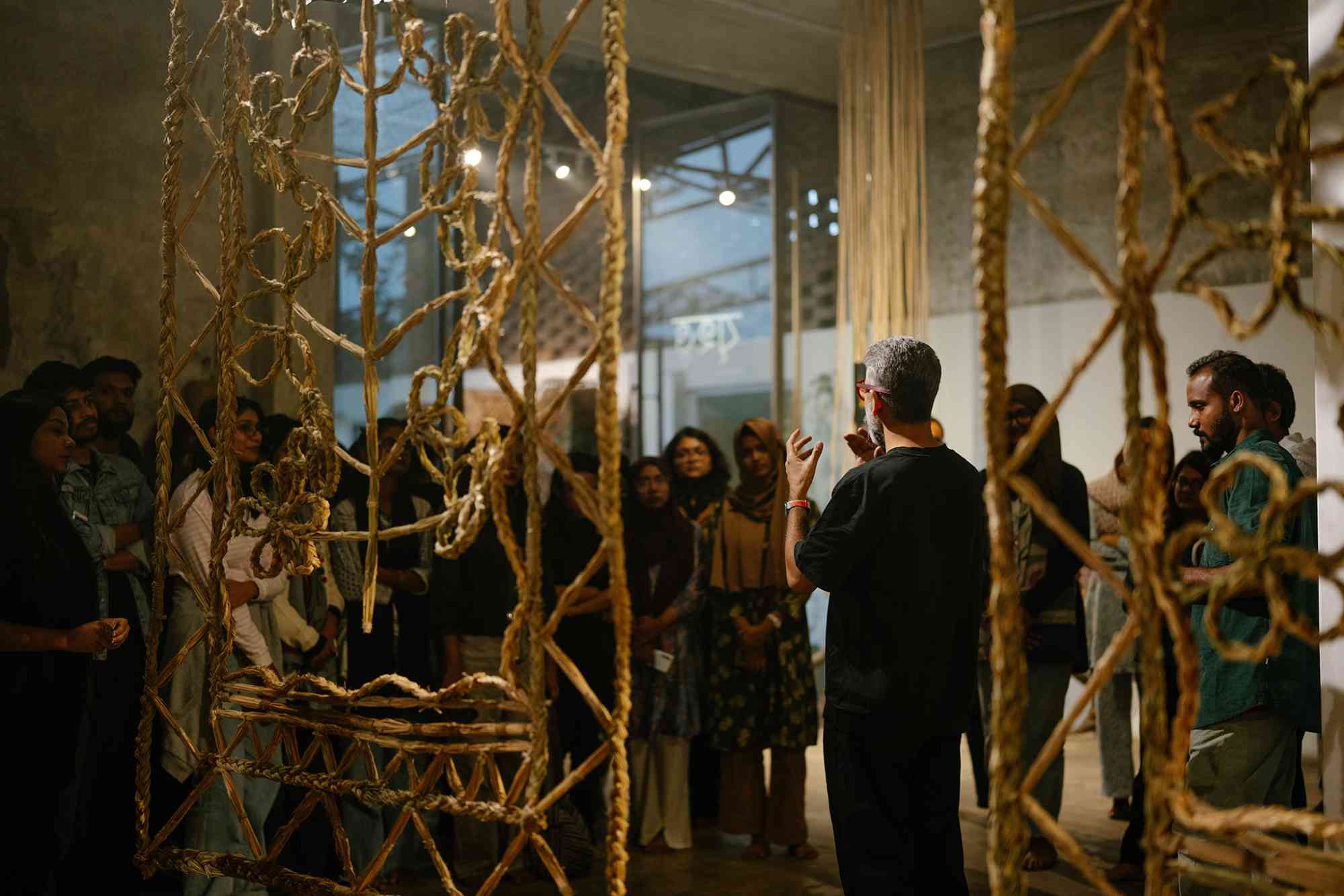
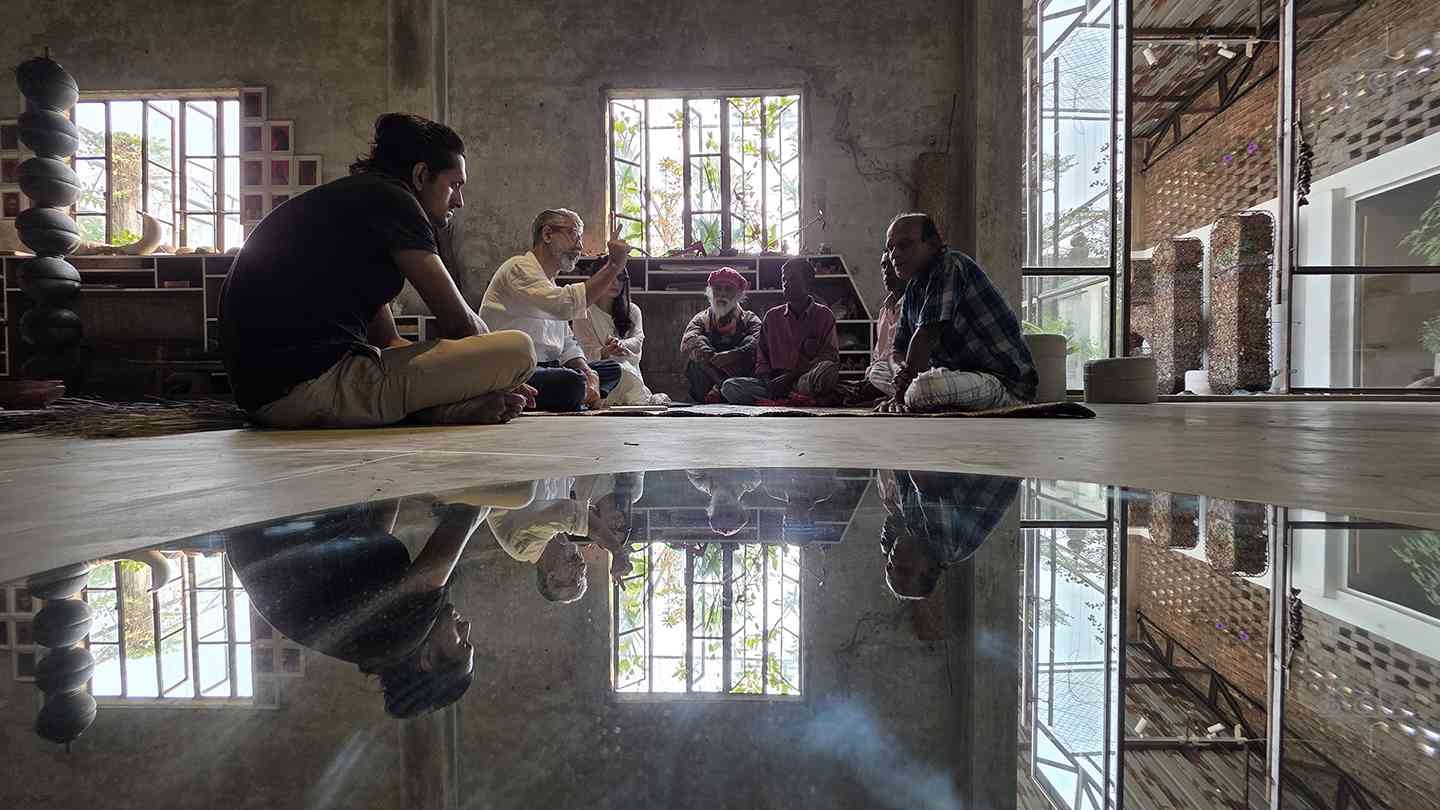
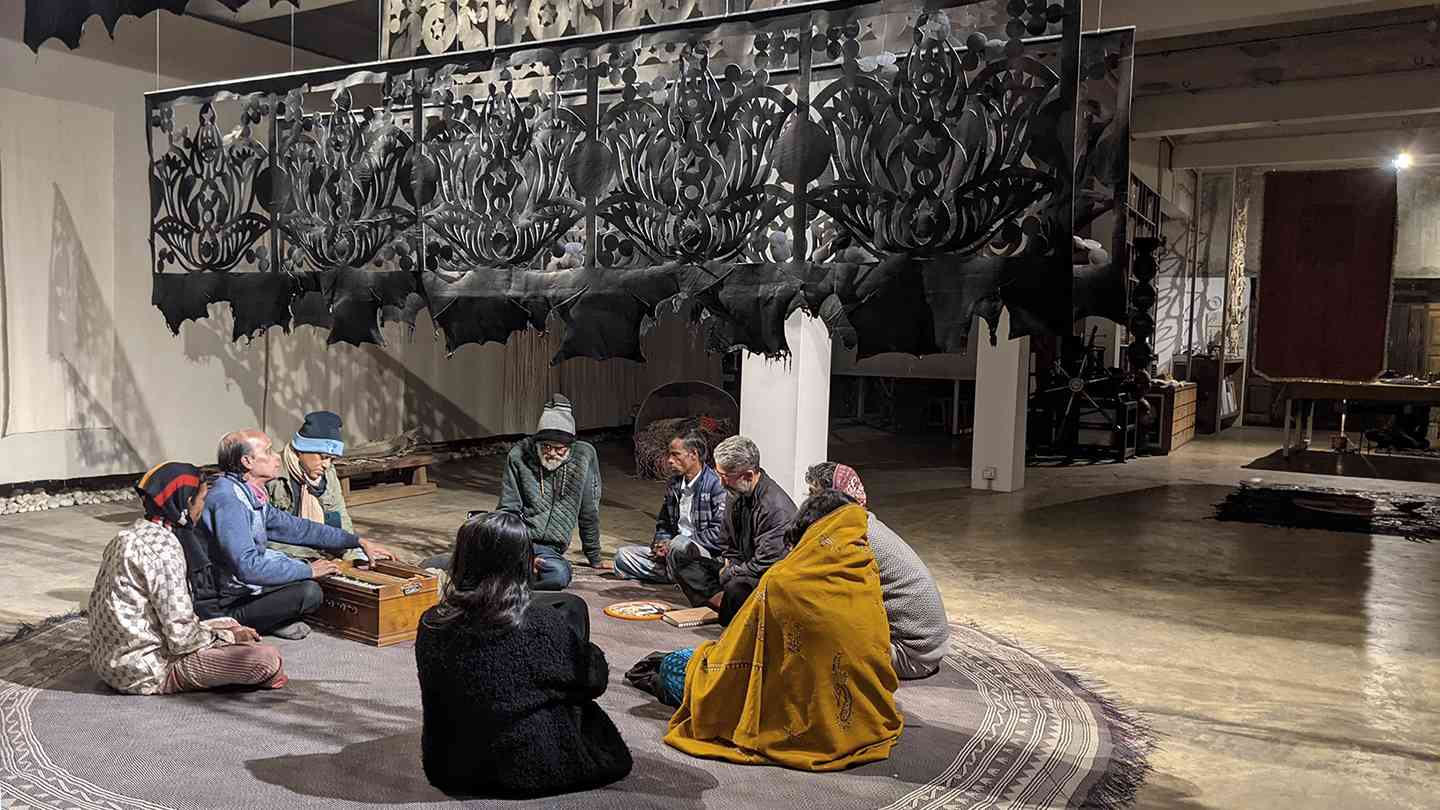
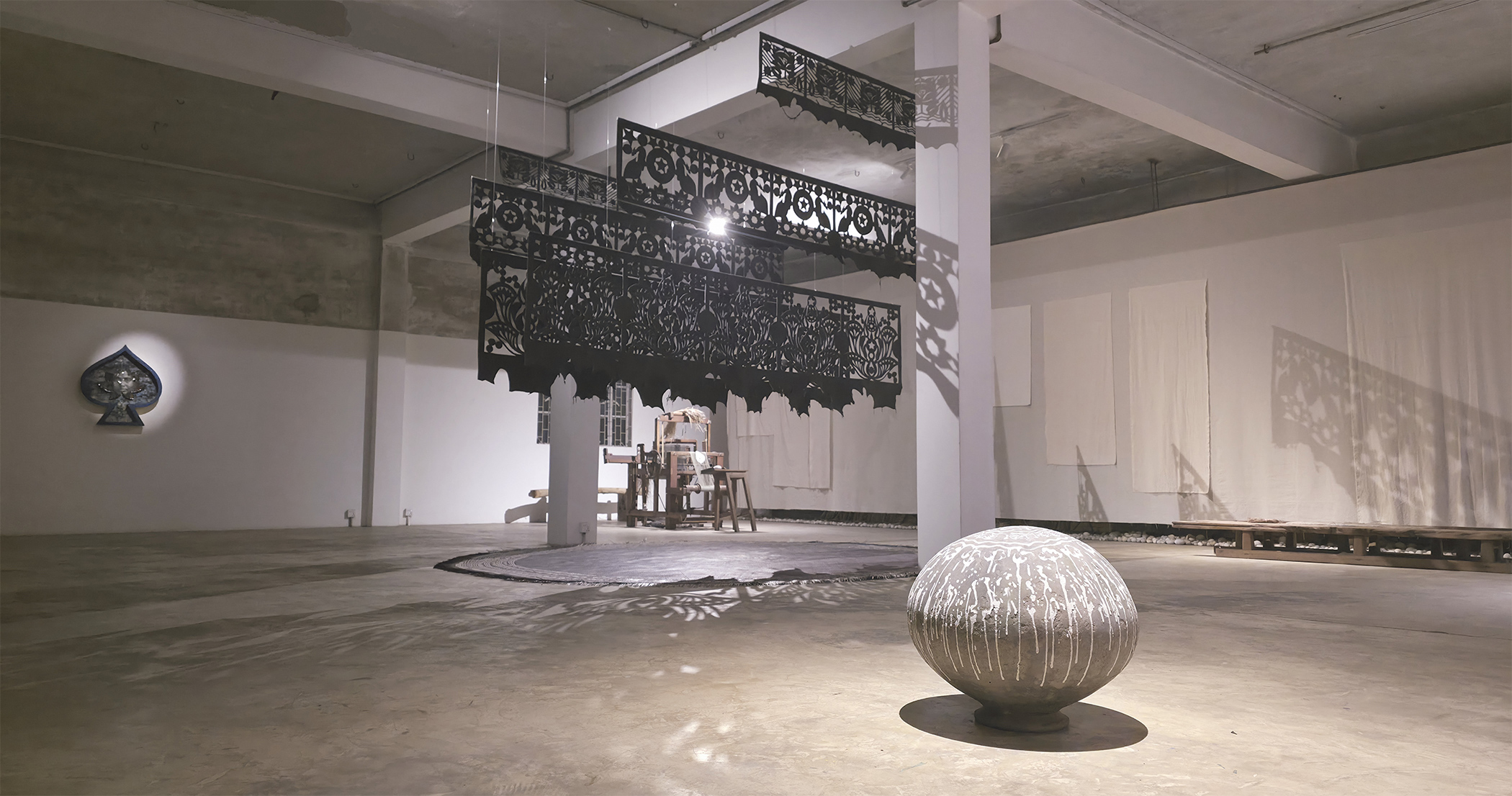
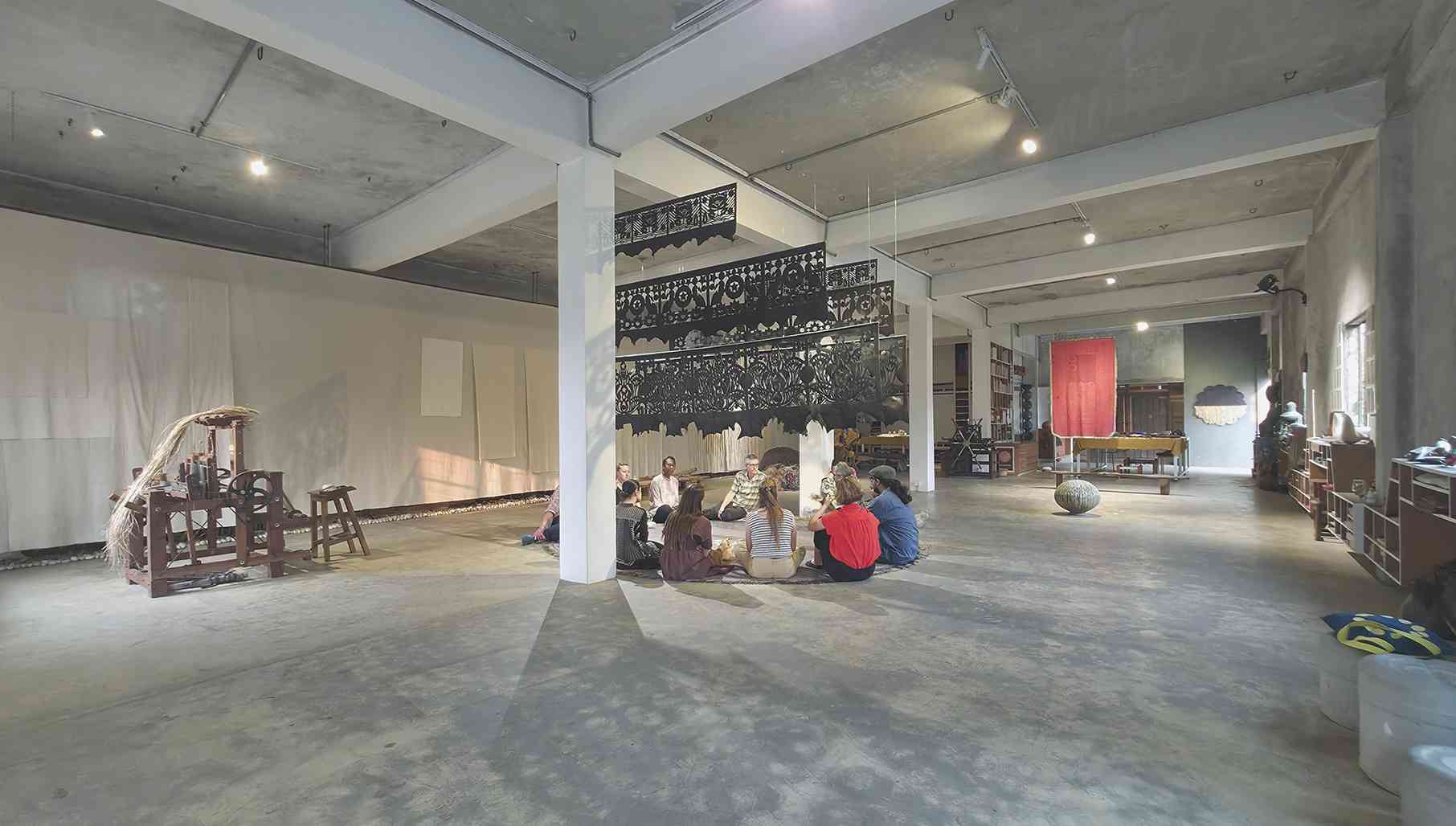
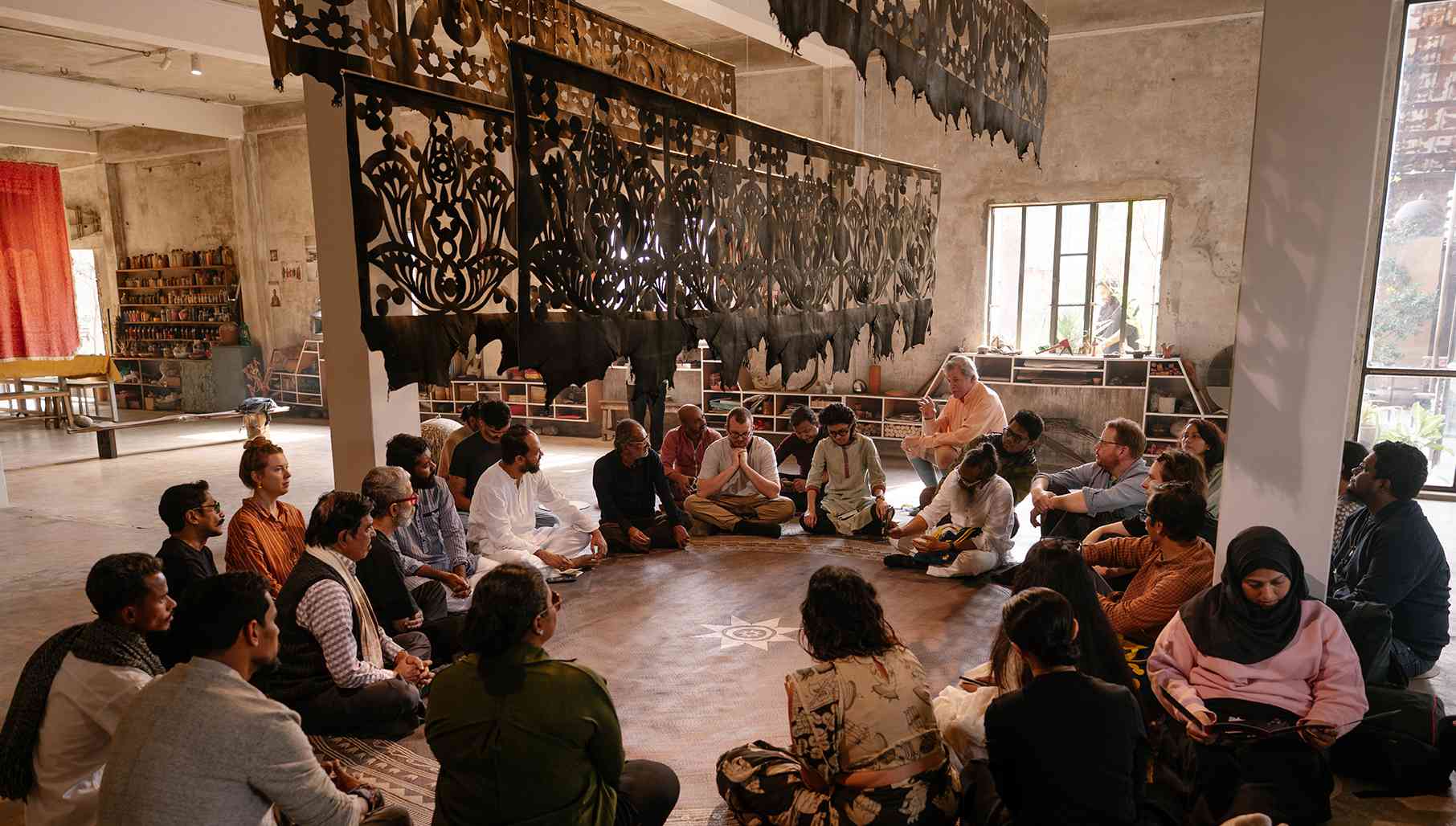
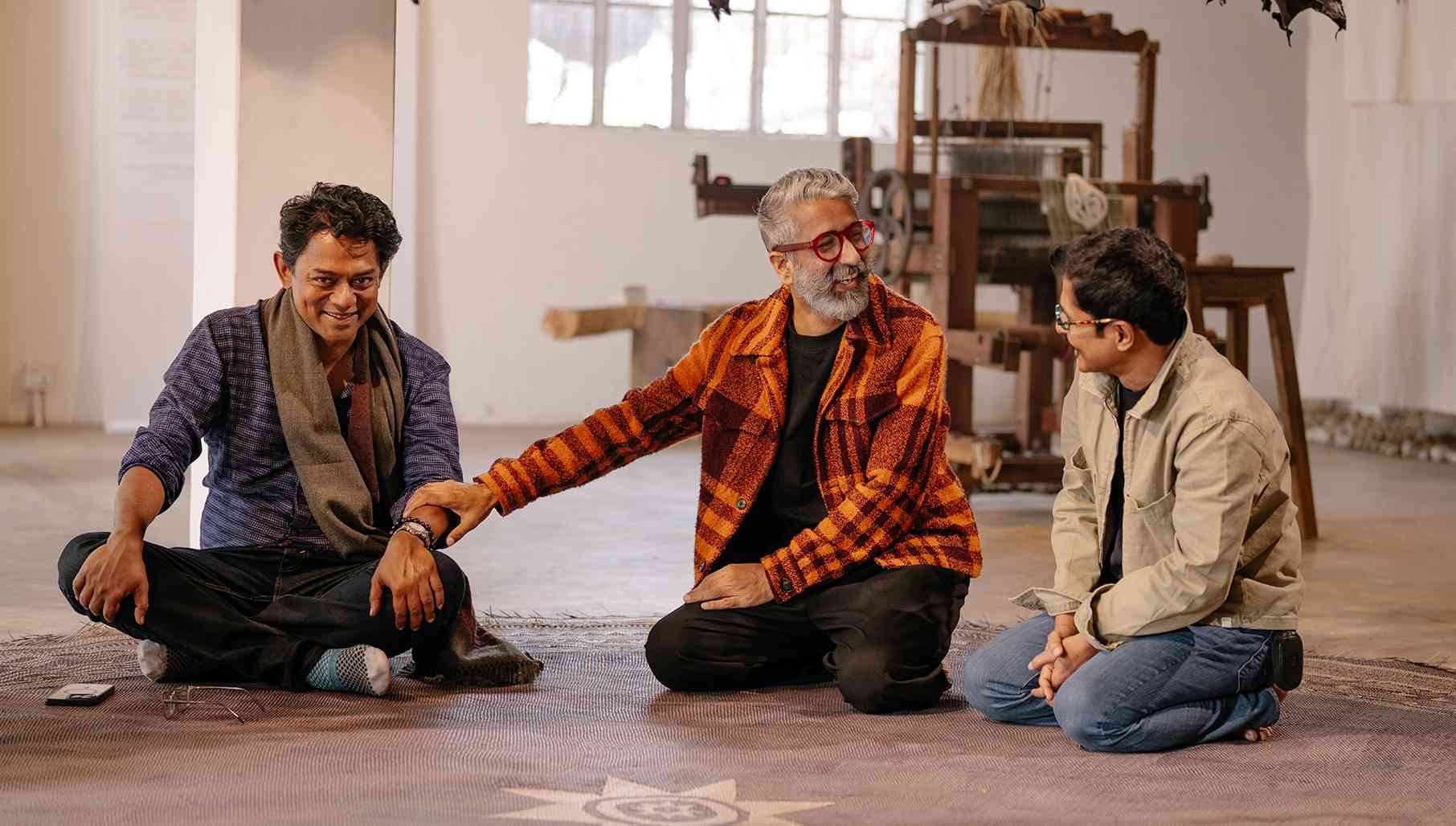
বৈঠক / Baithak, a gathering space for social exchange, invites visitors to sit and share conversations on shitalpati, weaving together memories that emerge from the collective presence of the space. ঝালর / Jhalor, a decorative fringe used in Bangladeshi rituals, adorns sacred spaces and ceremonial textiles. By marking a defined area, it creates a visual and spatial boundary, emphasising that the conversation or gathering beneath it is intentional and significant. Handcrafted by artist Bishwajit Goswami at Brihatta Art Space, Hazaribagh, the Jhalor symbolises auspiciousness and cultural reverence.
শীতলপাটি / Shitalpati is the traditional art of making handcrafted
mats by weaving together strips of green cane known as murta. These mats are
used across Bangladesh as sitting mats, bedspreads, or prayer mats. The primary
bearers and practitioners of this craft are weavers living mostly in the
low-lying villages of the greater Sylhet region, although pockets of shitalpati
weavers exist in other parts of the country. Shitalpati weaving is not only a
major source of livelihood but also a strong marker of cultural identity.
Primarily a family-based craft, it reinforces familial bonds and fosters a
harmonious social atmosphere. The Shitalpati rests as a circle—a bindu, the
point of origin—woven by artisans-in-residence Horendro Kumar Das, Gobinda
Kumar Das, and Shottendro Kumar Das under the creative direction of Bishwajit
Goswami.
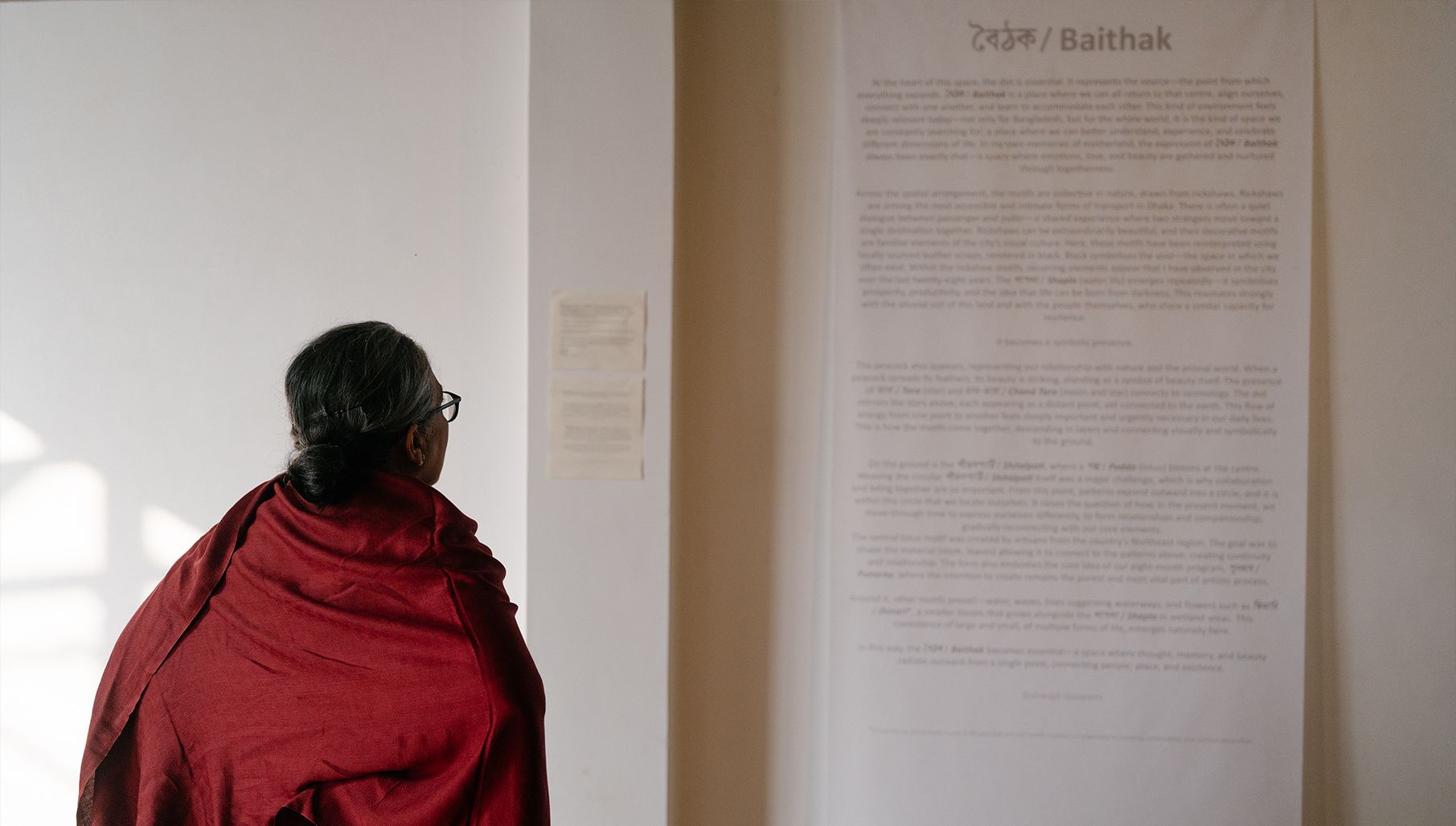
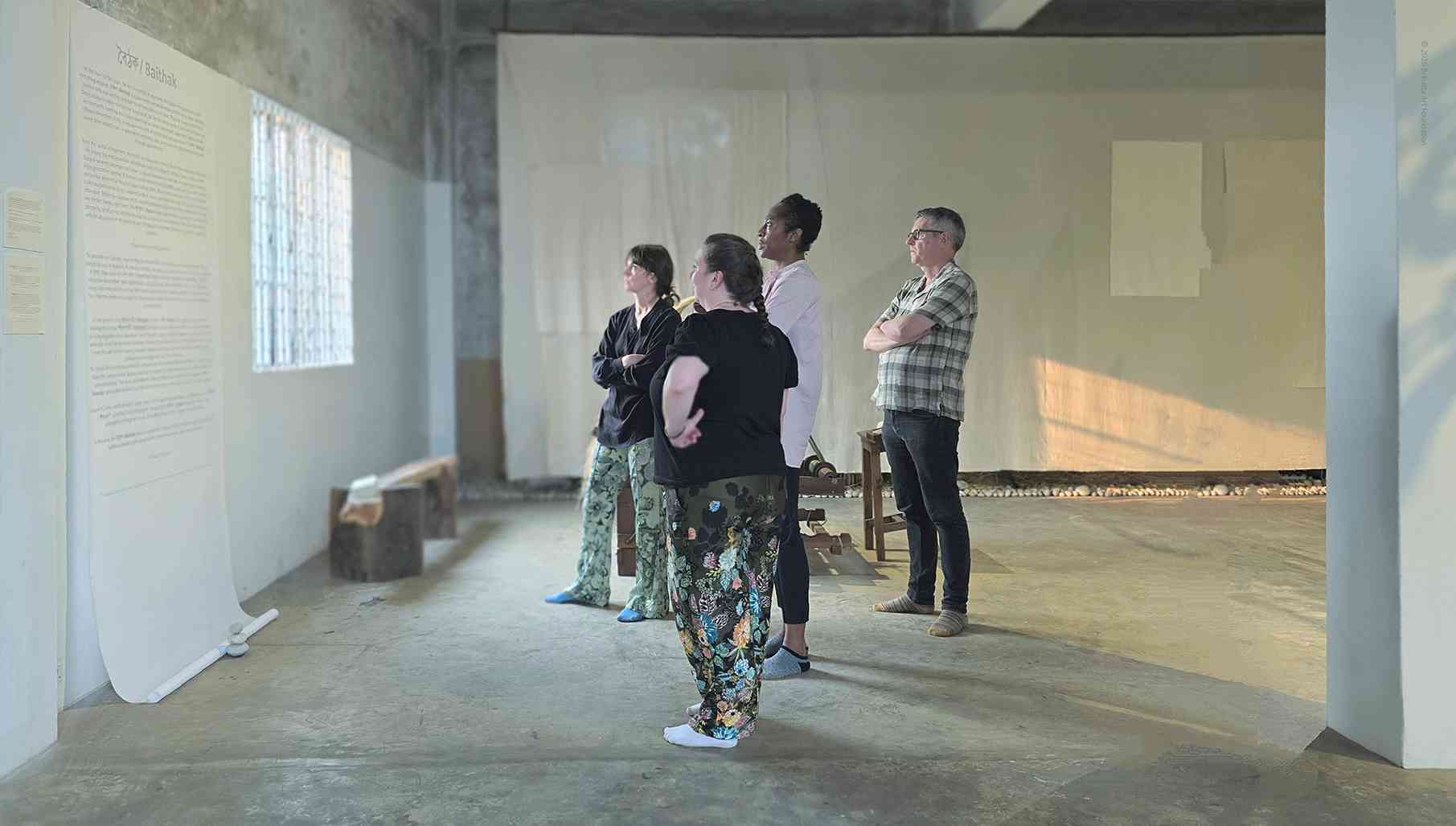
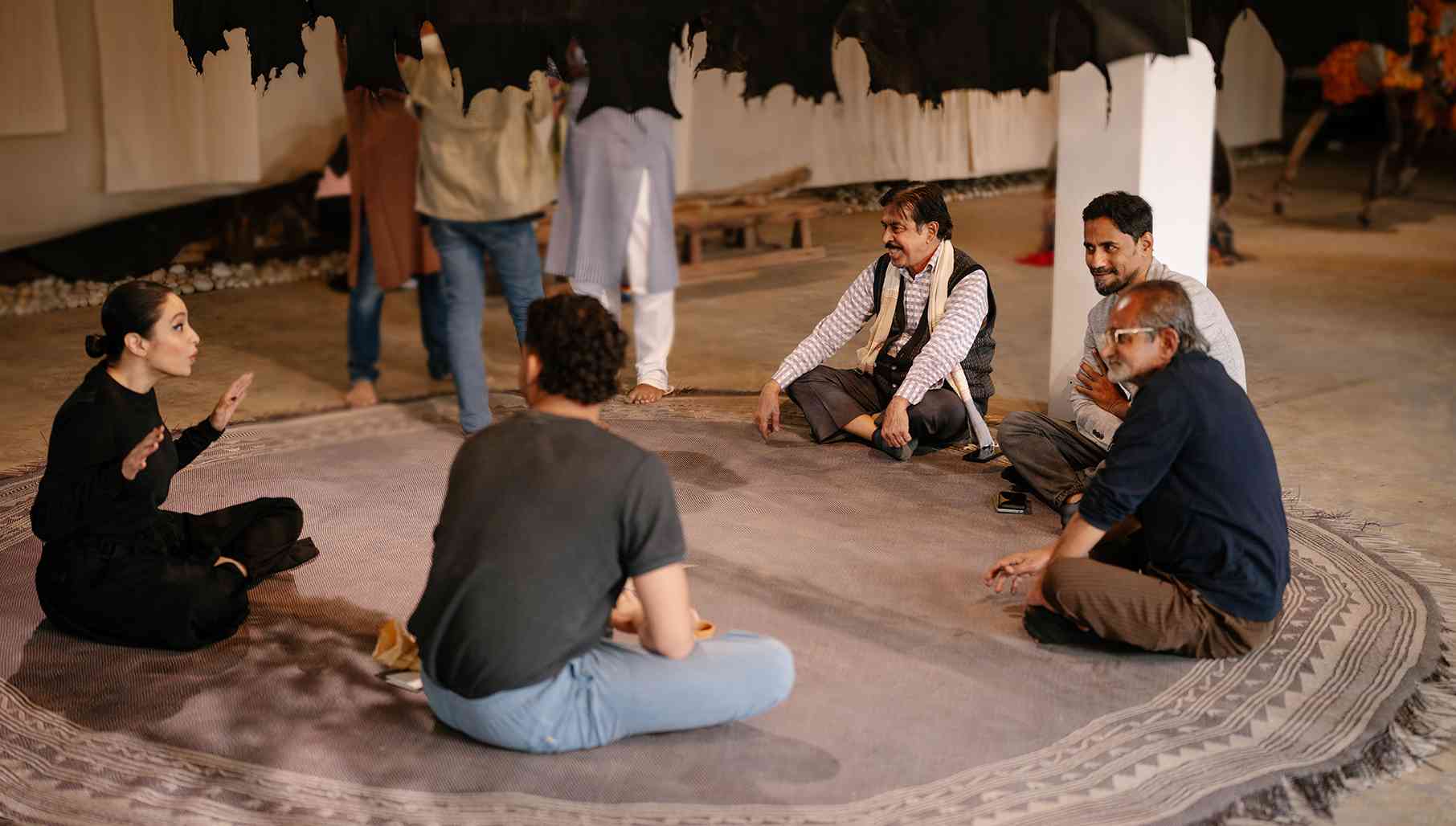
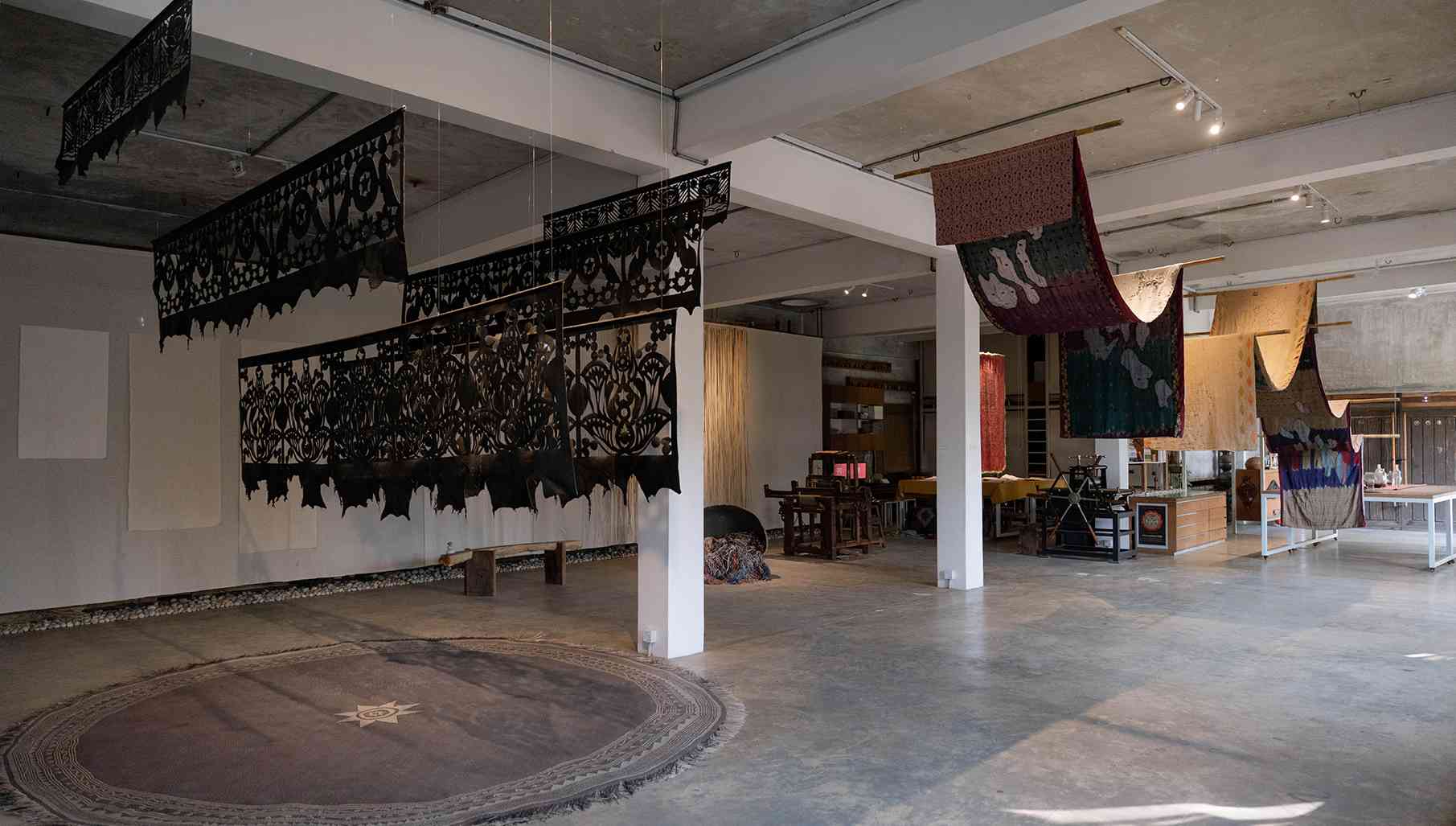
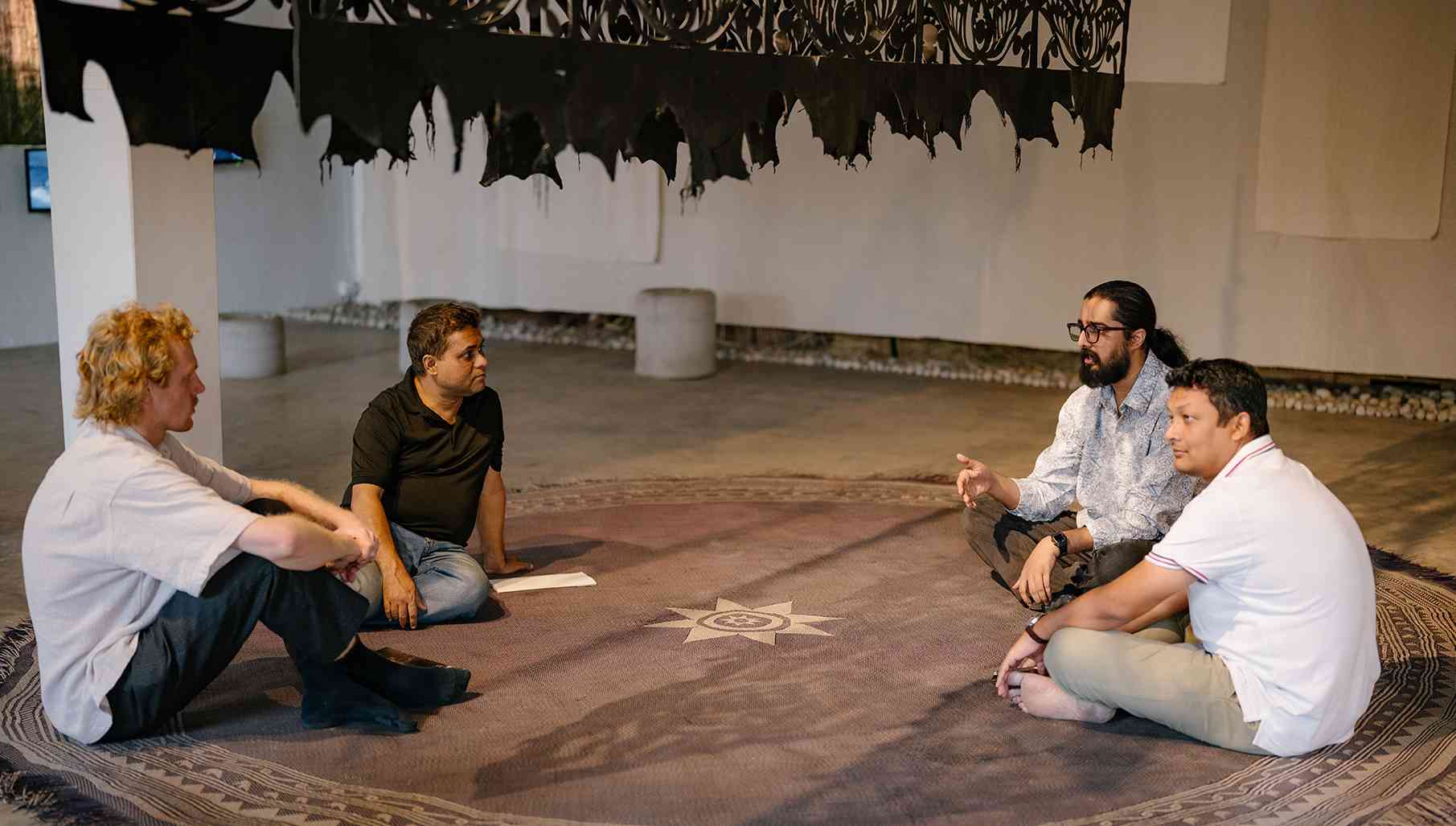
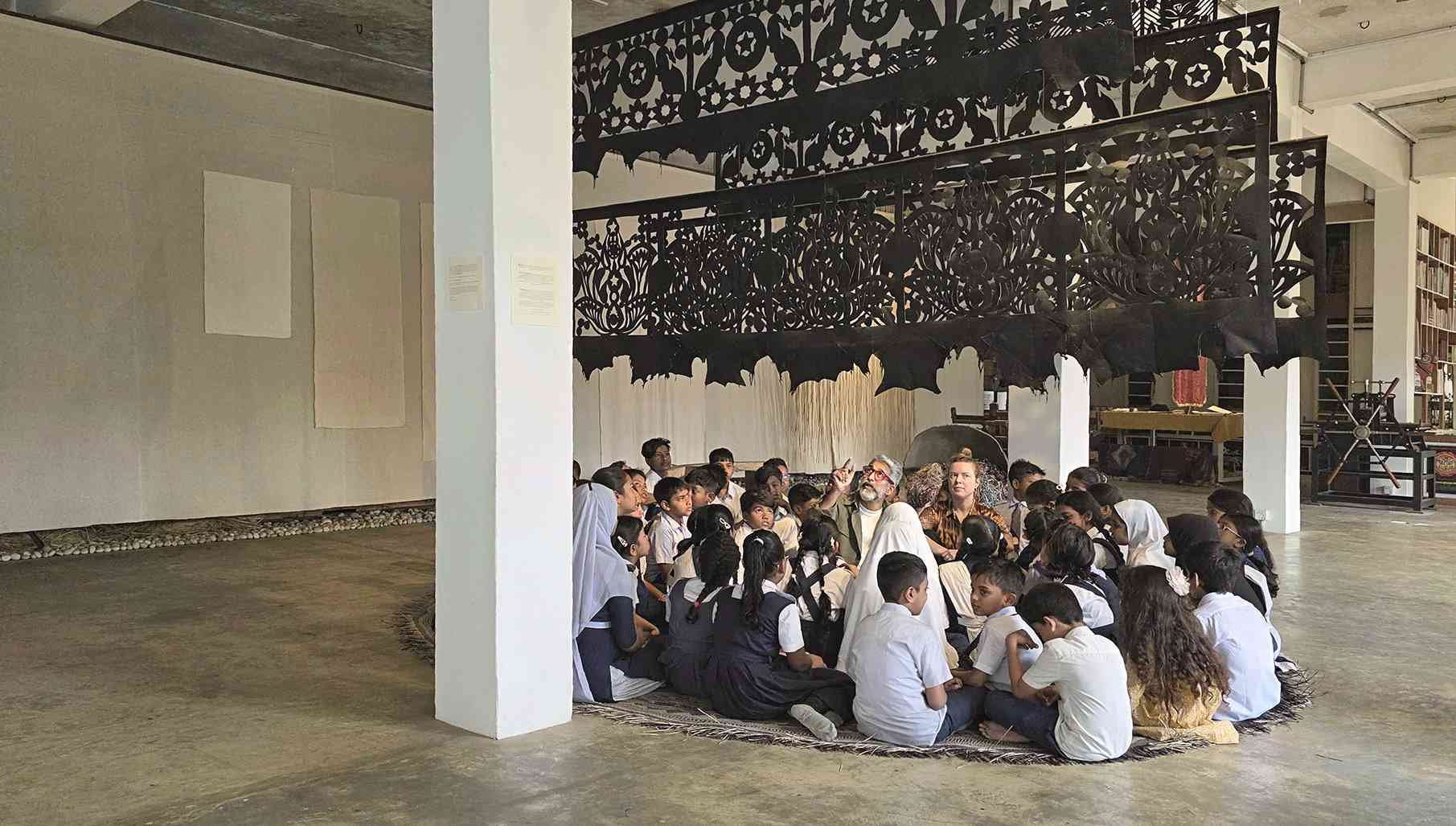
বৈঠক / Baithak by Bishwajit Goswami
বৈঠক / Baithak, a gathering space for social exchange, invites visitors to sit
and share conversations on shitalpati, weaving together memories that emerge
from the collective presence of the space.
At the heart of this space, the dot is essential. It represents the source—the
point from which everything expands. বৈঠক / Baithak is a place where we can all return to that centre, align
ourselves, connect with one another, and learn to accommodate each other. This
kind of environment feels deeply relevant today—not only for Bangladesh, but
for the whole world. It is the kind of space we are constantly searching for: a
place where we can better understand, experience, and celebrate different
dimensions of life. In my own memories of motherland, the expression of বৈঠক / Baithak always
been exactly that—a space where emotions, love, and beauty are gathered and
nurtured through togetherness.
Across the spatial
arrangement, the motifs are collective in nature, drawn from rickshaws.
Rickshaws are among the most accessible and intimate forms of transport in
Dhaka. There is often a quiet dialogue between passenger and puller—a shared
experience where two strangers move toward a single destination together.
Rickshaws can be extraordinarily beautiful, and their decorative motifs are
familiar elements of the city's visual culture. Here, these motifs have been
reinterpreted using locally sourced leather scraps, rendered in black. Black
symbolises the void—the space in which we often exist. Within the rickshaw
motifs, recurring elements appear that I have observed in the city over the
last twenty-eight years. The শাপলা / Shapla (water lily) emerges repeatedly—it symbolises prosperity,
productivity, and the idea that life can be born from darkness. This resonates
strongly with the alluvial soil of this land and with the people themselves,
who share a similar capacity for resilience.
It
becomes a symbolic presence.
The peacock also
appears, representing our relationship with nature and the animal world. When a
peacock spreads its feathers, its beauty is striking, standing as a symbol of
beauty itself. The presence of তারা / Tara (star) and চান-তারা / Chand Tara (moon
and star) connects to cosmology. The dot mirrors the stars above, each
appearing as a distant point, yet connected to the earth. This flow of energy
from one point to another feels deeply important and urgently necessary in our
daily lives. This is how the motifs come together, descending in layers and
connecting visually and symbolically to the ground.
On the ground is the শীতলপাটি / Shitalpati,
where a পদ্ম / Poddo (lotus) blooms at the centre. Weaving the circular শীতলপাটি / Shitalpati itself
was a major challenge, which is why collaboration and being together are so
important. From this point, patterns expand outward into a circle, and it is
within this circle that we locate ourselves. It raises the question of how, in
the present moment, we move through time to express ourselves differently, to
form relationships and companionship, gradually reconnecting with our core
elements.
The central lotus
motif was created by artisans from the country's Northeast region. The goal was
to shape the material (stem, leaves) allowing it to connect to the patterns
above, creating continuity and relationship. The form also embodies the core
idea of our eight-month program, পুনরায় / Punaray, where the intention to create remains the purest and most
vital part of the artistic process.
Around it, other
motifs prevail—water, waves, lines suggesting waterways, and flowers such as ঝিনারি / Jhinari,
a smaller bloom that grows alongside the শাপলা / Shapla in
wetland areas. This coexistence of large and small, of multiple forms of life,
emerges naturally here.
In this way, the বৈঠক / Baithak becomes
essential—a space where thought, memory, and beauty radiate outward from a
single point, connecting people, place, and existence.
Bishwajit Goswami
Co-founder
Brihatta Art Foundation